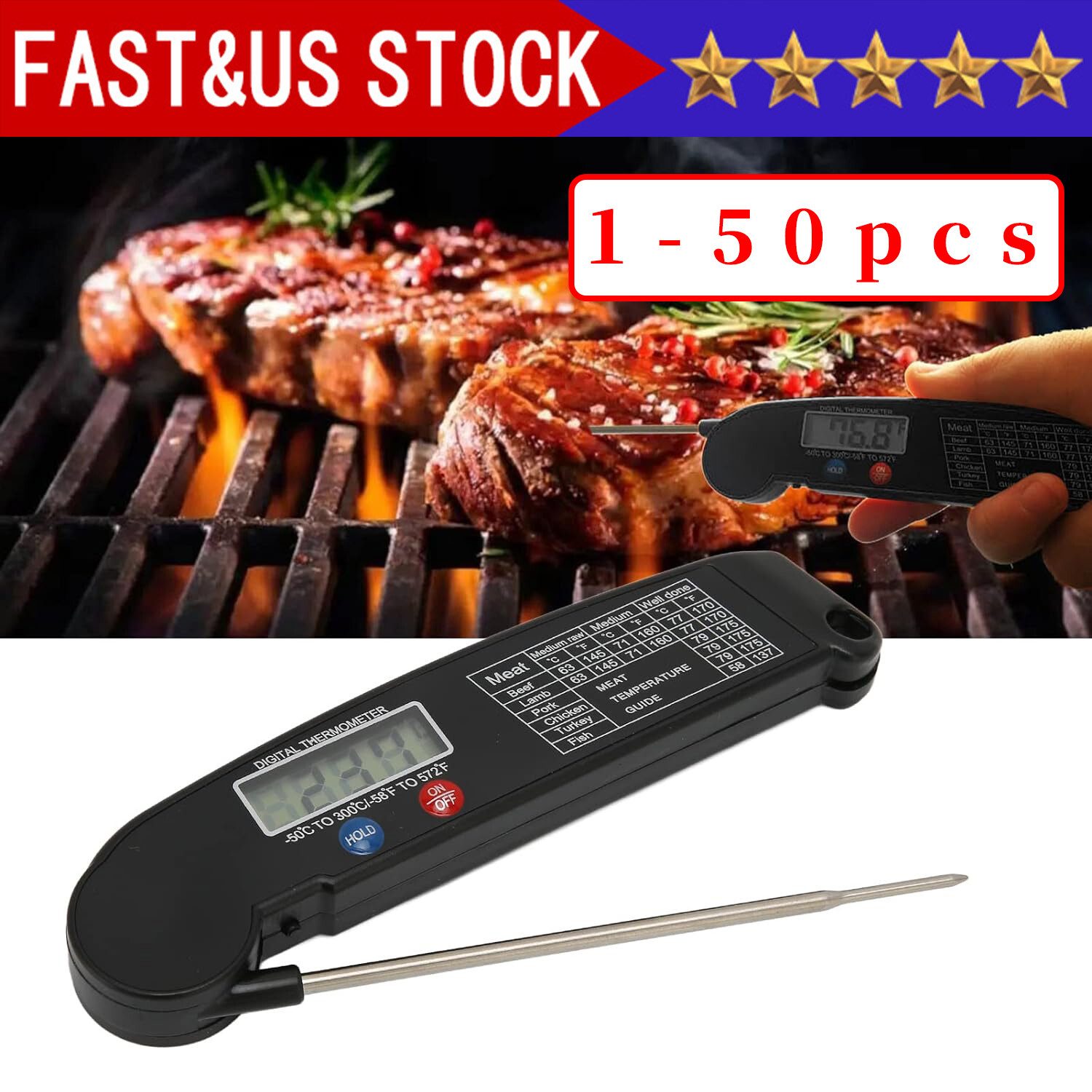

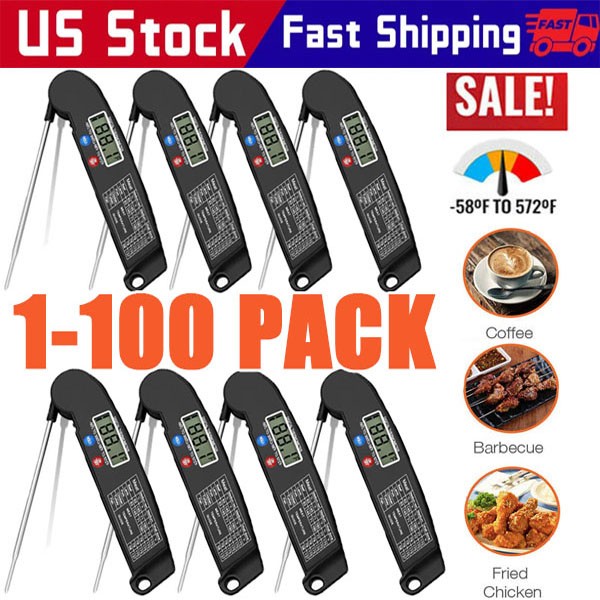
Photos from current listings. Actual item, color, and included accessories may vary.
Instant Read Food Thermometer Buying Guide
An instant read food thermometer is a handheld probe used to verify internal doneness in seconds. The core trade-off is response speed versus durability: thin thermocouple probes read in 1–3 seconds but are fragile and not water-resistant, while thicker thermistor probes take 4–8 seconds but survive splashes and drops. Choose thermocouple with a folding or replaceable probe if you cook daily; choose a sealed thermistor if you grill in rain or wash the unit under a tap.


At a glance
- Category
- BBQ Thermometers & Controllers
- Data updated
- Nov 17, 2026
Current offers
Highlights
- Thermocouple sensors read in 1–3 seconds and are accurate to ±0.5°F; thermistor sensors take 4–8 seconds but tolerate moisture and impact better.
- Probe tip diameter below 1.5 mm reduces juice loss in steaks and burgers but bends easily; 2–3 mm probes are sturdier for daily grill use.
- IP65 or higher sealing means splash-proof and washable; unsealed folding probes must never be submerged or run through a dishwasher.
- Calibration to 32°F (0°C) in an ice bath is the baseline check; a unit that cannot be field-calibrated should be avoided for high-heat cooking.
Best use cases
- Pick a folding thermocouple (1–3 s, replaceable probe) for daily steak, chicken, and smash-burger cooking where speed preserves sear temperature.
- Pick a sealed IP65 thermistor with a 4–8 s read for rain-prone grilling, camper cooking, and households that wash the thermometer under the tap; skip unsealed folding probes in wet conditions.
- Pick a leave-in probe style only if you also need continuous monitoring; for thinning sauces, tempering chocolate, or frying oil, choose a dedicated instant read with a thin tip, not a leave-in unit.
Buying tips
- Response time under 3 seconds matters for thin cuts: a 1 s thermocouple reads a 1-inch pork chop before the surface cools, while a 6 s thermistor will over-read carryover heat.
- Probe diameter below 1.5 mm minimizes juice loss but bends on frozen meat; 2–3 mm probes are the durability tier for daily grilling and should be paired with a replaceable probe design.
- For high-heat searing above 500°F, confirm the probe and cable are rated to at least 572°F (300°C); silicone cables and glass-braid probes are the minimum for grill and smoker use.
- Buy a unit with a field calibration function and a stated accuracy of ±0.5°F (±0.3°C); ±1°F drift is common on uncalibrated budget thermistors after a few months.
Specs
| Sensor Type | Thermocouple 1-3 s vs Thermistor 4-8 s |
|---|---|
| Probe Tip Diameter | 1.0-1.5 mm thin vs 2-3 mm durable |
| Water Resistance | IP65 splash-proof vs unsealed wipe-only |
| Calibration & Accuracy | Field-cal ±0.5°F (±0.3°C) vs fixed |
Related searches
What to check before buying
- Measure your thickest cut: if you regularly cook 2-inch roasts or whole chickens, choose a probe at least 4 inches long to reach the thermal center without burning your hand.
- Confirm your cooking environment: open-flame grills and fryers need a probe rated to 572°F or higher, and outdoor use in rain requires an IP65 or better seal.
- Check battery type and availability: AAA or coin-cell (CR2032) are field-replaceable; built-in rechargeable batteries age out and render the unit disposable.
- Verify the display: backlit LCD or OLED is readable in low light and bright sun alike; a folding probe needs a display that rotates or stays visible when the probe is stowed.
FAQ
Data sources: eBay / Amazon listings and product attribute feeds Data updated Nov 17, 2026.
Some links on this page are affiliate links. If you buy after clicking one, we may earn a commission at no extra cost to you. This does not change which products appear here or their order. Affiliate disclosure.