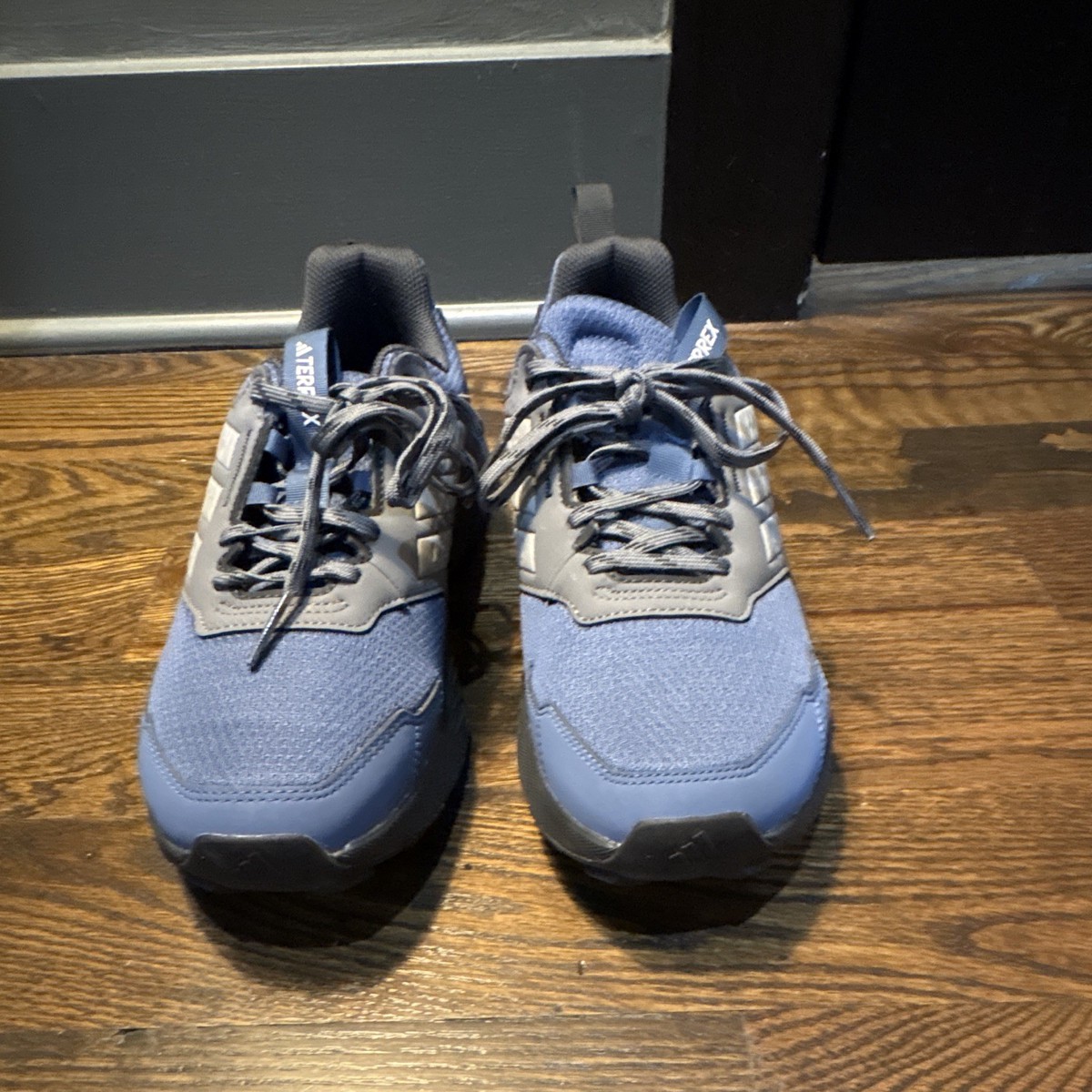

Photos from current listings. Actual item, color, and included accessories may vary.
Adida Trail Running Shoe Buying Guide
Trail running shoes are defined by outsole lug depth, rock-plate or shank protection, and upper drainage rather than by cushioning alone; the trade-off is grip versus weight/ground feel. Adidas trail models split cleanly into the Terrex Speed/Agravic race line (shallow 3-4 mm lugs, fast) and the Terrex Free Hiker/Swift/Tracefinder all-mountain line (deeper 4-6 mm lugs, stiffer plates) — pick the shallow-lug tier only for groomed hardpack, and anything with 4+ mm lugs and a forefoot plate for rocks and wet roots.


At a glance
- Category
- Trail Running Shoes
- Data updated
- Nov 17, 2026
Current offers
Highlights
- Adidas trail outsoles: Continental rubber on premium Terrex (Agravic, Free Hiker 2, Swift R3) vs TRAXION on entry Tracefinder/Terrex Eastrail — Continental compound is softer and grips wet rock better.
- Lug depth tiers: 3 mm on Terrex Speed Ultra race shoes; 4-5 mm on Agravic 3 and Free Hiker 2; 5-6 mm on Tracefinder — under 4 mm is hardpack-only, 5 mm+ for mud and loose gravel.
- Plate architecture: PRO-MODERATOR rock plate in Agravic and Free Hiker vs none in Tracefinder and Eastrail — plated uppers resist sharp stone bruising on technical descents.
- Upper construction: welded TPU overlays with gusseted tongue on race tiers vs stitched synthetic overlays and standard tongue on entry tiers; drainage mesh ports matter for creek crossings.
Best use cases
- Groomed rail-trail and packed dirt 5-10K: pick Terrex Speed Ultra or Agravic with 3-4 mm lugs — skip stiff 5 mm all-mountain plates that feel dead on hardpack.
- Rocky, rooty technical singletrack: pick Agravic 3 or Free Hiker 2 with Continental outsole + rock plate; skip Tracefinder entry shoes whose thinner midsole and lugs underperform on wet roots.
- Wet/muddy UK or PNW trails: pick 5-6 mm lug models (Terrex Swift R3 GTX or Free Hiker 2 GTX) with a GORE-TEX membrane; skip non-membrane race shoes that soak through in 30 minutes.
- Mixed road-to-trail commute: pick a 3-4 mm lug model with a smoother center-outsole strip — skip deep 6 mm mud lugs that chatter and wear fast on asphalt.
Buying tips
- Size up a half size over your road shoe: trail uppers run narrow in the toe box and feet swell on descents — measure heel-to-toe on a Brannock at end of day.
- Match lug depth to terrain, not marketing: 3 mm for hardpack, 4-5 mm all-round, 6 mm for mud — a 6 mm lug on pavement wears flat in under 300 miles.
- For technical descents, require a forefoot rock plate or shank; unplated entry shoes transmit stone bruising through thin EVA at 4+ hour efforts.
- Choose Continental-rubber outsoles if you run wet rock or roots; TRAXION compound is adequate for dry dirt but harder and less grippy when soaked.
Specs
| Outsole Compound | Continental rubber vs TRAXION |
|---|---|
| Lug Depth | 3-6 mm by terrain tier |
| Rock Plate | PRO-MODERATOR vs none |
| Membrane Option | GORE-TEX vs breathable mesh |
Related searches
What to check before buying
- Measure your foot at the end of the day (longest foot, heel to toe) and add 8-10 mm for toe splay and downhill slide — Adidas trail lasts run narrow.
- Confirm your terrain mix: if more than 30% of mileage is pavement, cap lug depth at 4 mm to avoid rapid outsole wear.
- For wet climates, select a GORE-TEX or membrane version and size up another half size to accommodate thicker socks and reduced breathability.
- Check heel-to-toe drop matches your road shoe (typically 6-8 mm on Terrex) to avoid calf/Achilles strain on longer efforts.
FAQ
Data sources: eBay / Amazon listings and product attribute feeds Data updated Nov 17, 2026.
Some links on this page are affiliate links. If you buy after clicking one, we may earn a commission at no extra cost to you. This does not change which products appear here or their order. Affiliate disclosure.