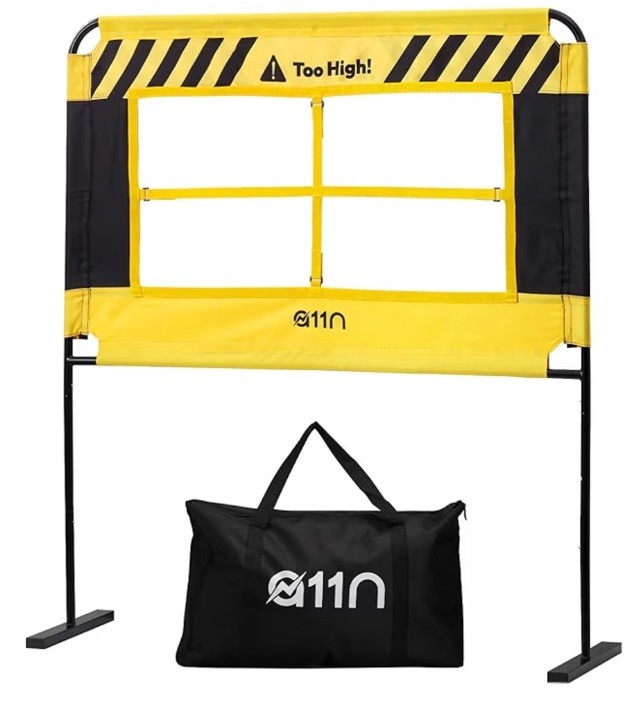

Photos from current listings. Actual item, color, and included accessories may vary.
Pickleball Trainer Buying Guide
A pickleball trainer is a practice aid—rebound net, dink net, or ball-return machine—that lets you rehearse strokes and footwork without a partner. The core trade-off is between a passive rebound/dink net (cheap, portable, but limited to ball-return drills) and an active ball machine (higher cost, consistent feeds, but power and portability constraints). Buy a passive net only if you need dink/volley repetition; buy an active machine only if you need consistent drive and serve practice.


At a glance
- Category
- Pickleball Training & Protection
- Data updated
- Nov 16, 2026
Current offers
Highlights
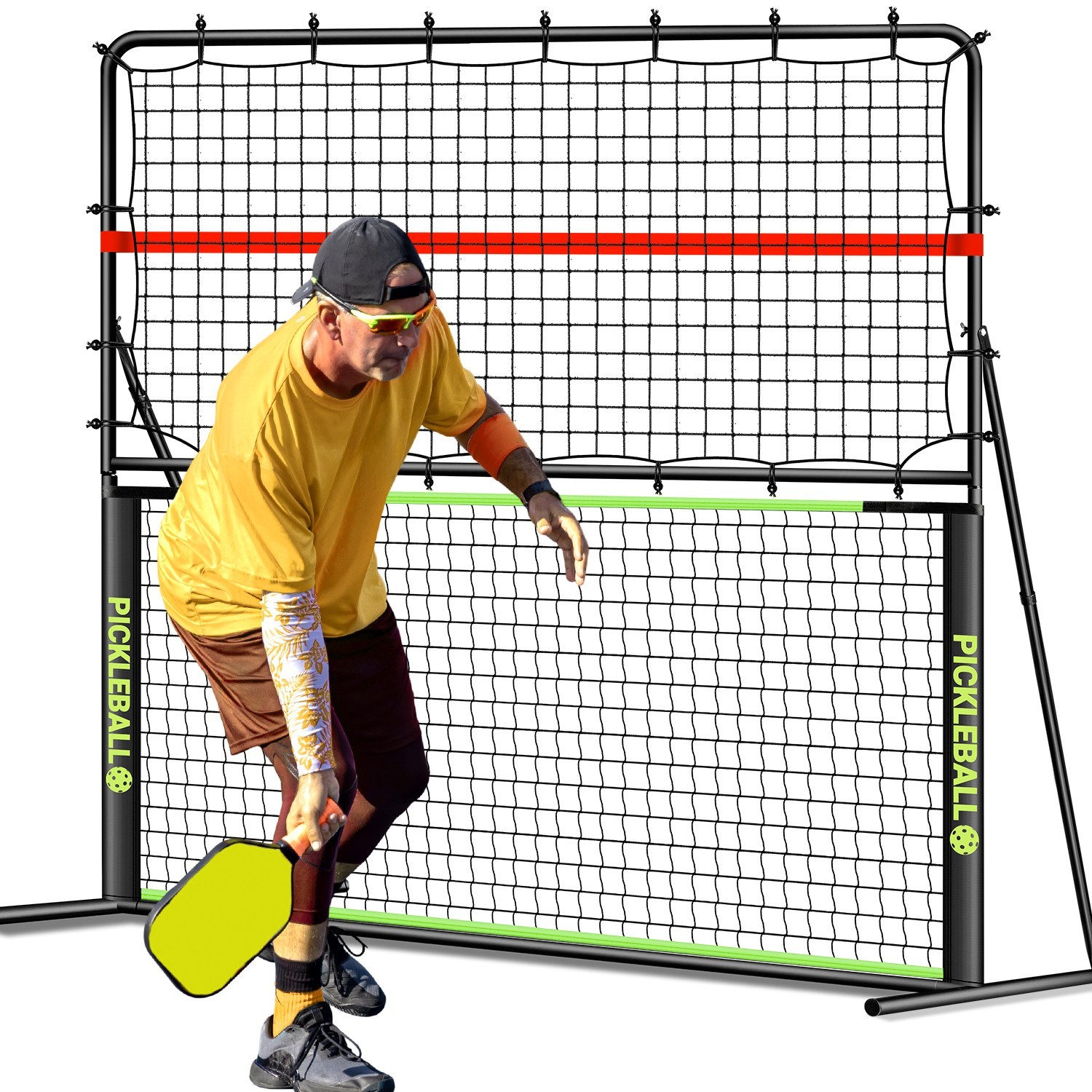
- Rebound nets use angled nylon or polyester mesh to return balls at variable speed; mesh denier and frame gauge determine durability under repeated ball impact.
- Dink nets are low-height portable nets (typically 20-34 inches tall) designed for close-range soft-game drills, not full-court play.
- Ball machines feed 30-100+ balls per hopper at adjustable intervals and spin; AC-powered units deliver consistent velocity, battery units trade power for portability.
- Foldable 2-in-1 designs combine a rebound surface with a practice net, but hinge and joint quality—not fabric—are the first failure point.
Best use cases
- Best fit: solo dink and volley practice in a driveway or small yard—pick a portable dink net with weighted base or ground stakes; skip full-size rebound cages if space is under 10 feet.
- Best fit: backyard stroke repetition with a partner or solo—choose a foldable rebound net with adjustable angle and a frame of at least 1-inch steel or aluminum tubing.
- Best fit: consistent serve and drive practice—choose a ball machine with adjustable feed rate and oscillation; skip battery machines if you need sustained high-velocity feeds.
- Wrong fit: buying a dink net for full-court baseline drilling—it is too short to return drives; wrong fit: buying a cheap rebound net with plastic joints for daily outdoor use.
Buying tips
- Frame tubing: choose 1-inch or thicker steel or aluminum; thin-wall 0.5-inch tubing bends under repeated ball impact and UV exposure.
- Mesh grade: look for UV-treated nylon or polyester mesh with reinforced edge binding; unprotected mesh degrades within one outdoor season.
- Ball machine hopper: 50+ ball capacity reduces reload frequency; feed interval adjustable from 1-10 seconds covers dink-to-drive practice.
- Portability math: a foldable net should collapse to under 40 inches wide and weigh under 20 pounds for one-person carry; heavier units need wheels.
Specs
| Trainer Type | Dink net / Rebound net / Ball machine |
|---|---|
| Frame Material | 1-in+ steel or aluminum tubing |
| Ball Capacity | 30-100+ balls (machines) |
| Power Source | AC corded / Rechargeable battery |
Related searches
What to check before buying
- Measure your practice space: dink nets need at least 10 feet of depth; rebound nets need 15-20 feet for ball return; ball machines need 20+ feet of clear flight path.
- Check surface: weighted bases work on hard courts; ground stakes are required on grass or turf; suction cups only work on smooth indoor floors.
- Confirm power: AC ball machines need a nearby outlet or extension cord; battery units require charging time and lose velocity as battery drains.
- Verify companion parts: ball machines require compatible pickleballs (not all machines feed perforated indoor balls reliably); rebound nets may need anchor weights sold separately.
FAQ
Data sources: eBay / Amazon listings and product attribute feeds Data updated Nov 16, 2026.
Some links on this page are affiliate links. If you buy after clicking one, we may earn a commission at no extra cost to you. This does not change which products appear here or their order. Affiliate disclosure.