Choosing among disc golf drivers usually comes down to one practical question: do you want a disc aimed at distance, or one aimed at shaping fairway lines? The Axiom NEUTRON VANISH and Axiom FISSION RHYTHM answer that question differently. The cleanest way to narrow the choice is to match each disc's stated category and use case to your throw, then use price as a tie-breaker.
Quick verdict
Choose the Axiom NEUTRON VANISH when the priority is an understable distance-driver profile that changes with thrower power and wind. Choose the Axiom FISSION RHYTHM when you want the fairway-driver role described for newer players or line-shaping power arms. The deciding split is the intended use: distance-oriented flight on one side, controllable fairway work on the other.
Price and listed attributes
| Disc | Price | Plastic | Listed flight ratings |
|---|---|---|---|
| Axiom NEUTRON VANISH | $16.95 | Neutron | Speed 11, glide 5, turn -3, fade 2 |
| Axiom FISSION RHYTHM | $21.95 | Fission | Speed 7, glide 5.5, turn -2, fade 1 |
Where each wins
Axiom NEUTRON VANISH
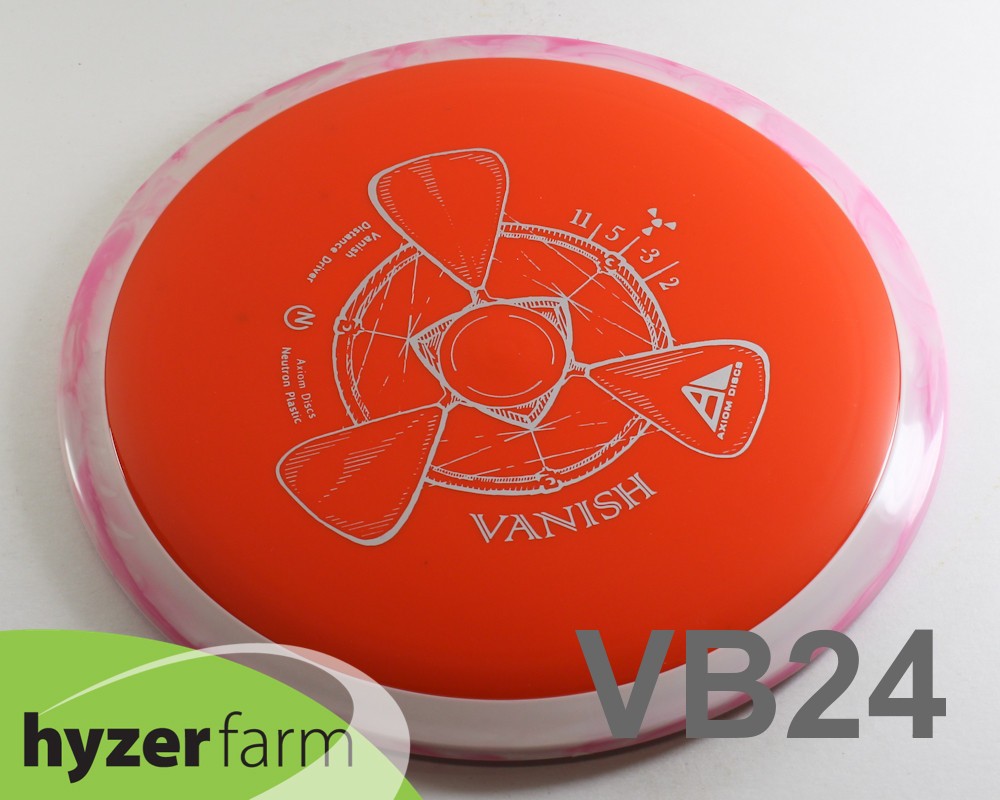
The Vanish is the clearer fit when thrower power and wind are central to the decision. Its description gives different behavior for low power or tailwinds versus high power or mild headwinds, making the understable profile part of the buying logic rather than a vague label. It suits a shopper who wants the distance side of the category and appreciates a flight description that accounts for conditions.
Axiom FISSION RHYTHM
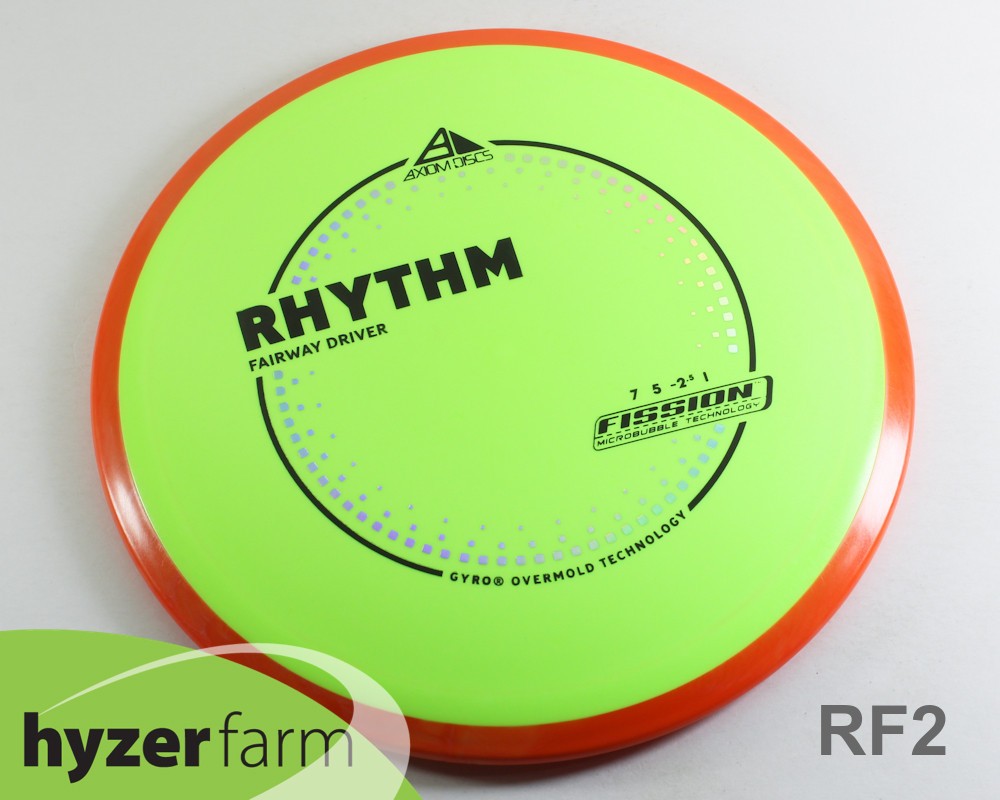
The Rhythm wins for a more specific fairway brief. Its description calls it a first driver for newer players and a line-shaping fairway for power arms, while also describing it as controllable. That gives it two concrete use cases: learning the driver category or shaping lines with a power-oriented throwing style. Fission plastic separates it from the Vanish's Neutron plastic, but the material names alone do not establish a performance winner.
Product notes
Axiom NEUTRON VANISH
The Vanish makes the clearest case for a shopper seeking the distance-driver side of this matchup. Its description calls it an understable distance driver and gives a useful condition-based profile: straight at low power or in tailwinds, then controllably understable at high power or in mild headwinds. That is the concrete reason to choose it when thrower power and wind are central to the decision. The limitation is built into the same wording: the stated flight depends on those conditions rather than promising one fixed result. The disc uses Neutron plastic, carries the VB 24 color pattern, and the title allows weight and color selection. Choose the Vanish for that stated distance role and context-dependent flight.
Axiom FISSION RHYTHM
Rhythm suits a buyer whose priority is a fairway-driver role with a clearly described use case. Its description positions it as a first driver for newer players or as a line-shaping fairway for power arms, and calls it controllable. That makes the reason to choose it concrete: it addresses either an entry point into drivers or a shaping-focused slot. The limitation is its role in this head-to-head; someone specifically seeking a distance driver is looking at a different category. Fission plastic and the RF 2 color pattern define the configuration, while the title also allows weight and color selection. Choose Rhythm when those fairway use cases matter more than a distance-driver brief.
Final choice by use case
- Choose Axiom NEUTRON VANISH for an understable distance-driver brief, particularly when the straight-to-understable description fits the thrower and wind conditions you expect.
- Choose Axiom FISSION RHYTHM for a first-driver use case for newer players or for line-shaping fairway work associated with power arms.
- Use price as the tie-breaker if either role works: the listed prices are $16.95 and $21.95, a $5.00 difference.
The matchup is therefore easy to frame. Vanish is the more direct answer to the distance-driver question, while Rhythm is the more direct answer to fairway control and line shaping. Start with the category and stated use case, then consider the absolute price difference; do not treat the numeric flight ratings as a ranking.