Choosing between a compact charcoal grill and an offset smoker can shape the whole outdoor-cooking routine. When shopping for bbq grills & smokers, the key question is whether you want easier patio movement and a simpler two-level setup, or a dedicated smoker format with separate cooking areas. These two charcoal choices take distinctly different approaches, with a $141.00 listed price spread between them.
Quick verdict
The Barrel Barbecue Charcoal Grill is the more practical pick when mobility, adjustable heat control, and a lower upfront price matter most. The Outdoor Charcoal Grill Offset Smoker makes more sense when its offset-smoker layout and 512-square-inch total cooking figure match the way you plan to cook. Neither is a universal winner: the right choice depends on whether convenience or smoker-style capacity comes first.
Compact comparison
| Decision point | Barrel Barbecue Charcoal Grill | Outdoor Charcoal Grill Offset Smoker |
|---|---|---|
| Listed price | USD 89.99 | USD 230.99 |
| Cooking setup | 2-level charcoal grill; about 337 sq. in. | Offset smoker; 512 sq. in. total, including 366 sq. in. grill area and 146 sq. in. smoker area |
| Practical detail | Two-wheel design, stainless steel handle, four adjustable vents | Assembly required; one-piece smoker chamber |
Where each product wins
- Choose the Barrel Barbecue Charcoal Grill for patio mobility. Its two-wheel design and stainless steel handle directly address moving the grill around a patio, deck, or campground.
- Choose the Outdoor Charcoal Grill Offset Smoker for a dedicated smoker format. The title identifies an offset smoker, and its cooking layout separates a grill area from a smoker area.
- Choose the Barrel for a lower listed spend. Its USD 89.99 price is $141.00 below the Outdoor model's USD 230.99 price.
- Choose the Outdoor when assembly is acceptable. Assembly is explicitly required, so it suits shoppers comfortable with setup before cooking.
Product notes
Barrel Barbecue Charcoal Grill
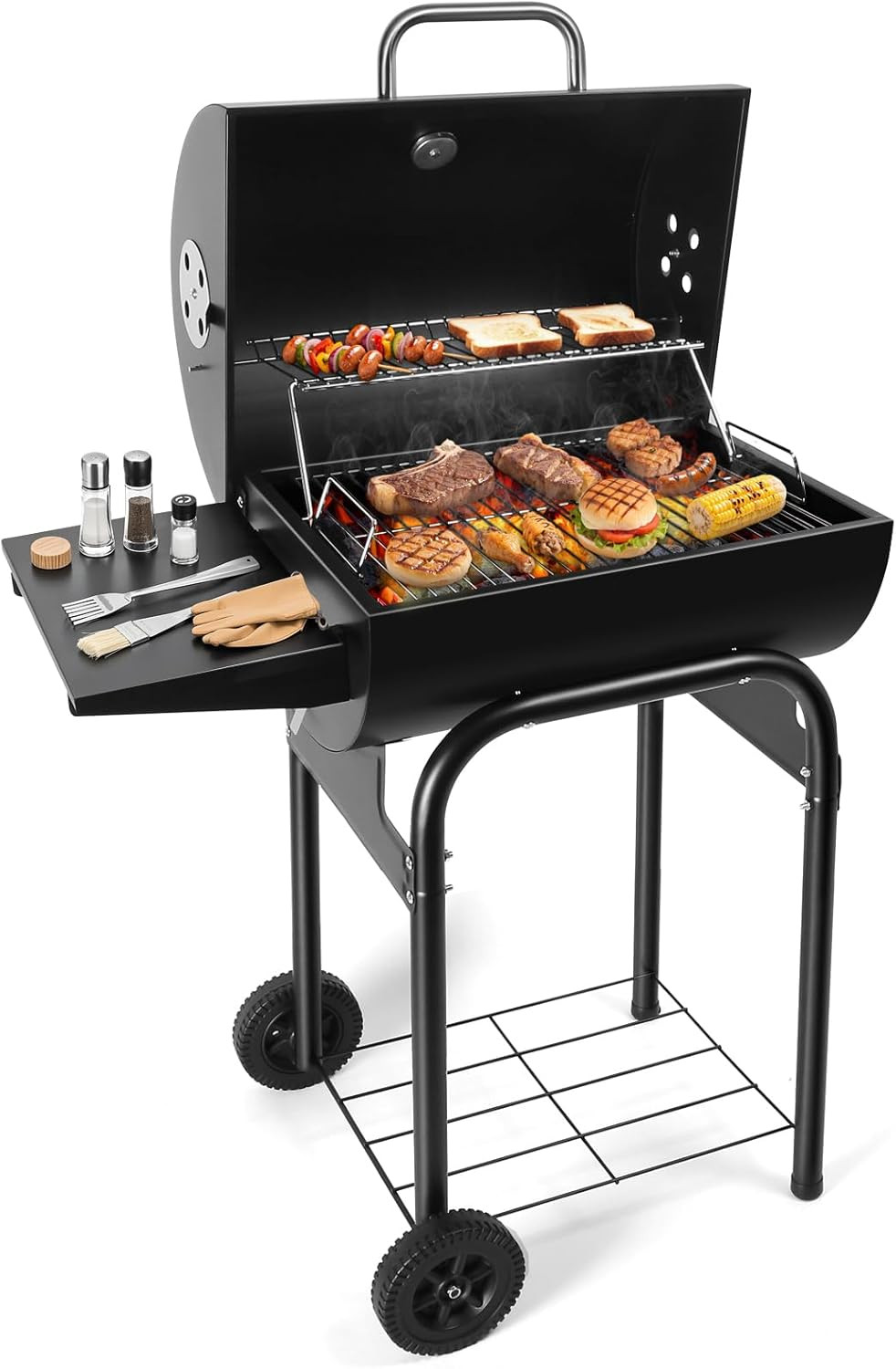
The Barrel Barbecue Charcoal Grill stands out for features that make outdoor cooking easier to reposition: a two-wheel design, stainless steel handle, and charcoal operation. Its 2-level grill configuration also gives the setup a distinct organization, while the listed four adjustable vents provide a concrete heat-control feature. At USD 89.99, it is the clear choice for shoppers who want to keep the listed purchase price lower while retaining a roughly 337-square-inch cooking surface. The limitation is capacity relative to the competing model: its listed cooking area is about 337 square inches, compared with the other grill's 512-square-inch total. If your priority is a larger listed cooking figure or a separate offset-smoking layout, the Barrel's more compact format may not be the best match.
Outdoor Charcoal Grill Offset Smoker
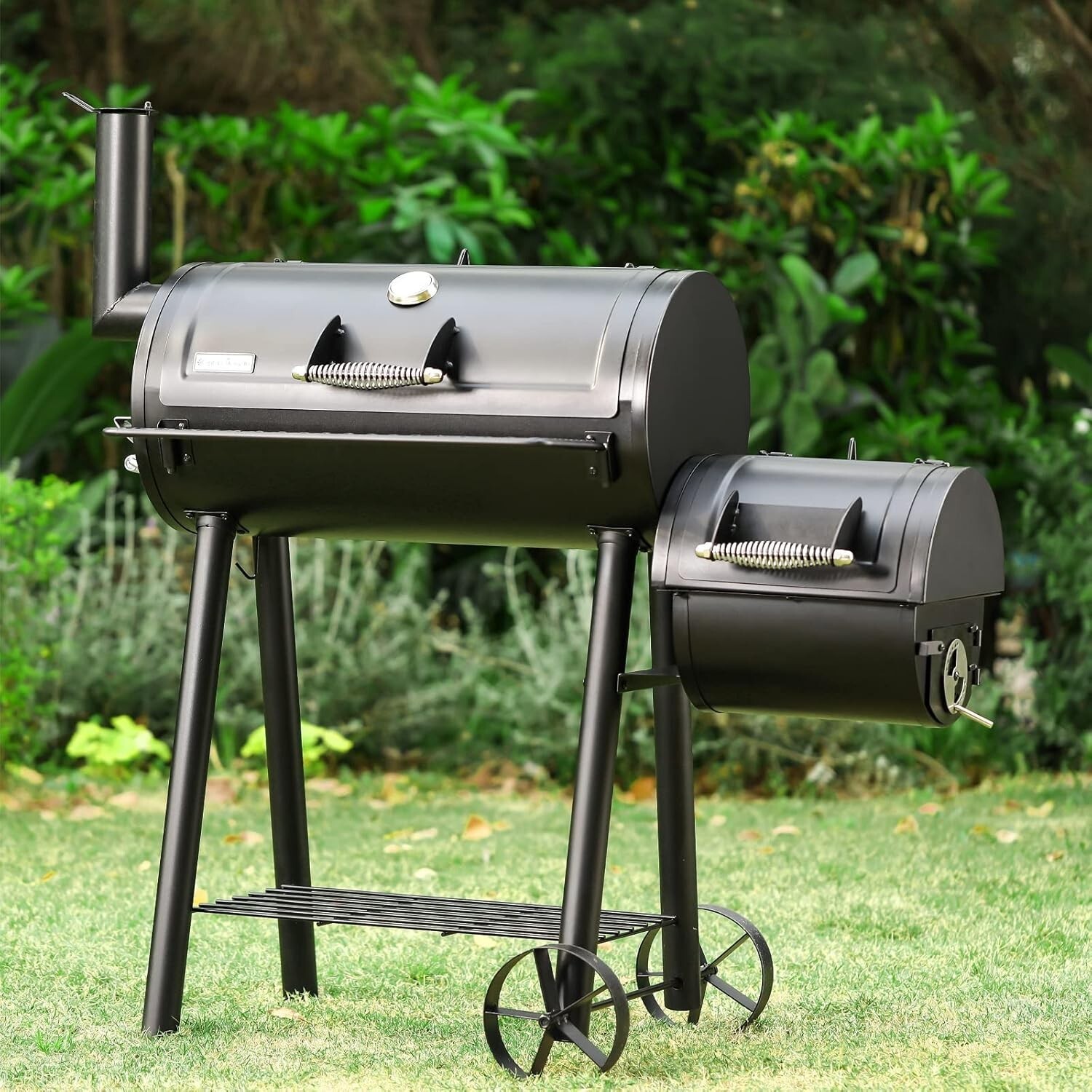
The Outdoor Charcoal Grill Offset Smoker is aimed at a different cooking plan. Its title explicitly combines an offset smoker with a charcoal barbecue grill, and the cooking breakdown lists 366 square inches for the grill area plus 146 square inches for the smoker area. That separated layout is the main reason to choose it when smoker-style cooking is central to your plans. The one-piece smoker chamber is another concrete design detail. The trade-off is its USD 230.99 listed price, which is $141.00 above the Barrel model, along with the stated assembly requirement. Shoppers seeking quick repositioning should also note that the listed details emphasize assembly and the offset layout rather than the Barrel's two-wheel mobility features.
Final choice by use case
For a patio grill that is easier to move and costs less on the listed comparison, pick the Barrel Barbecue Charcoal Grill. Its two-wheel design, stainless steel handle, four adjustable vents, and 2-level configuration make the decision straightforward for mobile backyard cooking.
For charcoal cooking built around an offset smoker, choose the Outdoor Charcoal Grill Offset Smoker. Its 512-square-inch total and separate grill-and-smoker areas justify the higher listed price when that layout is the deciding feature. If both mobility and smoker separation matter, prioritize the feature you will use most often rather than treating the shared charcoal fuel type as a differentiator.