Choosing among birding field guides & calls starts with a simple tension: do you need help identifying a bird in Texas, or a place to record what happened after you spot it? A bird identification field guide and a bird watching journal serve different moments, so the right choice depends more on purpose than on title alone.
Quick verdict
Choose Birds of Texas Field Guide if your priority is a regional bird-watching reference. Its title names Texas and the *Bird Identification Guides* series, making its role clear.
Choose Bird Watching Journal if you want a structured birding field notebook. Its description includes prompts for date, time, location, habitat, weather, temperature, species, bird count, and appearance.
Compact comparison
| Choice | Listed price | Format or focus | Best match |
|---|---|---|---|
| Birds of Texas Field Guide | $5.48 | Paperback; Good condition; Texas identification focus | Identifying birds in Texas |
| Bird Watching Journal | $20.78 | New, English journal; 111 pages | Recording observations in detail |
The listed-price spread is $15.30, with the journal at the higher end. That difference makes the purpose of each book especially important: one is an identification reference, while the other is designed around documenting encounters.
Where each product wins
Birds of Texas Field Guide
This guide wins for identification-first outings. "Birds of Texas Field Guide" is a direct regional focus, and the title also identifies the book as part of the *Bird Identification Guides* series. The listed author is Stan Tekiela, adding a specific author reference for shoppers who want a named guide rather than a blank place to write.
Bird Watching Journal
The journal wins for observation tracking. The description organizes an encounter around when and where it happened, the habitat and weather, the bird's species and number, and visible details such as beak, tail, head feathers, and legs. That structure suits someone who wants each sighting to become a repeatable written record.
Product notes
Birds of Texas Field Guide (Bird Identification Guides)
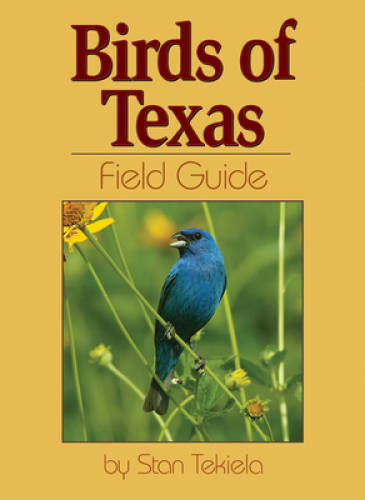
If your main question in the field is "What bird is that?", this is the clearer match. The title combines a Texas focus with "Field Guide," while the attributes identify Stan Tekiela and the *Bird Identification Guides* series. At $5.48, it keeps the purchase centered on an identification reference rather than a record-keeping book. The limitation is equally concrete: it is listed as a paperback in Good condition and described as used, so its physical condition is part of the trade-off. Its stated focus is identification, not documenting each encounter. Pick it when regional bird knowledge matters more than having dedicated prompts for notes.
Bird Watching Journal: A Birders and Nature Lovers Log Book
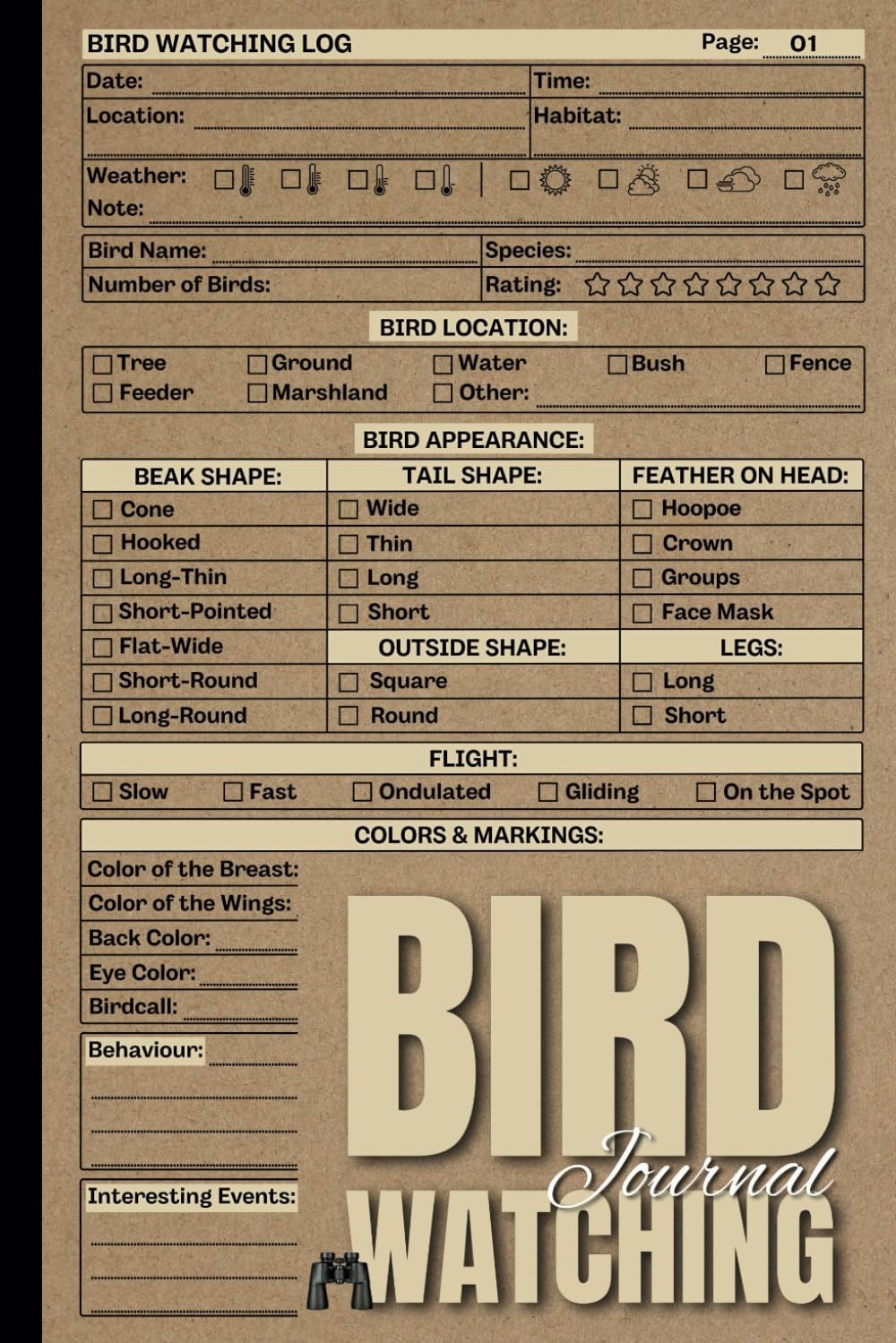
Choose this journal when recording is as important as observing. Its description lays out prompts for date, time, location, habitat, weather, and temperature, followed by bird name, species, number of birds, and rating. Appearance prompts include beak and tail shape, the outside shape, head feathers, and legs. At $20.78, it is $15.30 higher than the Texas guide, so the extra cost is tied to a dedicated logbook format rather than regional identification. Its limitation is focus: the title and description present a journal for documenting encounters, not a Texas species reference. The listed English format measures 6 x 0.25 x 9 inches and contains 111 pages.
Final choice by use case
- For identifying Texas birds: Choose Birds of Texas Field Guide, because its title directly combines the state focus with bird-identification guide language.
- For recording dates, habitats, weather, and sightings: Choose Bird Watching Journal, whose description is organized around those observation fields.
- For the lower listed price: Choose Birds of Texas Field Guide.
- For a dedicated writing companion: Choose Bird Watching Journal, especially if documenting appearance details is part of the outing.
The short answer is identification versus logging: the Texas guide is the focused reference, while the journal is the structured record.