Choosing equestrian saddles & pads is less about picking the most elaborate description and more about matching discipline, seat dimensions, tree wording, condition, and price. These four choices divide into three jumping or close-contact saddles and one dressage saddle, so the first decision is whether your riding centers on jumping or flatwork. From there, use the raw fit descriptors without treating a larger or smaller number as automatically better.
Quick take
- For jumping and close-contact riding: The Cliff Barnsby, Butet, and English jumping saddle all use jumping-focused language, but they differ in seat, tree wording, condition, and construction details.
- For dressage and flatwork: The Leather 18-inch Dressage Saddle is the clearest discipline match, with a double-flap feature and dressage model designation.
- For fit screening: Compare the 16.5-inch, 16-inch, and 18-inch seat references alongside the medium-tree and standard-tree wording. These are fit descriptors, not performance rankings.
- For condition: The Cliff Barnsby and Butet are used, while the English jumping saddle and Leather Dressage Saddle are new.
Listed-price comparison
| Saddle | Listed price | Price bar |
|---|---|---|
| Cliff Barnsby English Close Contact Jump Saddle 16.5 Medium Tree | $350.00 | |
| Butet Close Contact Jump Saddle 16\" Seat Standard Tree | $1,000.00 | |
| PREMIUM DARK BROWN ENGLISH JUMPING SADDLE CLOSE CONTACT 16 INCH HORSE TACK | $479.48 | |
| Leather 18\" Dressage Saddle English Horse Saddle Black Tan Premium Equestrian | $289.00 |
The four prices have an absolute spread of $711. The bars show relative price placement within this comparison only; they do not indicate fit, comfort, or jumping or dressage performance.
Decision matrix
- Discipline: Start with the saddle type named in the title. Cliff Barnsby, Butet, and the English Jumping Saddle are centered on jumping or close contact; the Leather Dressage Saddle is centered on dressage, flatwork, and training.
- Seat and tree screen: Cliff Barnsby lists a 16.5-inch seat with a medium tree. Butet lists a 16-inch seat with a standard tree. The English jumping saddle names a 16-inch seat, while the dressage saddle names an 18-inch seat. Treat those numbers as neutral fit dimensions.
- Condition screen: Used condition applies to Cliff Barnsby and Butet. New condition applies to the English jumping saddle and the Leather Dressage Saddle. This separates buying priorities without declaring one condition superior.
- Construction cues: Suede trim distinguishes Cliff Barnsby; Butet includes a cover and has reflocked knee rolls; the English jumping saddle describes a padded seat, supportive knee rolls, and a forward flap; the dressage saddle lists a double flap. Genuine leather is shared by the last two saddles, so it is not a tie-breaker between them.
Product notes
Cliff Barnsby English Close Contact Jump Saddle 16.5 Medium Tree
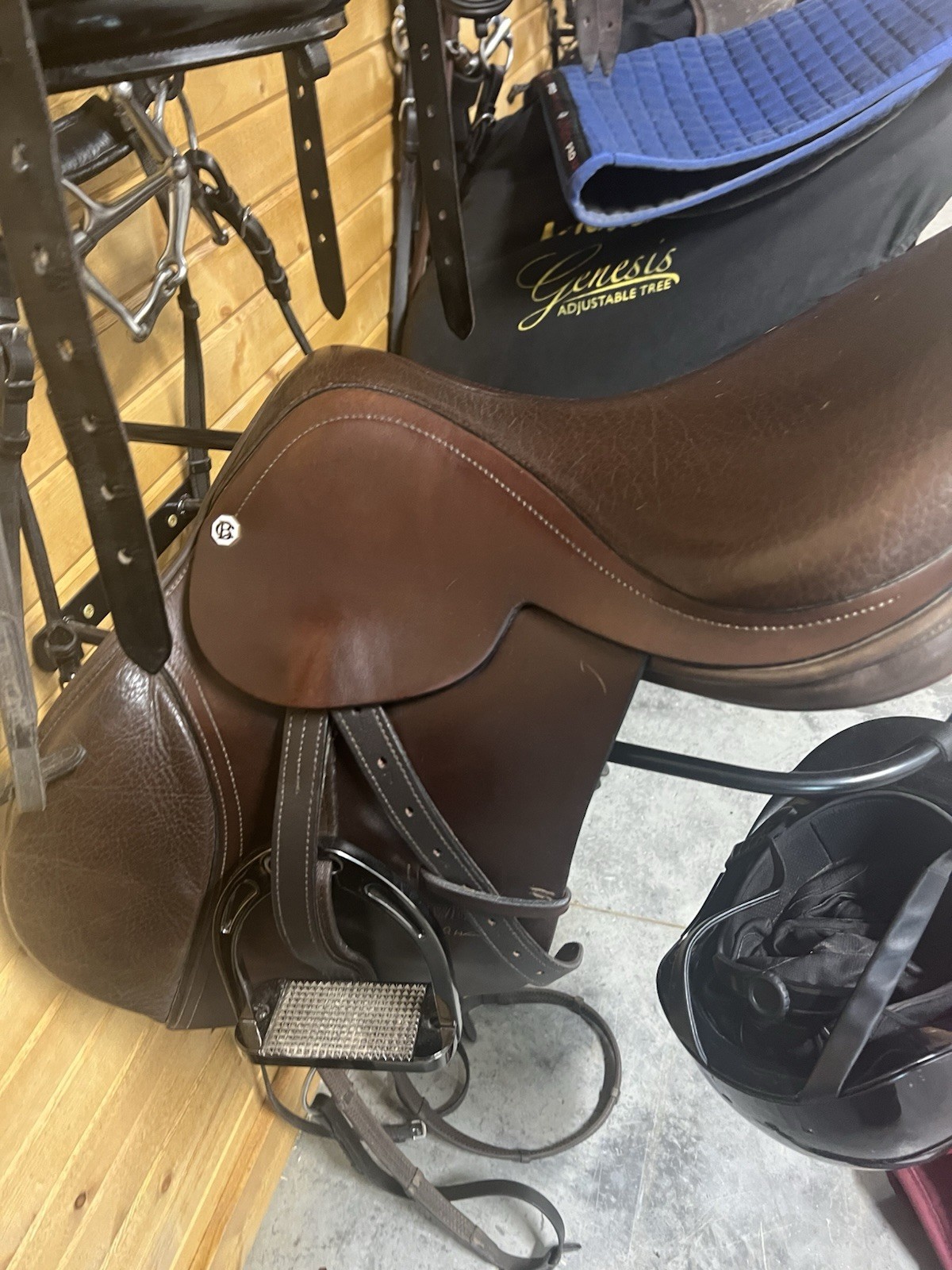
The Cliff Barnsby is the clearest fit-led jumping candidate for a rider whose horse suits its 16.5-inch medium-tree setup. The brown used saddle also has suede trim, while its flat-backed fit description makes it relevant when that shape matches the horse. That gives it a concrete reason to choose when those fit cues line up. The limitation is equally specific: a more muscled shoulder later caused pinching, so the medium-tree label should not be treated as a universal answer. Its close-contact jump focus also makes it less direct for a rider shopping specifically for dressage.
Butet Close Contact Jump Saddle 16" Seat Standard Tree
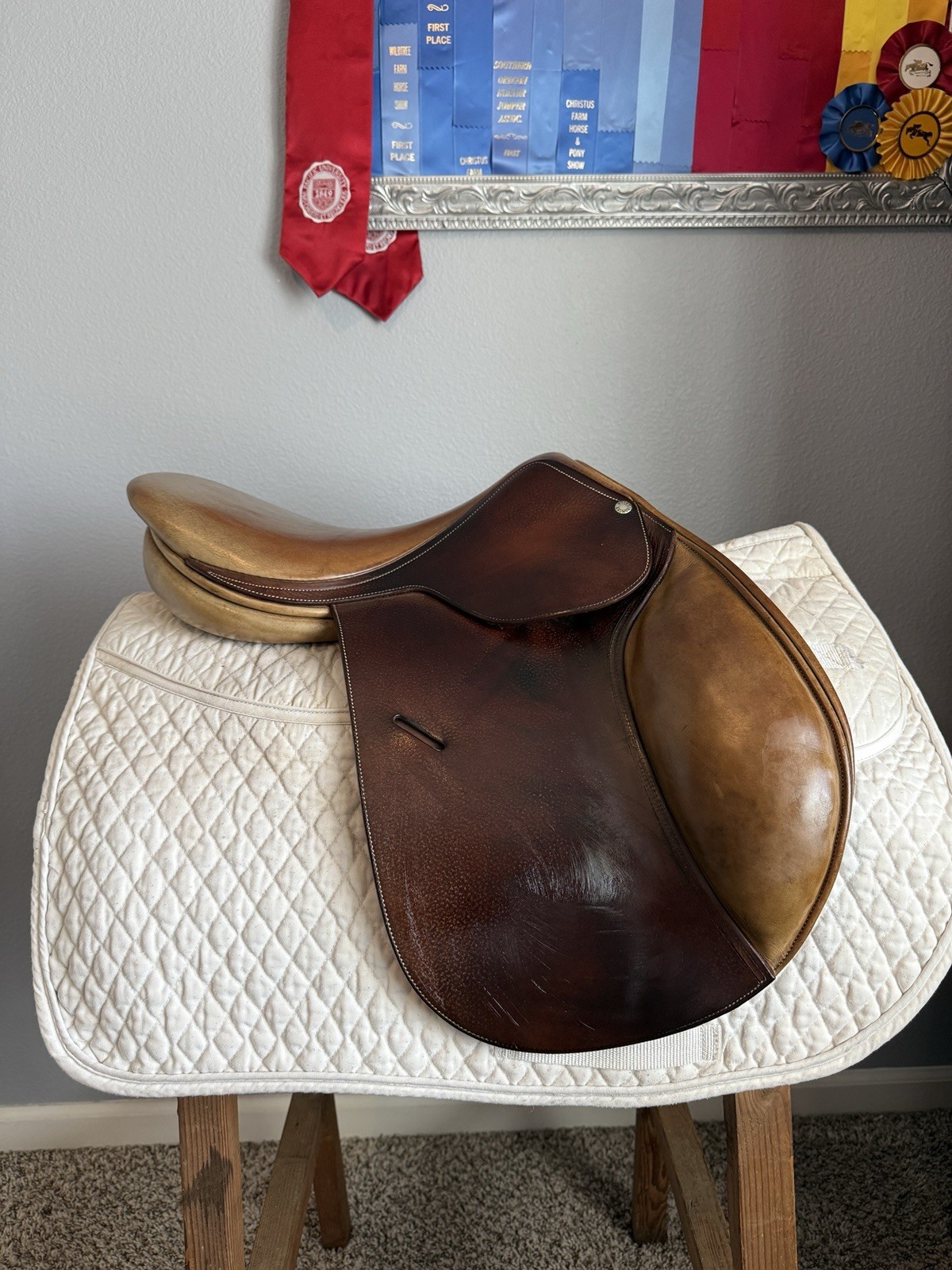
Butet's close-contact jump title, brown finish, standard-tree wording, cover, and cared-for leather give jumping riders several concrete details to weigh. The reflocked knee rolls add another specific feature for a shopper considering this used saddle. The trade-off is condition: it is marked used, so it suits someone comfortable with a pre-owned saddle rather than someone who has made new condition the first filter. Its close-contact format is a reason to consider it for jumping, while the 16-inch seat reference keeps the choice tied to the rider's own fit requirements rather than making it a general-purpose recommendation.
PREMIUM DARK BROWN ENGLISH JUMPING SADDLE CLOSE CONTACT 16 INCH HORSE TACK
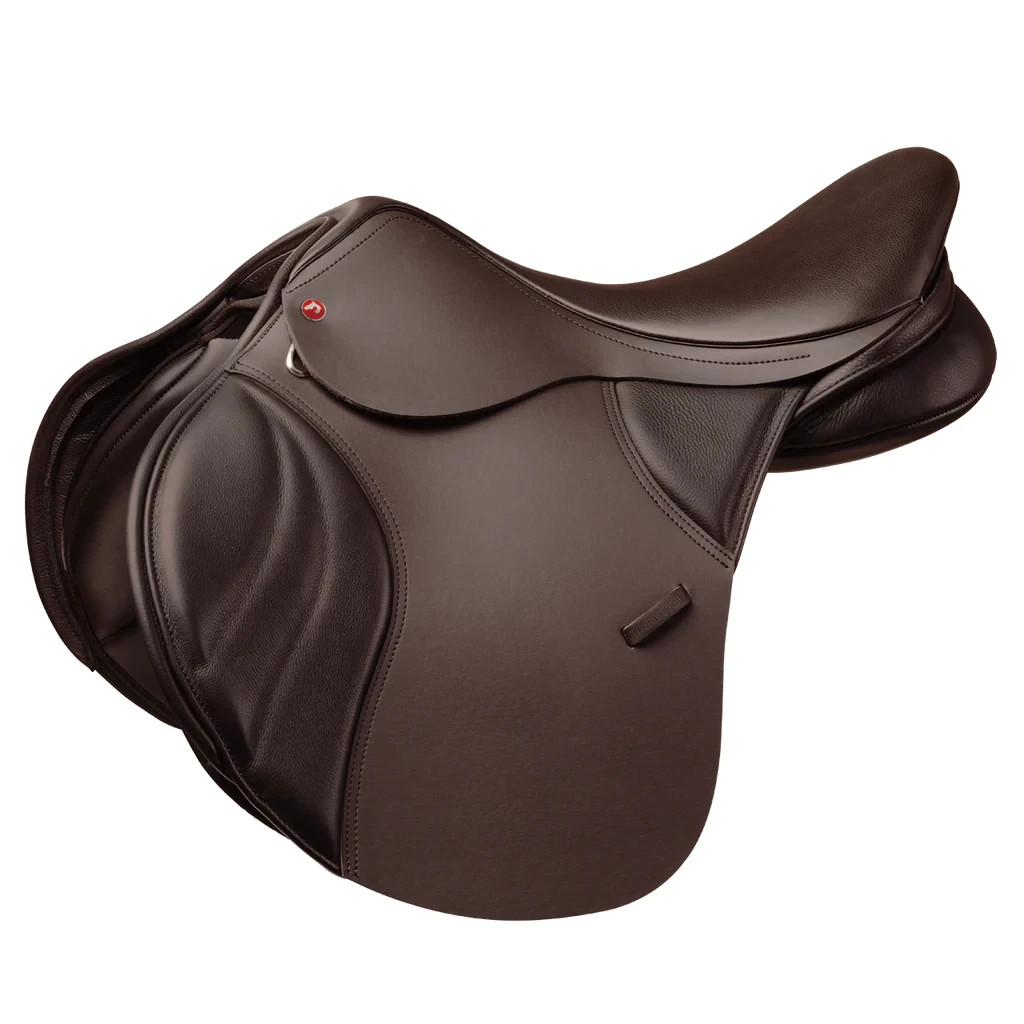
This English jumping saddle is aimed squarely at close-contact use, with new condition, genuine leather construction, a padded seat, supportive knee rolls, and forward-flap wording. Those details make it a natural starting point for a rider who wants a new saddle with a jumping-specific design rather than a used purchase. Its limitation is the 16-inch seat named in the title: riders seeking the 18-inch dressage size in this comparison will need a different fit and discipline. Focus on the jumping format, model T-131, and the construction details rather than the conflicting color descriptions.
Leather 18" Dressage Saddle English Horse Saddle Black Tan Premium Equestrian
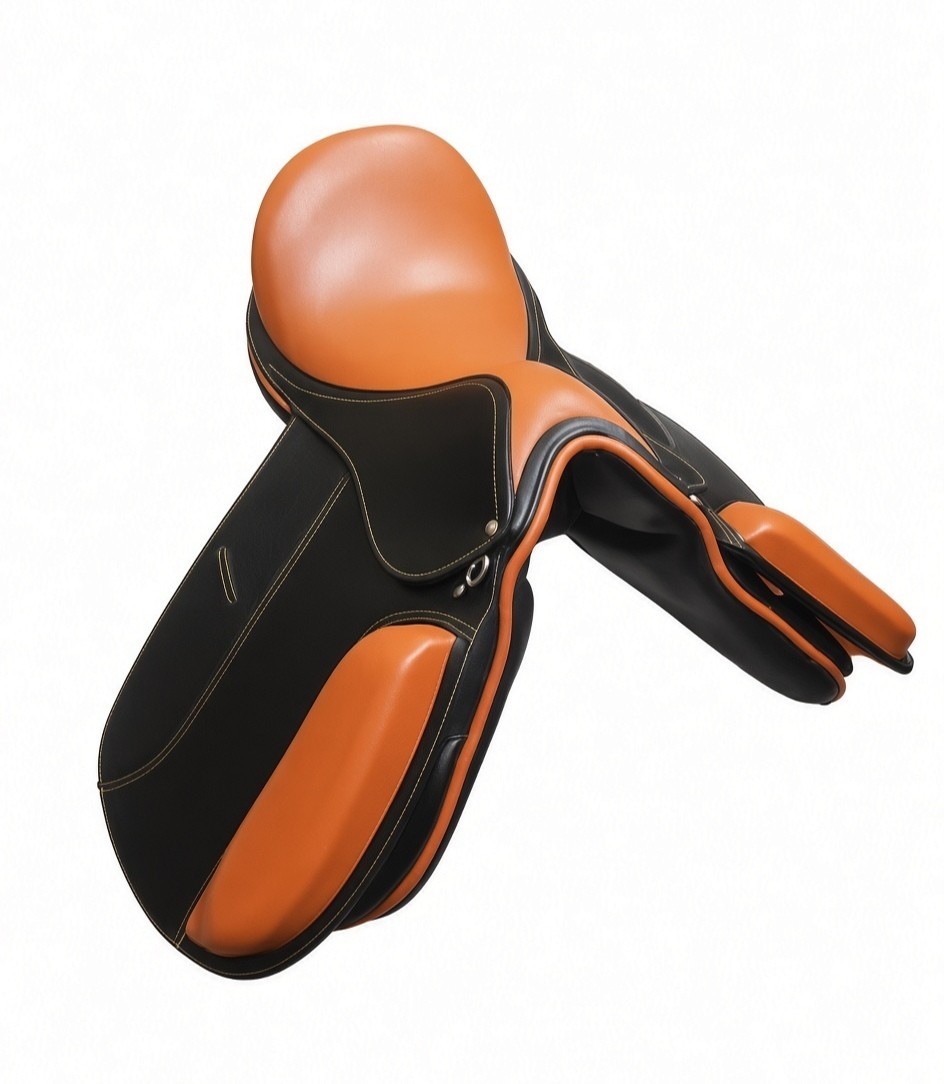
For dressage, flatwork, and training, the Leather 18-inch Dressage Saddle is the most directly aligned title in the group. It combines new condition, genuine leather construction, supportive seat and knee-roll language, and a double-flap feature. Those details give dressage riders a clear discipline-led reason to choose it. The limitation is use case: its dressage model and flatwork focus do not speak as directly to someone shopping for a jumping or close-contact saddle. Choose it when dressage is the priority, not simply because the 18-inch seat is the largest listed dimension.
Final recommendation by use case
- Jumping with a medium-tree fit brief: Choose the Cliff Barnsby because its title gives the most specific 16.5-inch and medium-tree combination, alongside a close-contact jumping format.
- Used close-contact jumping: Choose the Butet when its cover, reflocked knee rolls, and standard-tree wording fit the buying brief.
- New jumping saddle: Choose the English Jumping Saddle when new condition, genuine leather, a padded seat, and forward-flap design are the priorities.
- Dressage or flatwork: Choose the Leather Dressage Saddle because its title and model identify the discipline directly, with double-flap construction as an additional cue.
The practical shortlist is therefore discipline first, then seat and tree wording, then condition and construction. That approach keeps the $289-to-$1,000 spread in perspective without confusing price with fit.