Choosing running watches & heart-rate gear starts with a simple tension: do you need run data on your wrist, or audio in your ears? The Garmin Forerunner 165 and Mpow Swimming Headphone Wireless Open Earphone are built for different jobs, so they are not interchangeable. Garmin targets GPS tracking and training metrics, while Mpow focuses on listening during running, cycling, and swimming.
Quick verdict
Choose the Garmin Forerunner 165 if a GPS running watch with wrist-based heart-rate monitoring, pacing tools, and workout guidance is the priority. Choose the Mpow open-ear earphone if you mainly want wireless listening, MP3 playback, and a running-oriented headphone format. The Garmin is the training instrument; Mpow is the audio companion.
At-a-glance comparison
| Pick | Listed price | Format | Deciding detail |
|---|---|---|---|
| Garmin Forerunner 165 | USD 199.99 | GPS running watch | Wrist; GPS and heart rate monitor |
| Mpow Open-Ear Earphone | USD 36.09 | Wireless open-ear earphone | Bluetooth V5.4; built-in 32GB memory |
Where each one wins
Garmin wins for structured run tracking
The Garmin's GPS and wrist heart-rate monitor directly match runners who want route and biometric information during a session. Its HRV Status overnight trend, Running Power, PacePro grade-adjusted pacing, daily suggested workouts, and Garmin Coach adaptive training plans add useful structure for planned training. Morning Report, Body Battery, nap detection, and 25+ sport profiles broaden its role beyond a basic running heart rate monitor. If your shopping list says marathon training watch, the Garmin's training-focused features are the closer fit.
Mpow wins for flexible listening
Mpow's open-ear format is aimed at running and cycling, with bone conduction, a built-in microphone, wireless connectivity, and waterproofing listed among its features. Bluetooth and MP3 modes give it two listening routes, and the built-in memory supports stored playback. The swimming angle is particularly specific: Bluetooth does not work underwater, so the MP3 mode is the relevant choice in the water. That makes Mpow the clearer match when music or audiobooks matter more than wrist-based training data.
Product notes
Garmin Forerunner 165
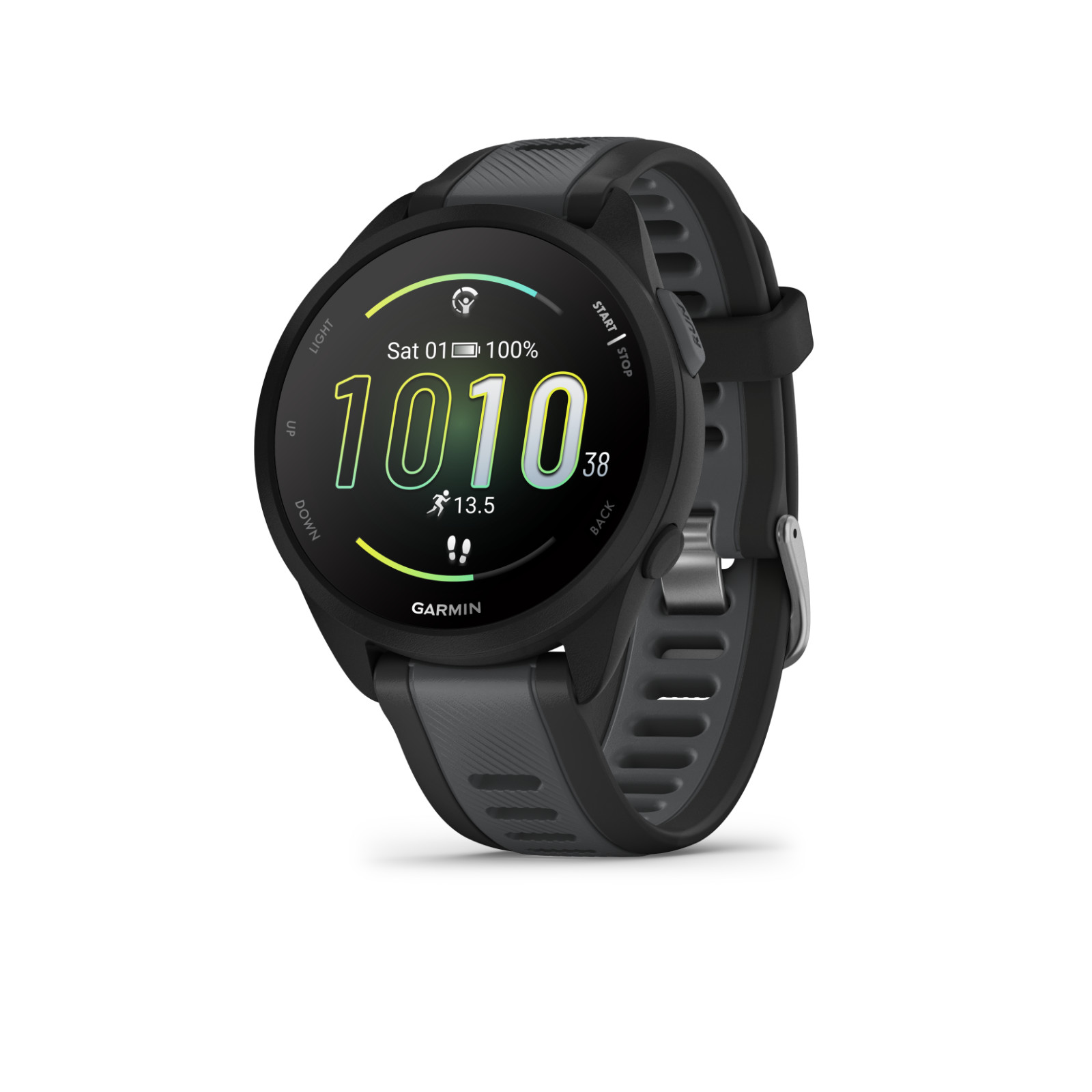
Garmin Forerunner 165 is the watch-focused choice for runners who want a broader wrist device. Its 1.2-inch AMOLED touchscreen, Garmin Pay, barometric altimeter, multi-GNSS support, and 25+ sport profiles cover more than a single run metric. Those functions give you route, elevation, payment, and sport-tracking tools in one watch format. The concrete limitation is its listed USD 199.99 price, which places it in a very different purchase decision from the Mpow. It also serves a different role: the title centers on a GPS running smartwatch, while the competing title centers on open-ear audio. Pick Garmin when the watch itself is the main tool you want during training.
Mpow Open-Ear Running Headphones
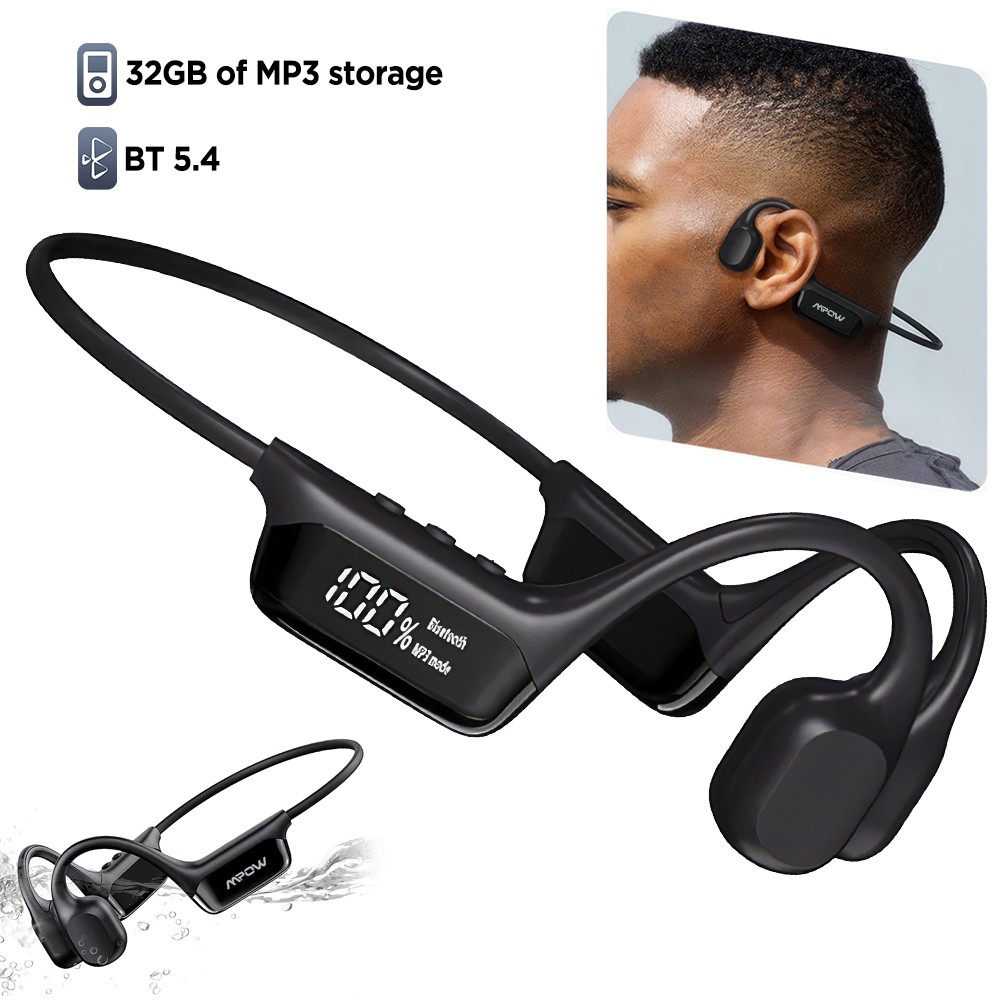
Mpow Open-Ear Running Headphones make sense when listening is the main task. The open-ear and bone-conduction design, built-in microphone, and waterproof feature give the headphone a clear running, cycling, and swimming identity. Its magnetic charging method and listed 2H charging time define the charging setup, while 230mAH is the stated battery capacity. The important limitation is specific: Bluetooth does not work underwater, so swimming playback depends on MP3 mode instead. At USD 36.09, it is a focused audio purchase rather than a watch-centered training tool. Choose Mpow when running or cycling audio is the priority and stored playback matters.
Final choice by use case
- For GPS route tracking, wrist heart-rate monitoring, HRV status, and guided pacing: choose the Garmin Forerunner 165.
- For running headphones, cycling audio, or MP3 playback while swimming: choose the Mpow Swimming Headphone Wireless Open Earphone Bluetooth 5.4 for Running Cycling.
- For a single training watch: Garmin is the direct fit because its title and features center on GPS running and wrist metrics.
- For dedicated listening gear: Mpow is the direct fit because its title centers on an open-ear earphone for running and cycling.