Choosing running watches & heart-rate gear often comes down to a practical trade-off: do you want an explicitly described wrist-based heart-rate monitor at a lower listed price, or a new, boxed Garmin Forerunner 55 with a defined accessory package? The Garmin Forerunner 235 and Garmin Forerunner 55 both carry the GPS running-watch designation, but their strongest reasons to choose them are different.
Quick verdict
Choose the Garmin Forerunner 235 when explicit wrist-based heart-rate monitoring and the lower listed price matter most. Choose the Garmin Forerunner 55 when you want a new, boxed watch with a charge cable and manual, and accept the $100.55 price spread. In short, the 235 is the function-led choice, while the 55 puts more emphasis on its package and physical configuration.
At a glance
| Watch | Listed price | Main listed focus | Configuration |
|---|---|---|---|
| Garmin Forerunner 235 | $59.40 | GPS; distance; calorie monitor | Black/Frost Blue; wrist use |
| Garmin Forerunner 55 | $159.95 | GPS running watch; fitness tracker | Whitestone; 42 mm case; white silicone band |
Where each product wins
Garmin Forerunner 235 wins for feature-led fitness tracking. Its attributes identify GPS, distance traveled, calorie monitoring, and an alarm, with Android and iOS named as supported operating systems. The up-to-seven-day battery figure also gives runners a concrete endurance reference when comparing everyday use.
Garmin Forerunner 55 wins for a clearly defined physical setup. The listed 42 mm case, white case color, white silicone band, and plastic case material make its configuration straightforward to understand. It also carries the fitness-tracker feature description, so it suits shoppers who want that specific combination rather than the broader feature list of the 235.
Product notes
Garmin Forerunner 235 GPS Running Watch
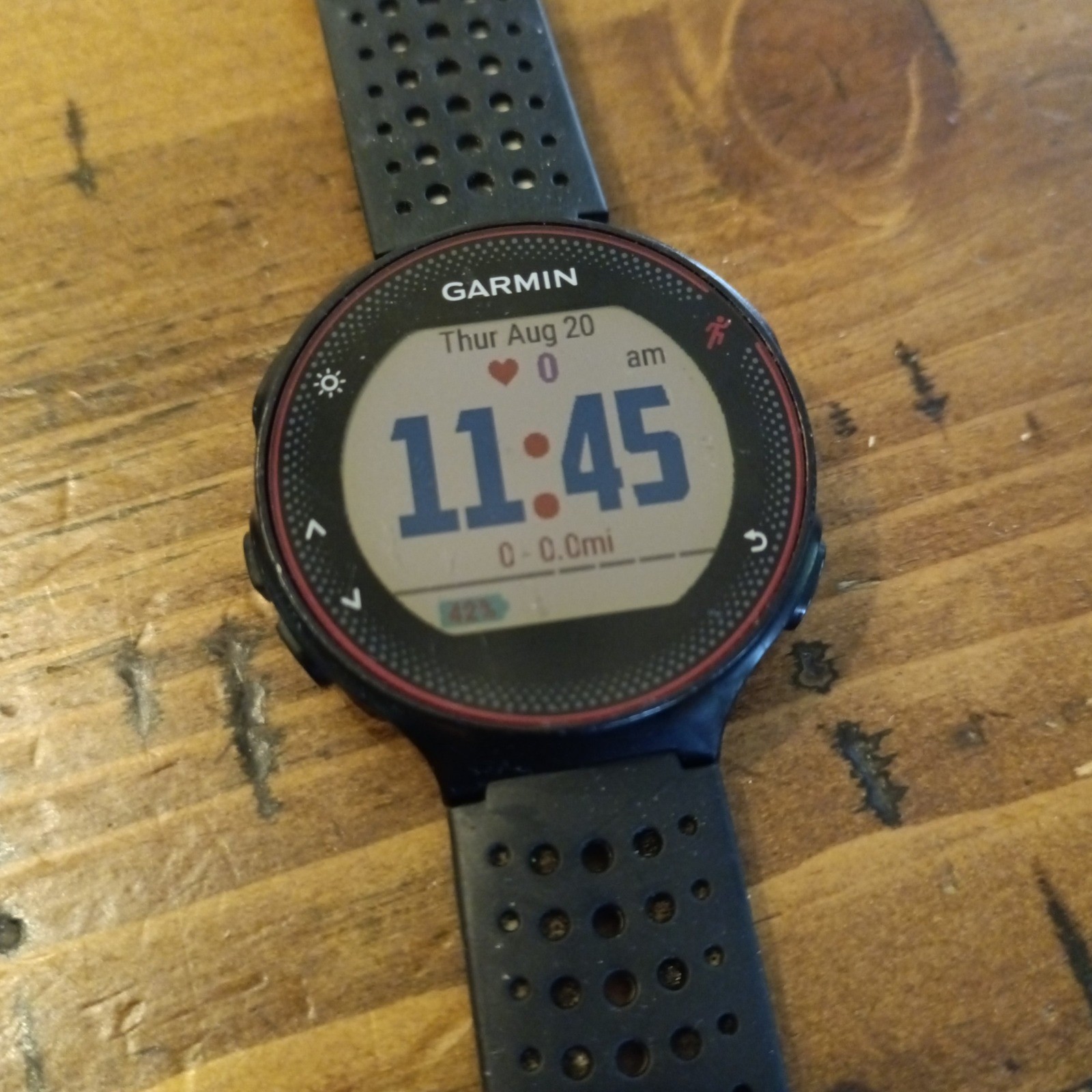
Garmin Forerunner 235 is a strong fit for runners who want a GPS watch with a concrete battery reference: up to seven days is specified, and the watch is designed for wrist use. The Black/Frost Blue color and plastic housing also make the listed configuration easy to identify. Its main limitation is the used presentation. Light wear is visible on the strap and bezel, and the charging cable is not included. Those details matter if a shopper wants an immediately complete setup rather than a watch that requires an additional charging accessory. The $59.40 price gives this model a distinct place in the comparison, but the condition and missing cable should be weighed alongside its GPS and fitness-tracking features.
Garmin Forerunner 55 GPS Running Watch
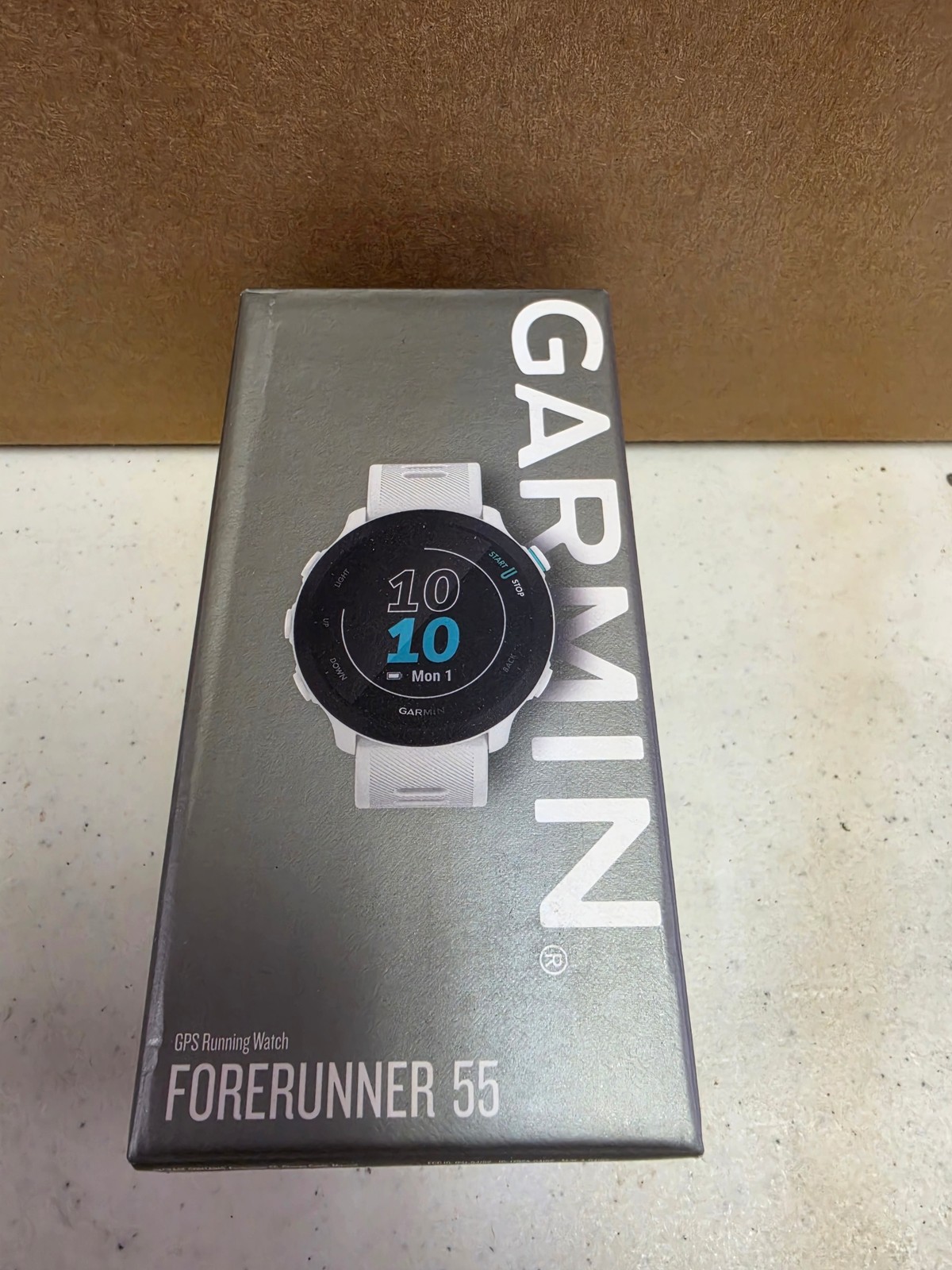
Garmin Forerunner 55 makes its case through the package details and physical setup. The description says the package includes the Forerunner 55, a charge cable, and a manual according to the box label. Its 42 mm case, white plastic case, and white silicone band further define what the shopper is choosing. That combination is a concrete reason to select it when a new boxed presentation and included accessories are important. The limitation is the price position: the $100.55 spread above the Forerunner 235 is substantial in this head-to-head. Its named focus is a GPS running watch and fitness tracker, so the decision rests on that package, configuration, and price rather than on assuming an unstated feature.
Final choice by use case
- For wrist-based heart-rate training: Choose the Garmin Forerunner 235 because its title and description explicitly identify a wrist-based heart-rate monitor alongside GPS. Accept the used condition and missing charging cable as the trade-offs.
- For a new packaged watch: Choose the Garmin Forerunner 55. Its new-with-box designation, white 42 mm configuration, and described cable-and-manual package make the purchase case clear.
- If the decision is close: Let the deciding factor be whether the 235's explicitly described heart-rate function or the 55's boxed presentation matters more. The listed price spread makes that trade-off especially important.