Choosing among bbq thermometers & controllers comes down to how you cook: do you want a display with built-in timing and alarms beside the grill, or several probes you can monitor remotely? TempPro TP17W and the Digital Meat Thermometer with 4 Probes are close in listed price, but they serve noticeably different cooking workflows.
Quick verdict
With only a $1 difference between the listed prices, feature fit matters more than cost. TempPro TP17W suits cooks who want onboard control at the grill, while Digital Meat Thermometer with 4 Probes suits anyone who wants to monitor multiple temperatures from farther away. The better choice depends on whether your priority is a timer-led display or wireless monitoring with several probe positions.
Side-by-side comparison
| Product | Listed price | Probe setup |
|---|---|---|
| TempPro TP17W Digital Meat Thermometer | USD 24.99 | Dual probe with a 40-inch stainless steel mesh cable |
| Digital Meat Thermometer with 4 Probes | USD 23.99 | Four probes with wireless monitoring up to 328 feet |
The price spread is $1, so the main decision is the hardware and control format rather than a meaningful price divide.
Where each one wins
TempPro TP17W
TempPro TP17W wins for cooks who want the display itself to help manage a session. Its countdown and count-up timer, backlight, and programmable high/low alarm create a control-centered setup for an oven, grill, or smoker. The dual-probe arrangement is suited to comparing two pieces of meat or two sections of one larger piece at the same time. Choose it when a built-in timer and easy low-light reading matter more than monitoring from a distance.
Digital Meat Thermometer with 4 Probes
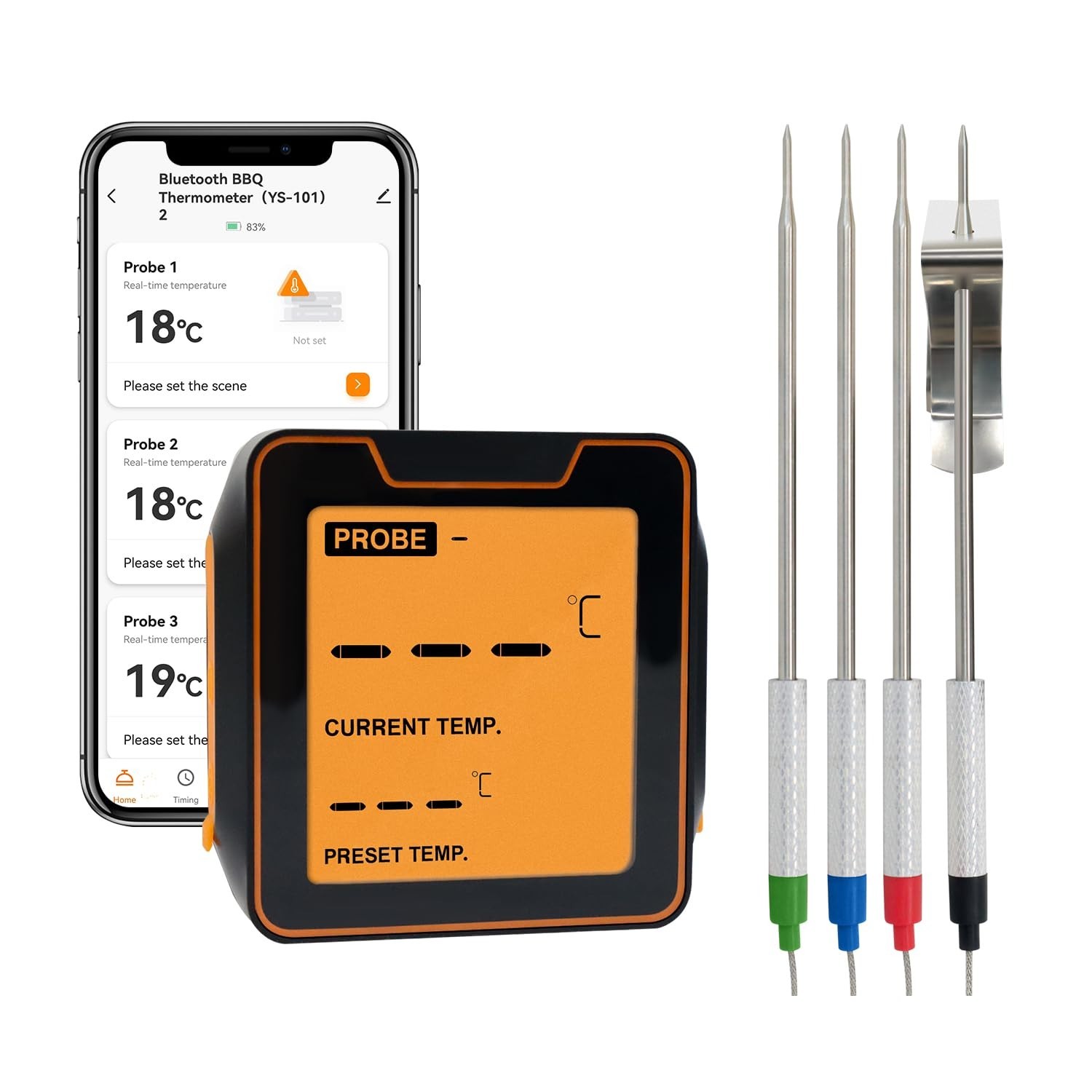
Digital Meat Thermometer with 4 Probes wins when several cooking points need attention at once. The four-probe setup is designed for monitoring multiple food temperatures, while wireless monitoring reaches up to 328 feet and can send an instant App notification when a preset value is exceeded. That combination fits smoking, grilling, or oven cooking when staying beside the cooker is inconvenient. Choose it when remote alerts and broader simultaneous monitoring take priority over TempPro's onboard control style.
Product notes
TempPro TP17W Digital Meat Thermometer
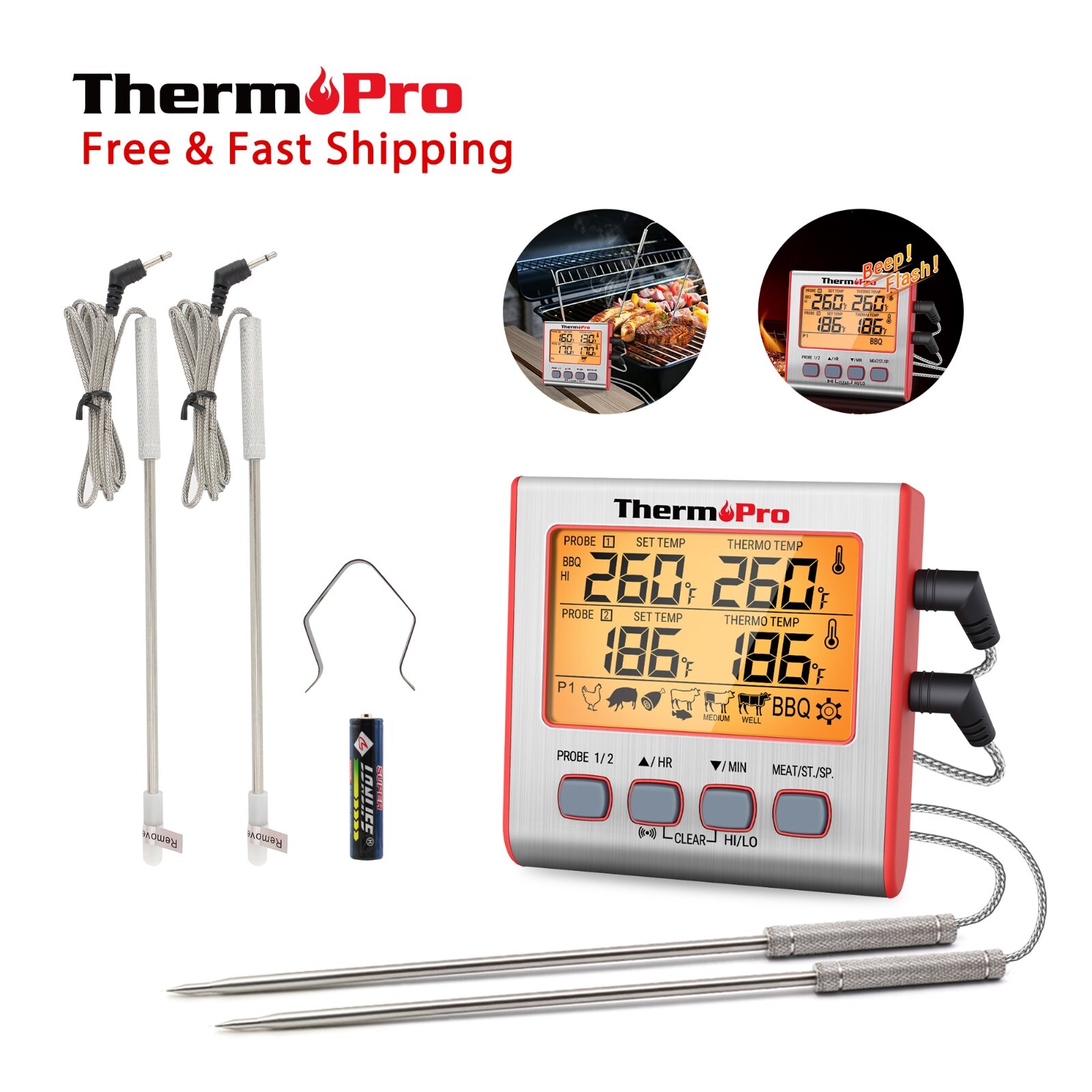
TempPro TP17W makes sense for a cook who wants active control at the grill rather than simply adding more probe positions. Its programmable high/low alarm can alert when a temperature moves outside a selected range, and the 40-inch stainless steel mesh cable gives the dual-probe setup a clearly stated reach. The original-package bundle and included AAA battery are also specified. The practical limitation is the dual-probe format: someone tracking four separate foods at once will have fewer probe positions than the four-probe wireless thermometer. At USD 24.99, TempPro is also the higher-priced choice by $1, so its timer, alarm, and display controls need to be the features that matter most.
Digital Meat Thermometer with 4 Probes
Digital Meat Thermometer with 4 Probes is the more suitable match for cooks managing several foods at once. Its four probes can monitor multiple temperatures, and the thermometer is described as producing readings in 2 to 3 seconds. Wireless communication can reach up to 328 feet, with notifications sent to both the App and the thermometer when a preset temperature is exceeded. The trade-off is a wireless- and app-centered workflow rather than a dedicated timer-led display. Shoppers specifically seeking an onboard countdown or count-up timer should instead consider TempPro TP17W. For remote alerts and multiple cooking points, however, the four-probe format is the clearest reason to choose it.
Final choice by use case
- Choose TempPro TP17W for grill or smoker sessions where the countdown/count-up timer, backlight, programmable high/low alarm, and dual-probe format fit the routine.
- Choose Digital Meat Thermometer with 4 Probes for several foods, remote monitoring, and App notifications from up to 328 feet.
- If the prices decide it, the $1 spread favors the four-probe thermometer, but both choices are close enough that the cooking workflow should lead.