Choosing an RV solar, batteries & power setup means deciding between a compact station for electronics and a larger unit for broader RV backup. The USE 240W Power Station emphasizes portability, USB-C charging, and a simple backup format. The BLUETTI Elite 200 V2 emphasizes a 2,073.6Wh reserve, 2,600W output, and RV-oriented use. The right call depends on whether your priority is easy storage and electronics charging or a station with broader stated capacity and control features.
Quick verdict
Pick the USE 240W Power Station when the brief is portable electronics backup: its compact format, integrated stand, and dual-way 100W USB-C PD keep the feature set focused. Pick the BLUETTI Elite 200 V2 when RV use, multiple devices, and expanded charging control matter: it supports up to nine devices, AC, car, and solar charging, plus WiFi/Bluetooth app control. The USE is the simpler match; BLUETTI is the broader-capacity choice.
Comparison at a glance
| Comparison point | USE 240W Power Station | BLUETTI Elite 200 V2 |
|---|---|---|
| Listed price | USD $56.99 | USD $899.00 |
| Stated capacity and output | 153.6Wh; 240W | 2,073.6Wh; 2,600W |
| Connections or device support | Five output ports; USB Type A and Type C | Up to nine devices simultaneously |
| Charging and controls | Three charging methods; dual-way 100W PD | AC wall, car, and solar charging; WiFi/Bluetooth app control |
| Stated applications | Backup power, camping/hiking, electronics | Backup power, camping/hiking, recreational vehicle (RV) |
Where each product wins
USE 240W Power Station wins on compact simplicity. Its smaller-size format, carry-on storage, integrated stand, and USB-C charging suit a portable electronics kit or a campsite table. The 100W PD output is a concrete advantage for USB-C charging needs, while the five output ports keep the setup straightforward.
BLUETTI Elite 200 V2 wins on scale and control. Its high-capacity positioning, explicit RV application, support for up to nine devices, and multiple charging modes make it the more relevant choice for a broader power brief. WiFi/Bluetooth app control adds a different kind of convenience than the USE station's connector-focused design. Both products reference LiFePO₄ battery technology, so that shared point does not separate them.
Product notes
USE 240W Power Station
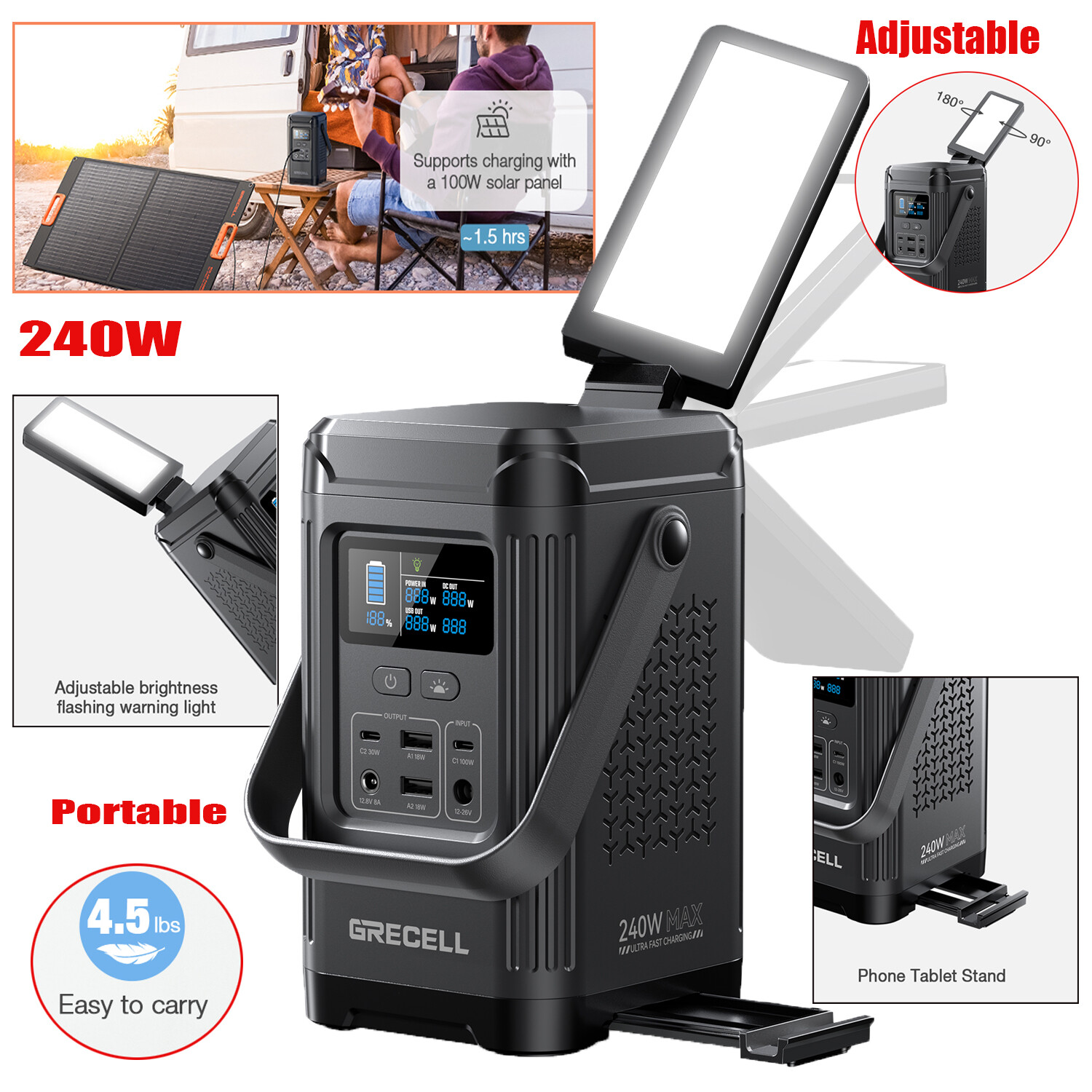
The USE 240W Power Station is a sensible fit for a compact electronics backup kit. Its compact format, carry-on storage, integrated stand, and dual-way 100W USB-C PD make the setup easy to frame around personal electronics, camping, or mobile-office use. Five output ports and USB Type A and Type C connectors provide clear connection choices. The solar-generator and RV-backup wording also aligns with occasional outdoor power needs. The limitation is scale: the stated 153.6Wh capacity and 240W rating suit a focused power brief rather than the larger capacity category represented by BLUETTI. Its stated condition is used, another concrete consideration before choosing it.
BLUETTI Elite 200 V2
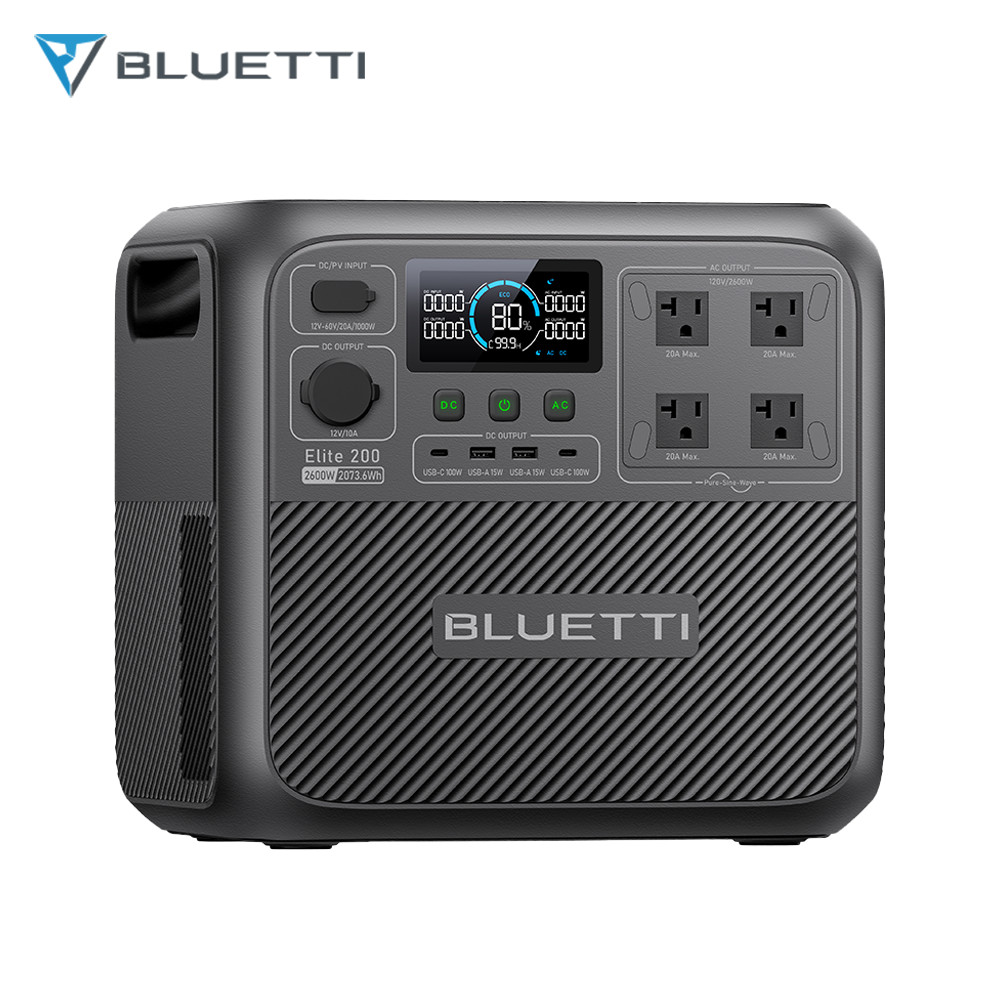
BLUETTI Elite 200 V2 is the stronger match for an RV setup that needs a substantial energy reserve and simultaneous device support. It specifies 2,073.6Wh capacity, 2,600W output, and support for up to nine devices at once. AC wall, car, and solar charging give it several input paths, while WiFi/Bluetooth app control provides a connected operating option. AI-BMS monitoring and automotive-grade battery cells are also named features, although they do not replace matching the station to your intended loads. The clear limitation is its higher listed price: shoppers who only need compact USB-C backup may not use the added capacity and controls.
Final choice by use case
For a compact RV backup centered on electronics, USB-A/USB-C ports, and easy storage, choose the USE 240W Power Station. For an RV setup built around broader backup and multiple simultaneous devices, choose BLUETTI Elite 200 V2. The listed prices-USD $56.99 and USD $899.00-make budget a central separator, so the BLUETTI makes sense when its expanded power and control features match the job rather than simply adding capacity you will not use.