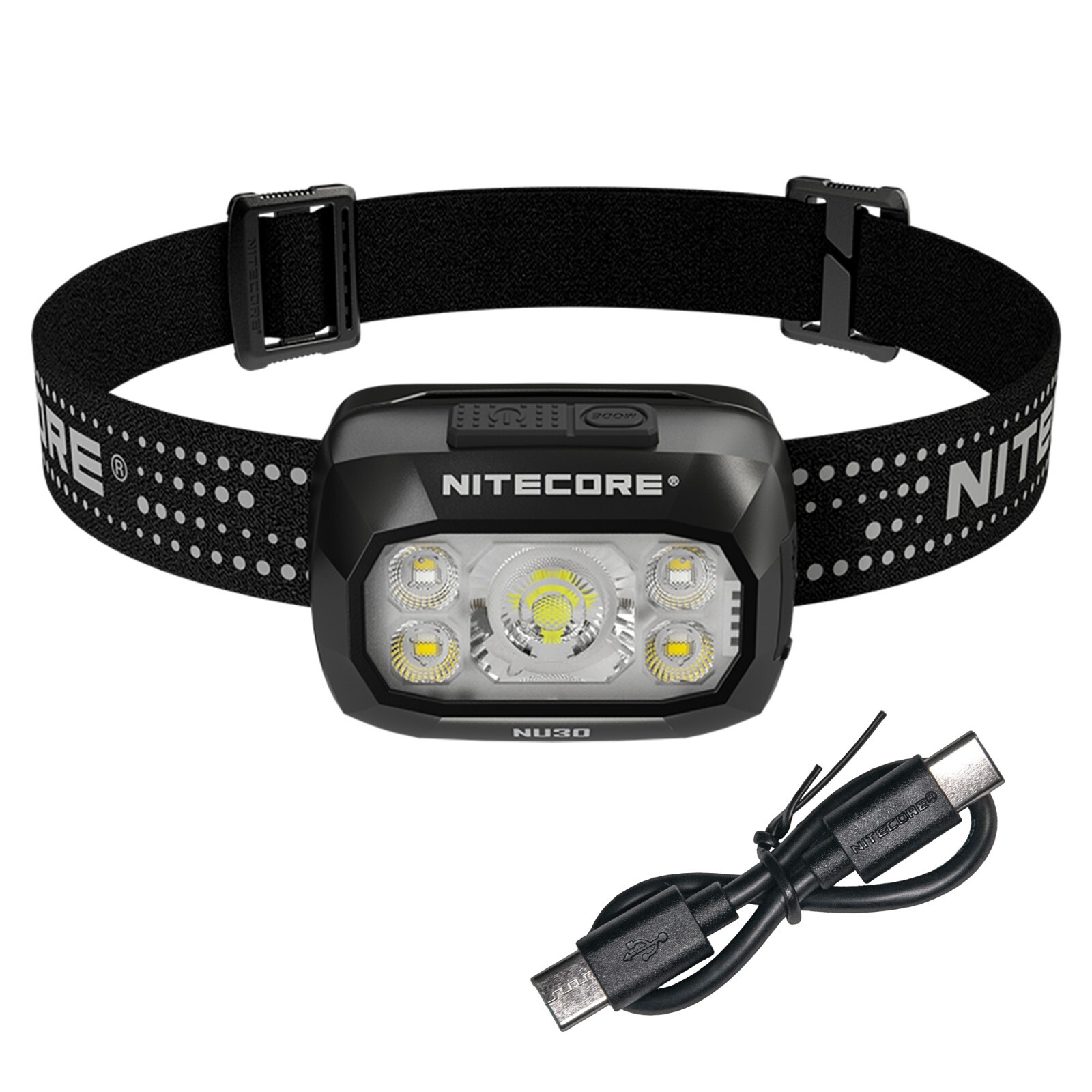

Photos from current listings. Actual item, color, and included accessories may vary.
Nitecore Headlamp Buying Guide
Nitecore headlamps are ultralight USB-C rechargeable lights built for trail running, backpacking, and technical work, where the primary trade-off is lumen output versus runtime and weight. The decisive rule: pick a model with a detachable or magnetic-reed charging system and at least IPX6 water resistance—sealed micro-USB or proprietary docks signal a legacy build to skip.


At a glance
- Category
- Camping Lanterns & Lights
- Data updated
- Nov 16, 2026
Current offers
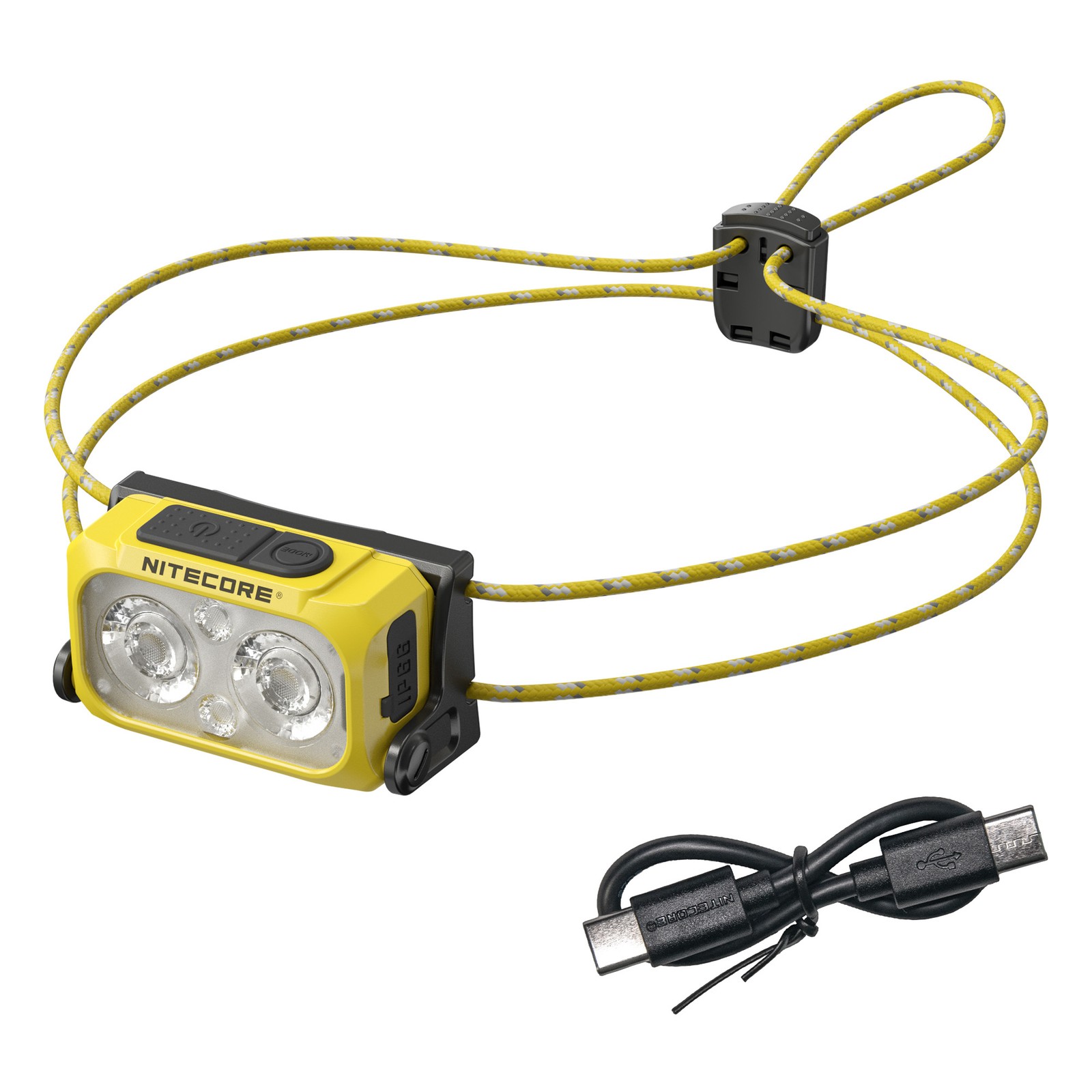
Highlights
- NU-series models use built-in USB-C rechargeable Li-ion cells; the NU25 MCT UL weighs roughly 1 oz, while the NU30 packs a 500-lumen main emitter in a polycarbonate housing.
- The MCT in NU25 MCT UL denotes multi-color-temperature LEDs (warm and cool white plus red), while standard NU25 variants use a fixed-cool-white primary beam.
- Output tiers split cleanly: UL and NU20-class lights deliver 200–400 lumens for weight-critical use; NU30 and NU40-class lights push 500 lumens with larger batteries for longer runtime.
- All current Nitecore headlamps use a polycarbonate body and elastic headband; IPX6 (jet-spray) is the realistic floor for rain and sweat, while IP68 adds submersion protection on select higher tiers.
Best use cases
- Best fit: ultralight backpacking and trail running—choose the NU25 MCT UL for sub-1-oz carry and warm-white tint on night trails; skip any model with a separate battery pack.
- Best fit: camp tasks and general outdoor use—the NU30's 500 lumens suits cooking, tent setup, and short night hikes; skip 200-lumen-class lights if you need throw beyond 30 meters.
- Wrong fit: caving or prolonged 8-hour night work—Nitecore's compact headlamps trade runtime for weight, so pick a removable-18650 lamp with spare cells instead.
- Wrong fit: helmet-mounted industrial or climbing use—Nitecore headbands lack the retention brackets and top-strap anchor points required for hard-hat or climbing-helmet mounting.
Buying tips
- Match battery capacity to runtime math: a 500-lumen light drawing roughly 4–5 W exhausts a 1,000 mAh cell in about 60–70 minutes at max; step down to 100–200 lumens for all-night burn.
- Choose USB-C native charging over micro-USB or proprietary cradles—USB-C means one cable for phone and lamp and avoids obsolete dock connectors.
- Pick the MCT multi-temperature version only if you need warm-white for map reading and red-light for dark adaptation; fixed-cool-white models are cheaper but harsher on night vision.
- Treat IPX6 as the minimum for wet climates; if you routinely wade or paddle, step up to an IP68-rated model rather than relying on a splash-proof body.
Specs
| Charging Standard | USB-C native (avoid micro-USB) |
|---|---|
| Output Tier | 200–500 lm (UL vs standard) |
| Water Resistance | IPX6 minimum / IP68 select |
| LED Configuration | Fixed cool-white vs MCT multi-temp |
Related searches
What to check before buying
- Confirm headband fit: measure head circumference and check the strap's adjustable range—Nitecore bands typically fit 50–62 cm, so larger heads or helmet use need a different mount.
- Verify your charging setup: a USB-C port requires a USB-C cable and a 5V/1A source; legacy micro-USB models need a micro-USB cable you may no longer carry.
- Check night-temperature exposure: Li-ion cells lose 20–30% capacity below freezing, so plan a warm-pocket spare or a model with an external cell for sub-zero trips.
- Confirm the beam pattern suits your task: flood-oriented TIR optics favor camp chores and running, while a focused reflector is needed for distance spotting.
FAQ
Data sources: eBay / Amazon listings and product attribute feeds Data updated Nov 16, 2026.
Some links on this page are affiliate links. If you buy after clicking one, we may earn a commission at no extra cost to you. This does not change which products appear here or their order. Affiliate disclosure.