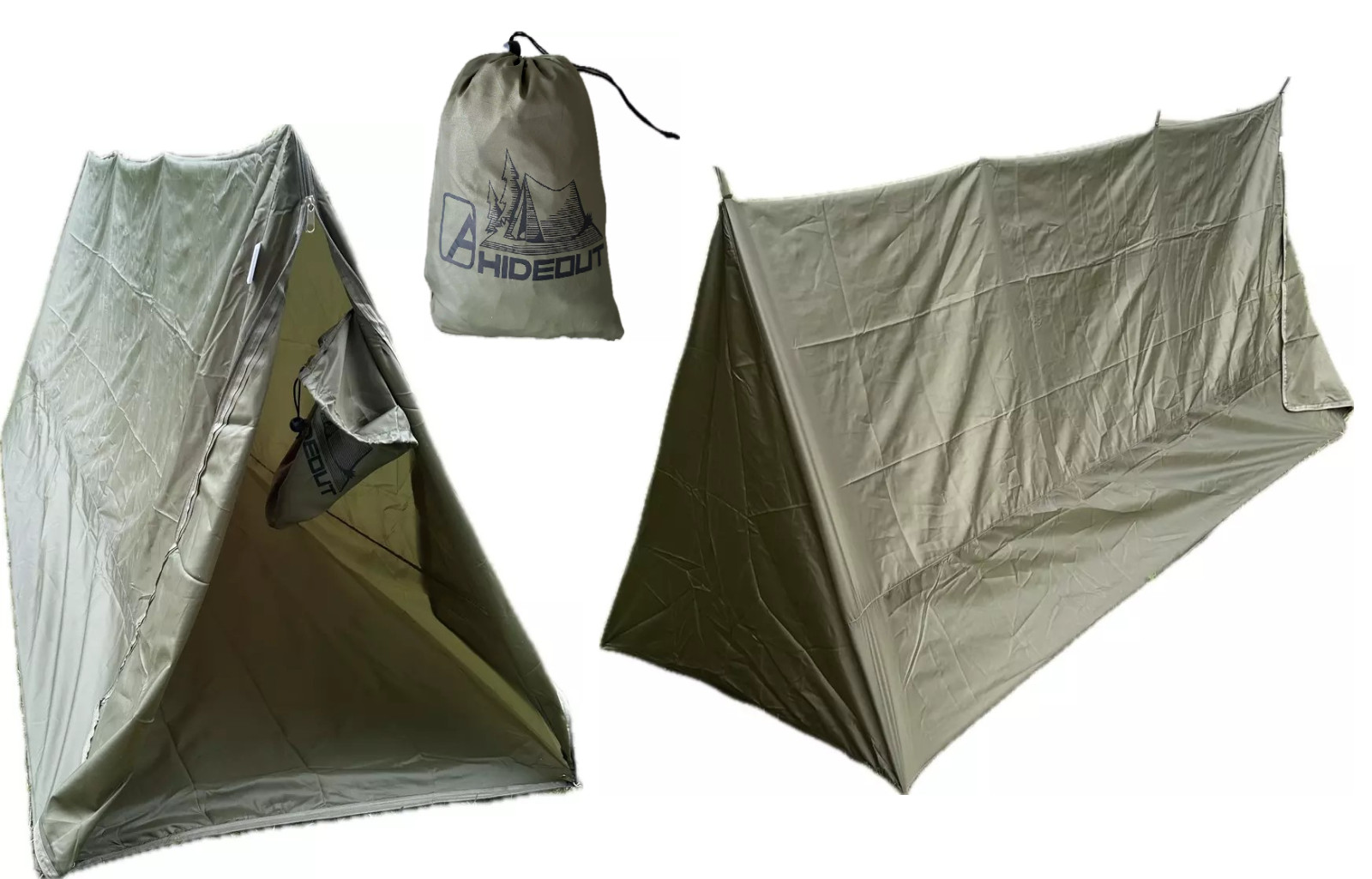

Photos from current listings. Actual item, color, and included accessories may vary.
1 Man Tent Buying Guide
A 1-man tent is a solo shelter where the key trade-off is weight versus weather protection: ultralight dyneema or silnylon models save grams but cost more and need careful handling, while polyester or silnylon budget tents are heavier yet more forgiving. The decision rule is simple: buy a freestanding double-wall tent for three-season camping, a trekking-pole single-wall for gram-counting backpacking, and a bivy or hooped shelter only for fast-and-light alpine or emergency use.


At a glance
- Category
- Tents & Shelters
- Data updated
- Nov 17, 2026
Current offers
Highlights
- Pole material drives durability: aluminum 7001-T6 or 7075-T6 poles resist wind far better than fiberglass, which splinters and adds weight.
- Fabric hydrostatic head matters: 1,200–1,500 mm silnylon/polyester is minimum for rain; 3,000 mm+ coatings handle sustained storms and snow loads.
- Single-wall trekking-pole tents cut weight to 1–2 lb but suffer condensation; double-wall designs add 1–1.5 lb yet vent far better in humid conditions.
- Floor area for one person should be at least 18–20 sq ft with a 30–36 in peak height; smaller floors force gear onto your sleeping bag.
Best use cases
- Three-season backpacking: pick a freestanding double-wall aluminum-pole tent around 2–3 lb with two doors or a large vestibule; skip single-wall if you camp in humid forests.
- Ultralight thru-hiking: choose a trekking-pole single-wall silnylon or DCF shelter under 2 lb with a bathtub floor; skip it for car camping or wet, cold climates.
- Fast-and-light alpine or emergency: use a bivy sack or hooped single-wall shelter under 1.5 lb with a waterproof-breathable top; skip for multi-night trips where living space matters.
- Car camping or festivals: buy a cheap polyester dome 1-man tent with fiberglass poles only if weight is irrelevant; skip it for any trip where you carry the tent more than a mile.
Buying tips
- Match floor dimensions to your sleeping pad: a 20 in wide pad needs at least 30 in interior width at the hips; tapered floors lose usable space at the foot.
- Choose aluminum poles (7001-T6 or 7075-T6) over fiberglass for any tent you will pitch in wind; fiberglass poles are heavier and fail without warning.
- For trekking-pole shelters, confirm the required pole length (usually 105–125 cm) and that your poles lock at that height; otherwise buy the dedicated pole set.
- Check packed size against your pack: a 1-man tent should compress to roughly 12–18 in long and 4–6 in diameter; oversized rolls force external carry.
Specs
| Pole Material | Aluminum 7001/7075 vs Fiberglass |
|---|---|
| Wall Type | Double-wall vs Single-wall |
| Hydrostatic Head | 1,200–1,500 mm min; 3,000 mm+ storm |
| Floor Area | 18–22 sq ft solo; 30–36 in peak |
Related searches
What to check before buying
- Measure your sleeping pad and gear: interior floor must fit pad width plus 6–8 in for boots and pack, or plan to use a vestibule.
- Confirm your trekking poles adjust to the shelter's required height range (typically 105–125 cm) and lock securely.
- Check climate: humid or condensation-prone areas demand double-wall or high-vent single-wall designs; dry alpine allows single-wall.
- Verify seam sealing and footprint availability: silnylon and silpoly tents often need seam sealing, and a footprint protects thin floors.
FAQ
Data sources: eBay / Amazon listings and product attribute feeds Data updated Nov 17, 2026.
Some links on this page are affiliate links. If you buy after clicking one, we may earn a commission at no extra cost to you. This does not change which products appear here or their order. Affiliate disclosure.