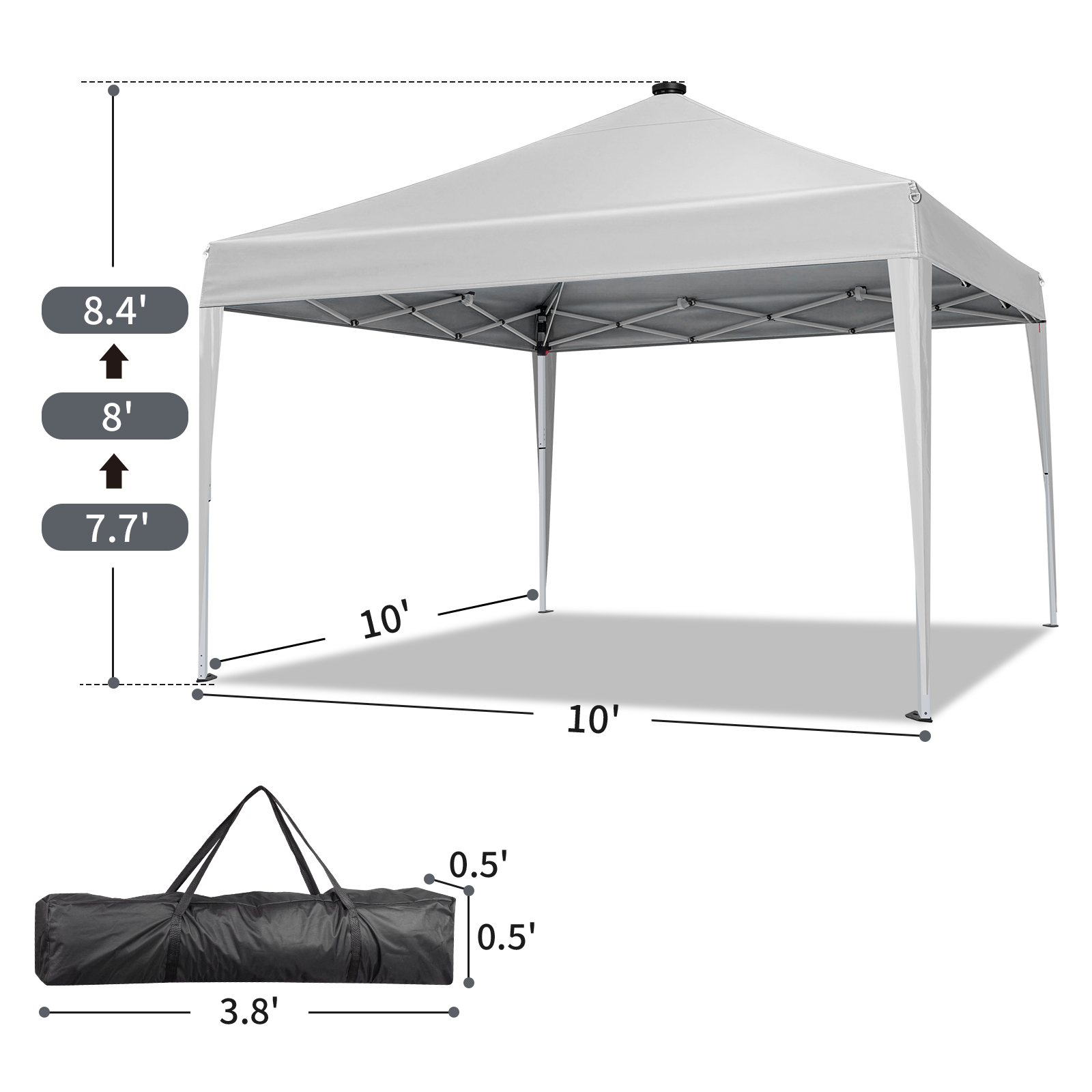

Photos from current listings. Actual item, color, and included accessories may vary.
Canopy With Wall Buying Guide
A canopy with wall is a freestanding pop-up or pole-frame shelter that adds removable side panels to a standard instant canopy, trading portability for wind, rain, and privacy protection. The primary decision is frame architecture: slant-leg (cheaper, less stable, smaller footprint) versus straight-leg (full 10x10 or 12x12 coverage, stronger trusses). Buy straight-leg with 210D+ Oxford and removable walls for durability; skip slant-leg and 150D fabric for anything beyond light backyard shade.


At a glance
- Category
- Tents & Shelters
- Data updated
- Nov 16, 2026
Current offers
Highlights
- Straight-leg frames provide a true 10x10 ft or 12x12 ft footprint; slant-leg canopies taper inward, reducing usable floor area by roughly 20-25%.
- 210D Oxford fabric is the minimum durable grade; 150D and polyester taffeta tear at grommets and fail waterproof ratings within a season.
- Frame steel thickness of 0.6mm-0.8mm with powder coating resists rust; thinner 0.4mm tubes dent permanently at leg joints.
- Removable walls attach via Velcro or zippers; zippered walls seal fully for wind-driven rain, while Velcro-only walls leak at seams.
Best use cases
- Backyard shade and light rain: pick a straight-leg 10x10 with 210D Oxford and two zippered walls — skip slant-leg, which pools water and collapses in gusts.
- Craft fair or farmers market vendor: choose a straight-leg 10x10 with full zippered wall set and sandbag anchor points; slant-leg fails vendor space rules and wind audits.
- Camping or beach day shelter: select a lighter 190T polyester canopy with mesh walls for airflow — skip 210D Oxford walls, which trap heat and add bulk.
- Snow or winter storage: avoid fabric canopies entirely; frames crack below freezing and 210D Oxford stiffens — use a metal carport or polycarbonate shelter instead.
Buying tips
- Measure your pad or booth space: straight-leg 10x10 needs a full 10x10 ft clear area; slant-leg base is 10x10 but top shrinks to about 8x8 ft usable.
- Check fabric denier: 210D Oxford with PU coating (waterproof rating 1000mm+) beats 150D polyester, which wicks and tears at seams within months.
- Match wall attachment to weather: zippered walls seal against wind-driven rain; Velcro-only walls are for privacy and light breeze, not storms.
- Confirm frame steel gauge: 0.6mm-0.8mm powder-coated steel legs with cross truss bars survive repeated setup; 0.4mm tubes bend at the push-pin joints.
Specs
| Frame Leg Type | Straight-leg vs slant-leg |
|---|---|
| Fabric Denier | 210D Oxford (min durable) vs 150D |
| Wall Attachment | Zippered vs Velcro-only |
| Footprint | 10x10 ft or 12x12 ft straight-leg |
Related searches
What to check before buying
- Measure your intended footprint: straight-leg 10x10 requires 10x10 ft clear ground; slant-leg fits tighter corners but loses ceiling height at the edges.
- Check anchor requirements: every canopy needs sandbags or stakes — plan 4 sandbags (empty, fill on site) for pavement or 8 stakes for grass.
- Verify wall count and door/window layout: a 4-wall set with 2 doors and 2 windows gives cross-ventilation; solid 3-wall sets block airflow and trap heat.
- Confirm carry bag length fits your vehicle: straight-leg 10x10 frames collapse to roughly 50-60 inches; measure trunk or truck bed first.
FAQ
Data sources: eBay / Amazon listings and product attribute feeds Data updated Nov 16, 2026.
Some links on this page are affiliate links. If you buy after clicking one, we may earn a commission at no extra cost to you. This does not change which products appear here or their order. Affiliate disclosure.