Photos from current listings. Actual item, color, and included accessories may vary.
Canvas Tent Buying Guide
Canvas tents are breathable, heavy-duty shelters built from cotton-poly blends (typically 8–12 oz/yd²) that excel in cold, wet, and long-stay camping thanks to their durability, condensation control, and stove compatibility. The main trade-off is weight and pack size versus lifespan and four-season performance, with cheap thin canvas or single-stitched seams failing within seasons. The clear decision rule: pick at least 10 oz/yd² canvas with double-stitched, taped seams and a stove jack if winter use is planned—skip lightweight sub-8 oz canvas if you need multi-season reliability.


At a glance
- Category
- Tents & Shelters
- Data updated
- Nov 16, 2026
Current offers
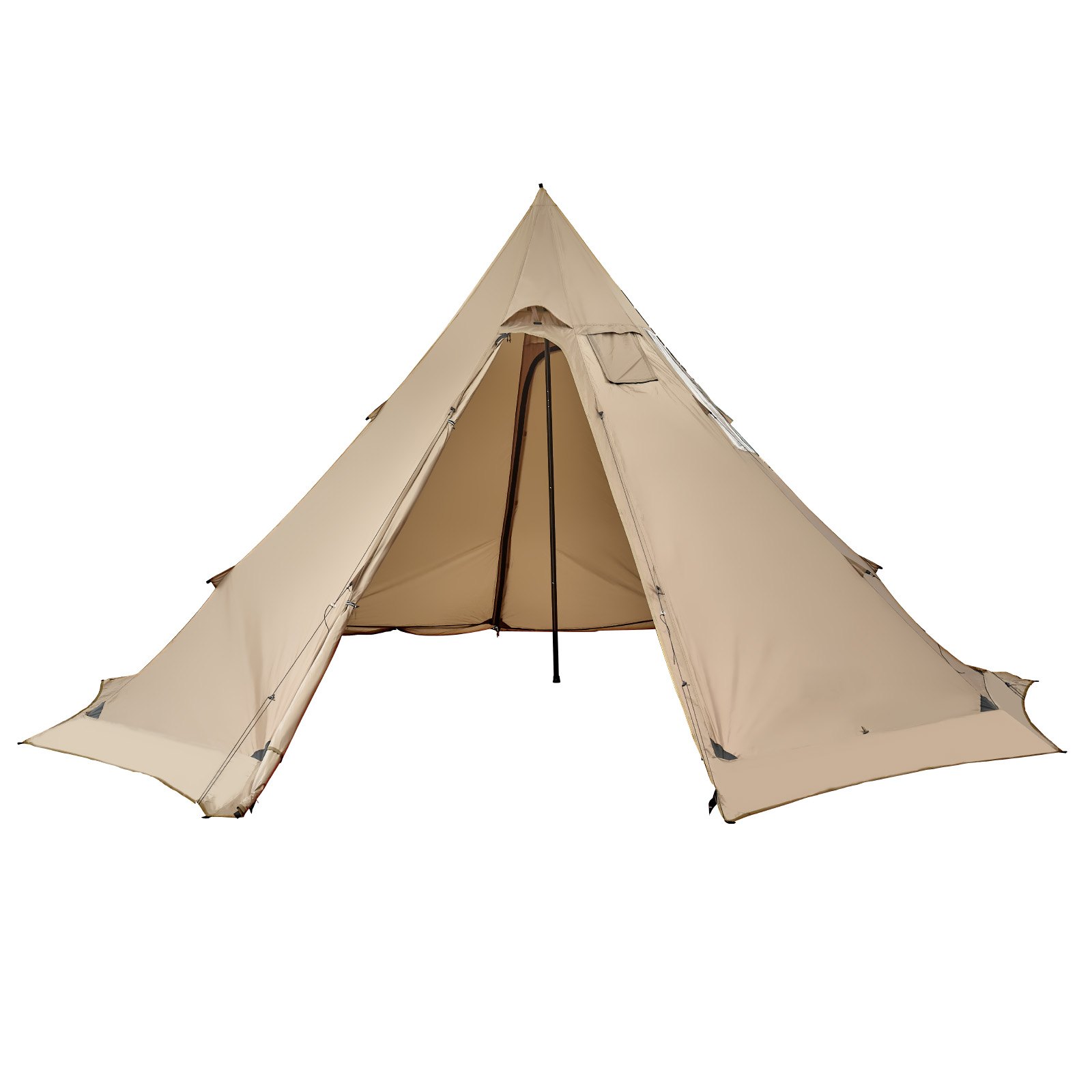 Hot Tent For 4-6 Persons, Portable Winter Tipi With Stove Jack, Waterproof Canvas Camping Tents, Lightweight 4 Season Shelter For Hiking Fishing Backpacking, L Size$79.99
 View on Mallflare
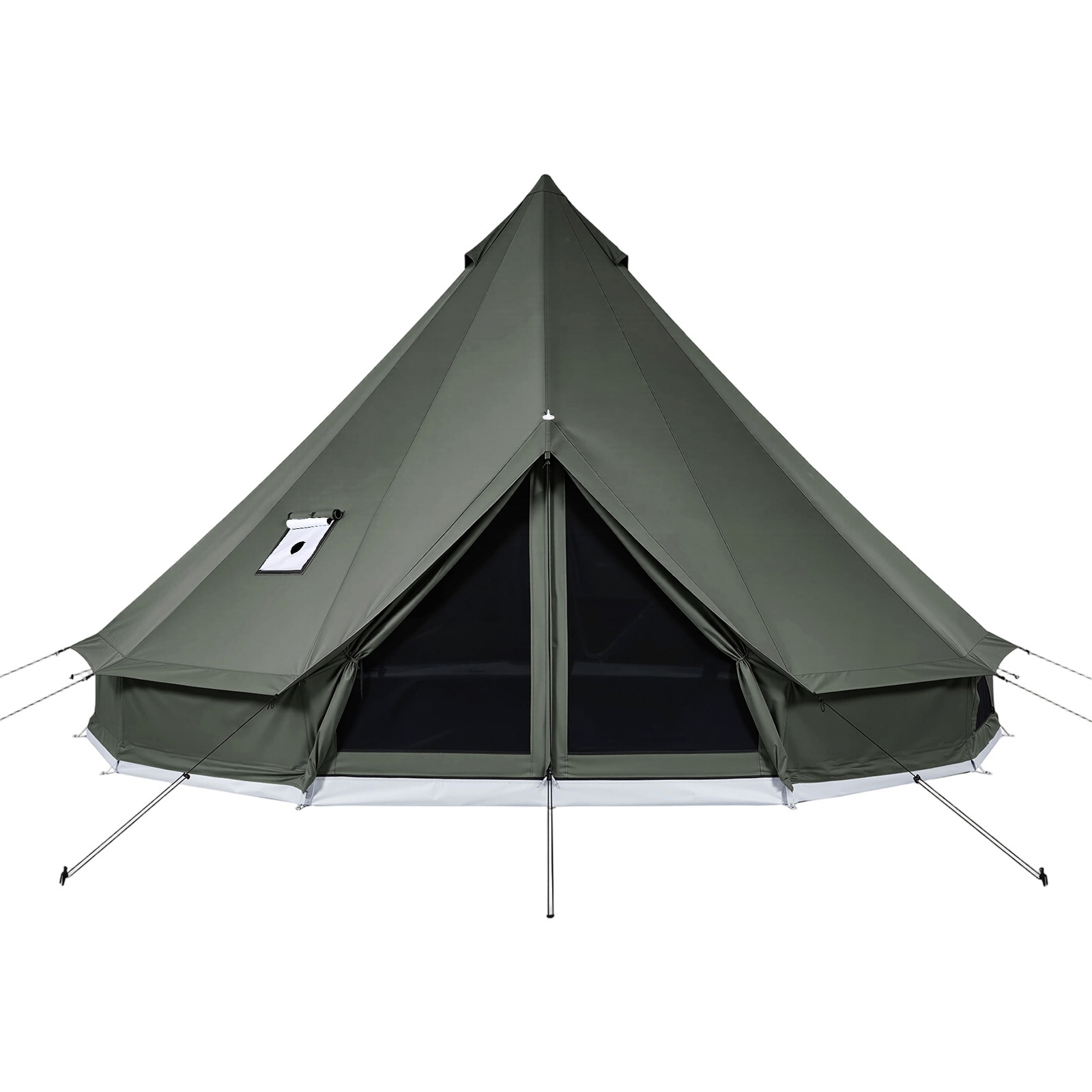 Canvas Bell Tent, 4 Seasons 9.84 Ft Yurt For Camping With Stove Jack, Breathable Holds Up To 3 People Zipped Detachable Floor, For Family Glamping Outdoor Hunting Party$284.99View on Mallflare
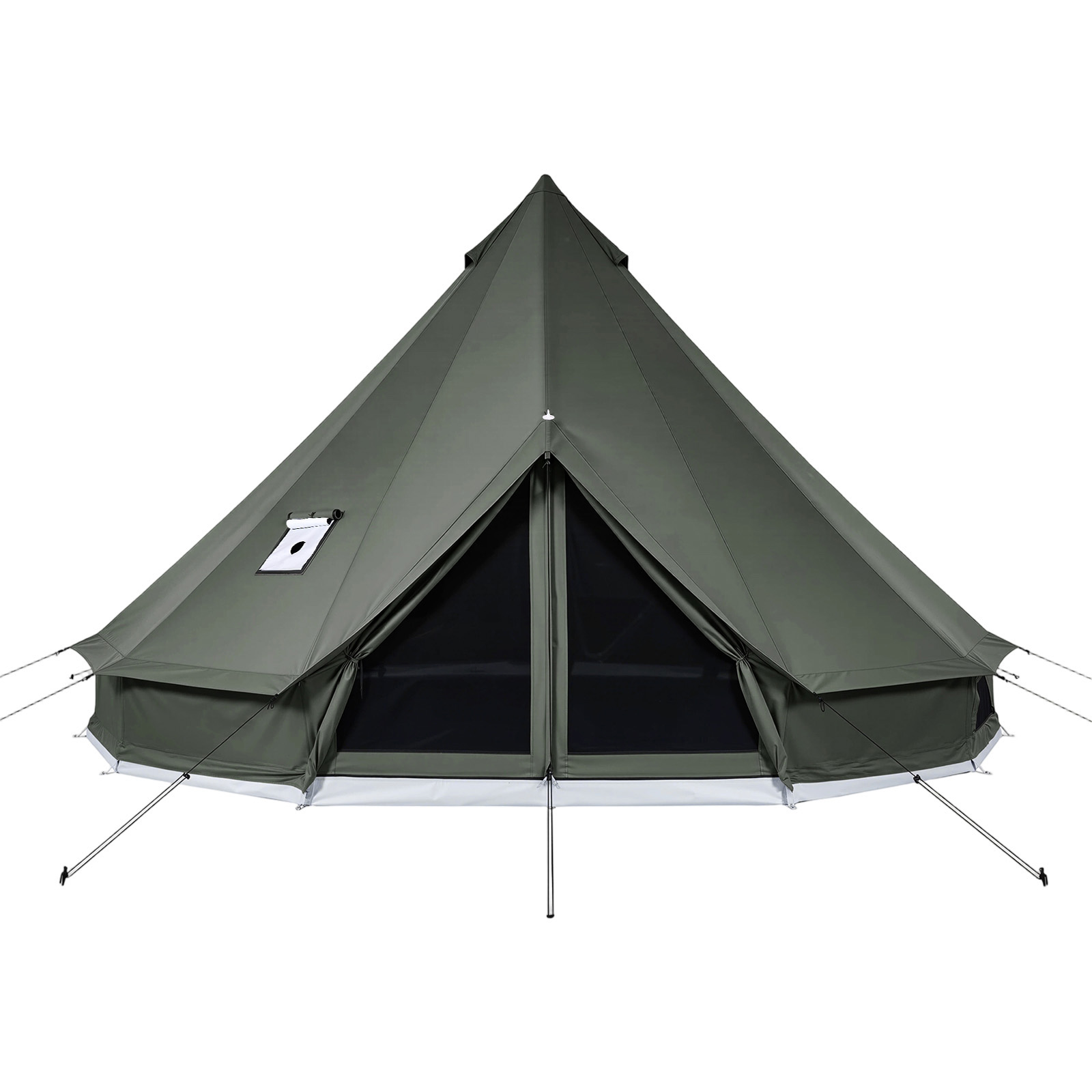 Canvas Bell Tent, 4 Seasons 13.12 Ft Yurt For Camping With Stove Jack, Breathable Holds Up To 4 People Zipped Detachable Floor, For Family Glamping Outdoor Hunting Party$338.99View on Mallflare
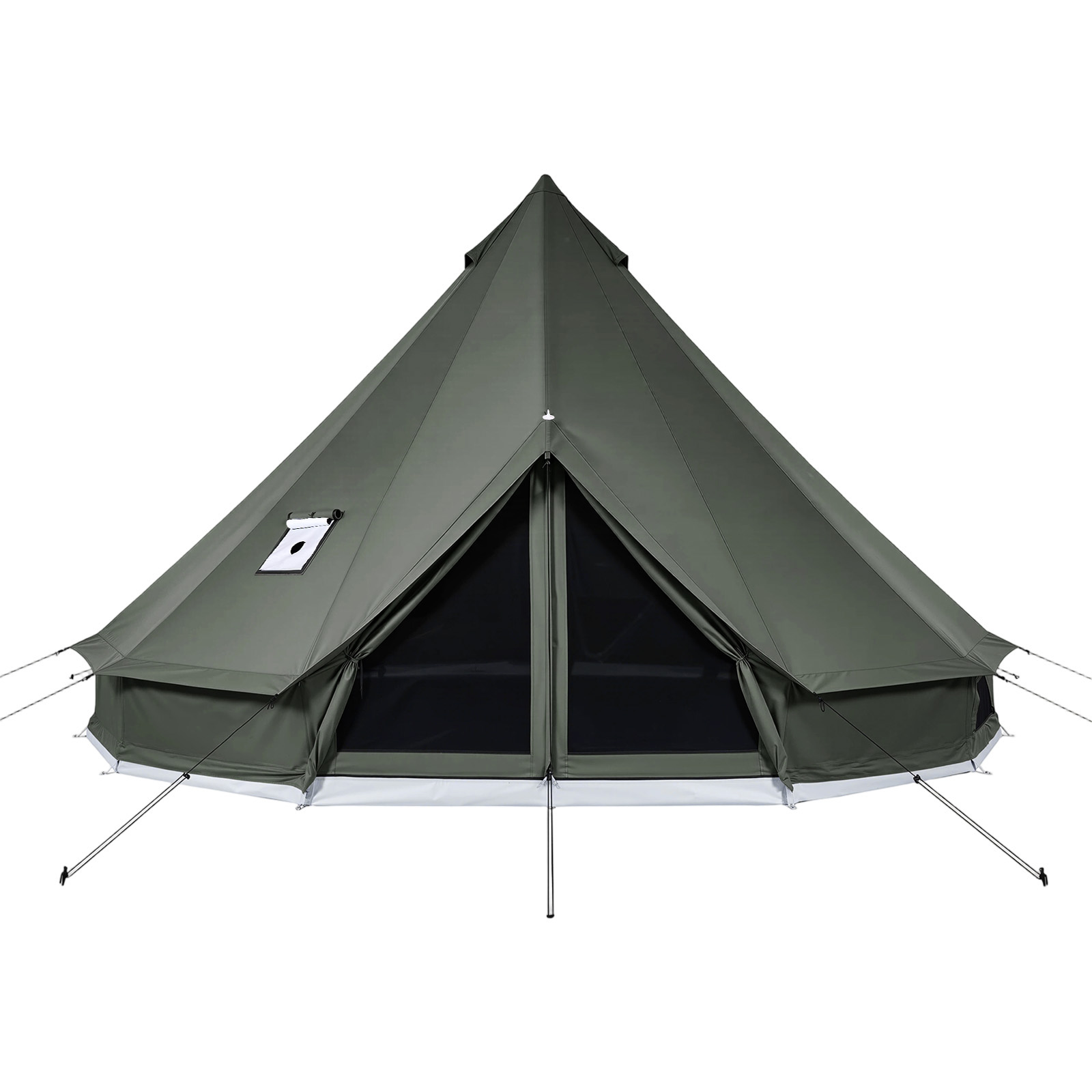 Canvas Bell Tent, 4 Seasons 16.4 Ft Yurt For Camping With Stove Jack, Breathable Holds Up To 7 People Zipped Detachable Floor, For Family Glamping Outdoor Hunting Party$429.99View on Mallflare
Highlights
- Canvas weight of 8–10 oz/yd² suits three-season use; 10–12 oz/yd² or higher is required for snow loads and frequent stove use.
- Bell tents use a center pole with guy-line tension, while tipi tents rely on a single apex pole and wider base stakes for wind stability.
- Stove jacks must be silicone- or fiberglass-reinforced with a minimum 5-inch opening and at least 18 inches clearance from canvas for safe wood-stove operation.
- Double-stitched seams with reinforced corners and taped or waterproofed stitch lines determine leak resistance more than the canvas coating alone.
Best use cases
- Best fit: family glamping or basecamp stays of 3+ nights—choose a bell tent sized 13 ft (4 people) or 16 ft (7 people) with a zipped detachable floor for easy cleaning.
- Best fit: cold-weather hunting or winter camping—pick a tipi or bell tent rated 4-season with a stove jack and 10+ oz canvas; skip thin summer tents.
- Wrong fit: backpacking or solo hiking—canvas tents are too heavy (often 20–60 lbs); choose a lightweight synthetic tent instead.
- Wrong fit: hot, humid climates without ventilation—canvas traps heat; prioritize models with large mesh windows or avoid canvas entirely.
Buying tips
- Sizing rule: allow 10–15 ft² of floor area per person; a 9.84 ft bell tent fits 2–3, 13.12 ft fits 4, and 16.4 ft fits 6–7 comfortably with gear.
- Canvas grade: insist on 10 oz/yd² or heavier for four-season use; 8 oz is acceptable only for mild three-season glamping.
- Stove compatibility: confirm a factory-installed stove jack with a heat-resistant ring and at least 5-inch flue opening; retrofitting voids warranties.
- Seam construction: double-stitched, lap-felled seams with taped or sealed stitch lines outperform single-stitched seams for waterproofing.
Specs
| Canvas Weight | 8–12 oz/yd² (10+ for 4-season) |
|---|---|
| Sleep Capacity | 2–7 persons by diameter |
| Stove Jack | 5-inch+ heat-resistant ring |
| Floor Type | Zipped detachable or sewn-in |
Related searches
What to check before buying
- Measure your pitch area: bell tents need a circular footprint equal to diameter plus 3–5 ft for guy lines; tipis need a similar radius.
- Verify ground conditions: canvas tents require staking into soil or sand; rocky or hard-packed ground needs alternative anchoring or a different shelter.
- Check stove clearance: ensure at least 3 ft between the stove jack and any nearby walls, and confirm your stove pipe diameter matches the jack opening.
- Confirm climate suitability: canvas breathes but can mold if packed wet; ensure you can dry it fully after each trip and store it dry.
FAQ
Data sources: eBay / Amazon listings and product attribute feeds Data updated Nov 16, 2026.
Some links on this page are affiliate links. If you buy after clicking one, we may earn a commission at no extra cost to you. This does not change which products appear here or their order. Affiliate disclosure.