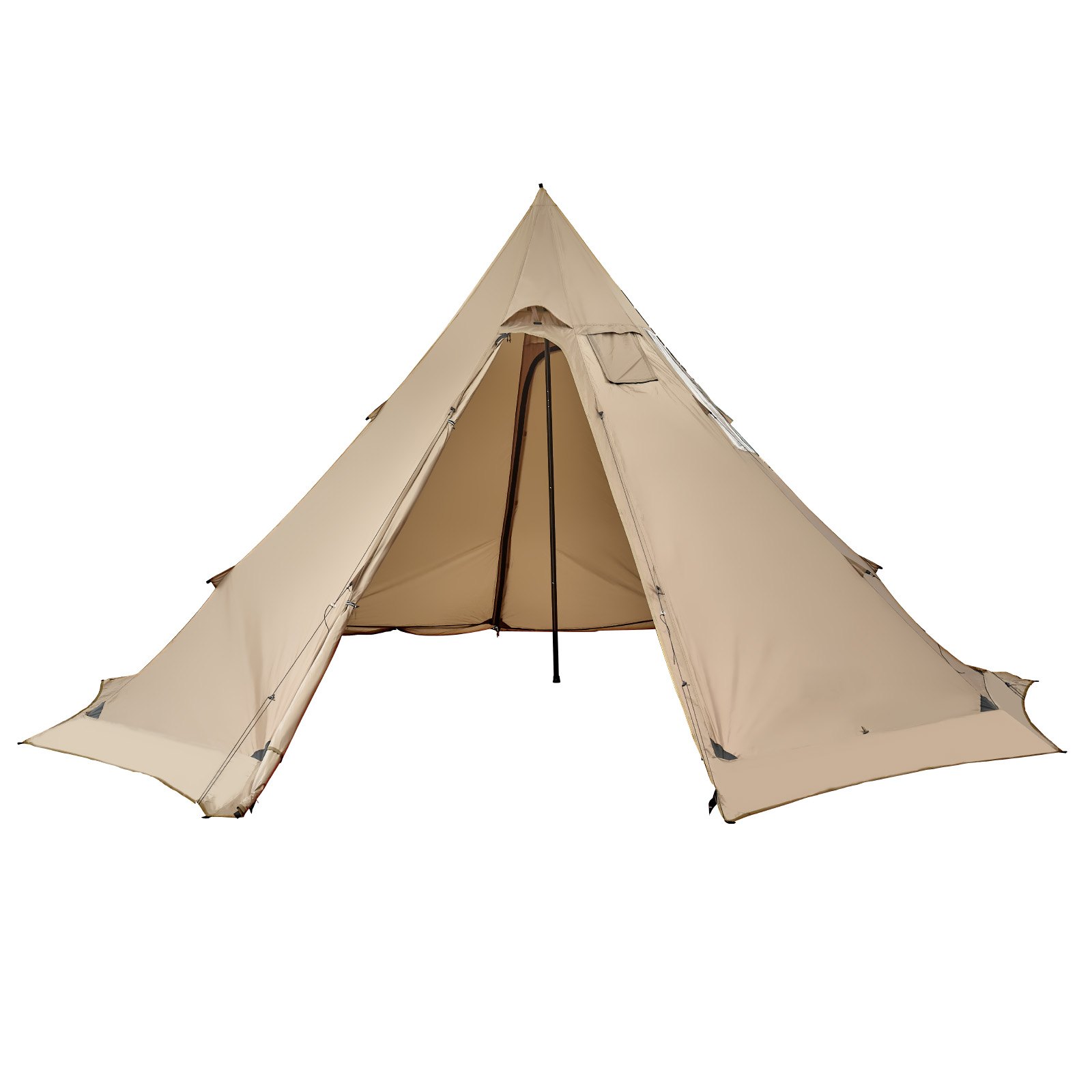

Photos from current listings. Actual item, color, and included accessories may vary.
Hot Tent Buying Guide
A hot tent is a four-season shelter engineered to run a wood-burning stove inside, defined by a stove jack, fire-resistant fabric, and a standing-height vented pitch. The buyer's core trade-off is fabric and frame: cotton-canvas bell tents breathe and hold heat but are heavy and must dry fully, while Oxford/polyester tipis are lighter and cheaper but can condense and off-gas near a stove. Choose canvas or high-GSM poly-cotton for cold-weather basecamps; choose coated Oxford only for mild three-season trips where weight beats warmth.


At a glance
- Category
- Tents & Shelters
- Data updated
- Nov 16, 2026
Current offers
Highlights
- Cotton or poly-cotton canvas (280-400 GSM) insulates, breathes, and resists sparks; coated Oxford (210D-420D) is lighter and waterproof but condenses and needs a spark-arrested flue.
- A real stove jack is a heat-rated silicone/fiberglass patch (typically 5-7 in ID) with a metal ring; cheap jacks are stitched fabric slots that scorch and leak.
- Tipi/teepee geometry sheds snow and wind best; bell/yurt walls add standing room but need more guy-out points and a larger footprint.
- Four-season rating requires a full-coverage rainfly or sealed seams, bathtub floor, and stovepipe clearance of 12+ inches from fabric.
Best use cases
- Best fit: winter basecamp with a wood stove and 2-4 people sleeping — pick a canvas bell tent in the 9.8-13.1 ft class with a fiberglass stove jack and a center or offset flue.
- Best fit: backpacking or drive-up weekends in shoulder season — pick a lightweight Oxford tipi with a stove jack only if you accept condensation and carry a spark arrestor.
- Wrong fit: family glamping without a stove — skip hot tents and buy a standard three-season cabin tent; the stove jack and heavy fabric are wasted weight and cost.
- Wrong fit: high-wind alpine exposed sites — skip tall bell/yurt shapes and choose a low-profile tipi with extra guy-lines and a reinforced pole sleeve.
Buying tips
- Size by sleeping capacity minus one: a 4-6 person tipi comfortably sleeps 3-4 with a stove; a 13.1 ft bell tent sleeps 6-8 without a stove but 4-5 with one.
- Match stove jack ID to your flue: most wood stoves use 3-6 in pipe; the jack opening must exceed pipe OD by about 1 in and include a metal ring.
- Pick fabric by climate: 280-400 GSM canvas for freezing nights and spark resistance; 210D-420D coated Oxford only for mild, dry cold where pack weight matters.
- Confirm pole and peg kit: hot tents need steel or aluminum poles plus 12-20 stakes and guylines; flimsy fiberglass poles fail under snow load.
Specs
| Fabric | Canvas 280-400 GSM vs Oxford 210D-420D |
|---|---|
| Stove Jack | Fiberglass/metal ring, 5-7 in ID |
| Shape | Tipi/teepee vs bell/yurt |
| Season | 4-season sealed, vented, bathtub floor |
Related searches
What to check before buying
- Measure your pitch area: a 13.1 ft bell tent needs a circle about 14 ft across plus guy-line clearance; a 9.8 ft bell needs about 11 ft.
- Check stove clearance: keep at least 12 in between stovepipe and fabric, and place the stove on a heat-safe mat over the floor.
- Verify floor and venting: a bathtub floor with sealed seams and high/low vents prevent ground water and CO buildup.
- Confirm site rules: many campgrounds require a spark arrestor and prohibit wood stoves during fire bans; plan an alternative heat source.
FAQ
Data sources: eBay / Amazon listings and product attribute feeds Data updated Nov 16, 2026.
Some links on this page are affiliate links. If you buy after clicking one, we may earn a commission at no extra cost to you. This does not change which products appear here or their order. Affiliate disclosure.