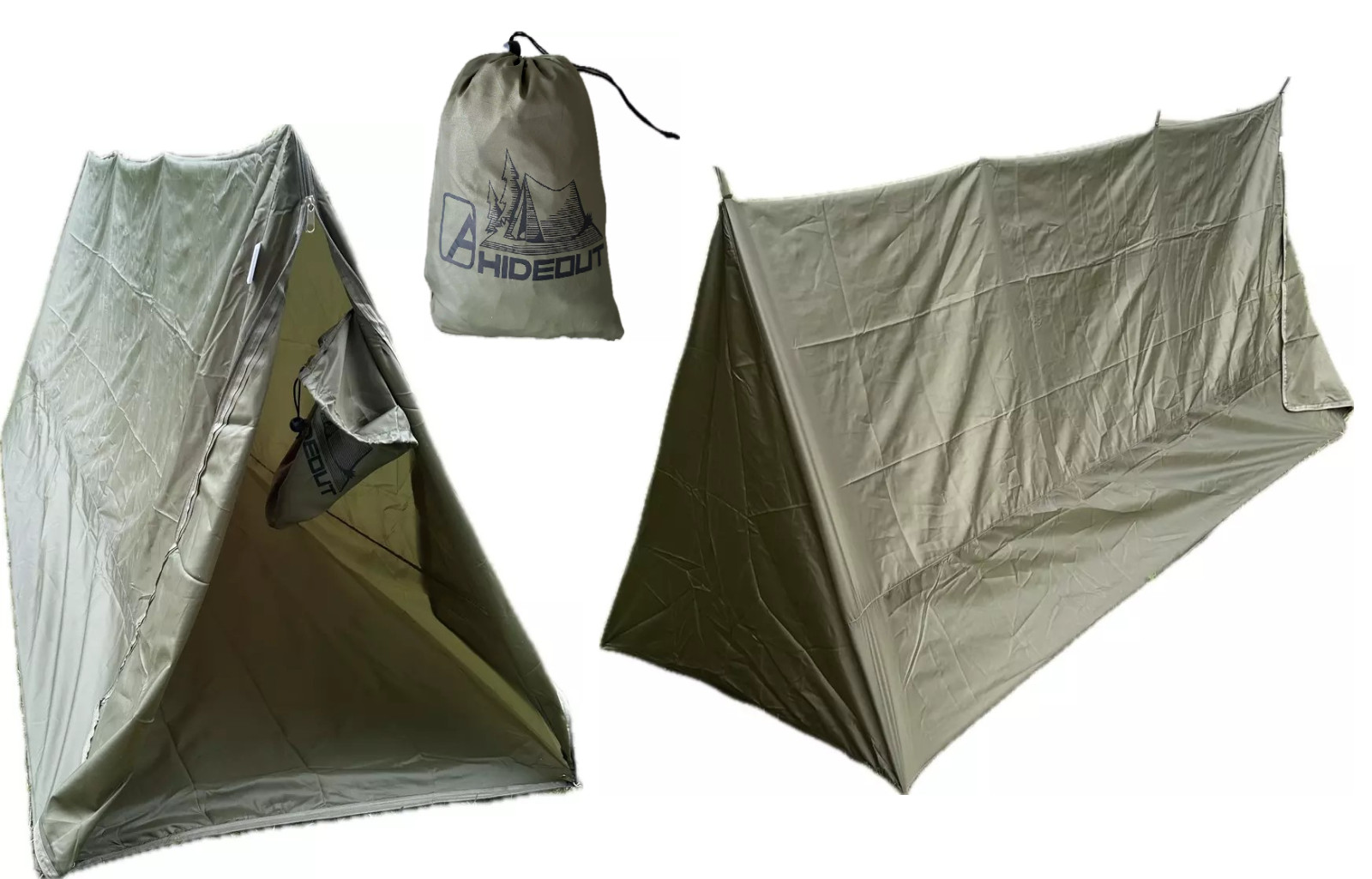

Photos from current listings. Actual item, color, and included accessories may vary.
One Man Tent Buying Guide
A one-man tent is a solo shelter optimized for minimal packed weight and footprint, where the key trade-off is weather protection and livability versus gram-count and packed size. Durable options use ripstop polyester or nylon with a hydrostatic head of at least 1,500 mm and taped seams, while compromises rely on single-wall non-breathable fabric or untaped stitching. Choose a double-wall or well-ventilated single-wall design with a real bathtub floor for three-season use; skip ultra-ultralight single-skin bivies unless you only camp in dry, mild conditions.


At a glance
- Category
- Tents & Shelters
- Data updated
- Nov 17, 2026
Current offers
Highlights
- Double-wall designs (separate fly and inner) manage condensation far better than single-wall tents, which require high-ventilation mesh panels and are best for arid or cold-dry climates.
- Fly and floor hydrostatic head ratings of 1,500–3,000 mm handle steady rain; below 1,000 mm is a fair-weather compromise and above 3,000 mm adds weight with little benefit for solo camping.
- Aluminum alloy poles (7001 or 7075 series) at 8.5–9.5 mm diameter balance strength and weight; fiberglass poles are heavier and prone to splintering in high wind.
- A true one-person tent packs to roughly 1.5–2.5 kg and 40–50 cm length; sub-1 kg shelters usually sacrifice floor area, vestibule space, or durability for gram savings.
Best use cases
- Best fit: three-season backpacking where you carry the tent daily — pick a double-wall, two-pole design under 2 kg with a 2,000 mm fly and a vestibule for boots and pack.
- Best fit: minimalist fast-and-light trips in predictable weather — choose a single-wall trekking-pole shelter under 1 kg, but only with a bathtub floor and high mesh ventilation.
- Wrong fit: car camping or basecamp where weight is irrelevant — skip ultralight one-man tents; a heavier two-person tent gives far more livability for the same or lower cost.
- Wrong fit: winter or exposed alpine use — a standard three-season one-man tent will collapse under snow load; choose a four-season single-hoop or geodesic design with reinforced pole sleeves.
Buying tips
- Match floor dimensions to your sleeping pad: a 7 ft x 2.5 ft (213 x 76 cm) floor fits a regular pad plus a small pack; narrower than 70 cm leaves no room for gear beside you.
- Use the packed-length number: if you bikepack or use a small daypack, choose a tent that packs to 45 cm or less; standard 50–55 cm rolls only fit top-loading backpack compartments.
- Count poles and stake points: a two-pole crossover or single-hoop design with at least four guy-out points survives wind far better than a one-pole A-frame with two stakes.
- Select a bathtub floor with at least 10 cm (4 in) of turned-up sides; a flat floor with seam at ground level wets out in sustained rain regardless of hydrostatic rating.
Specs
| Wall Design | Double-wall vs single-wall |
|---|---|
| Fly Hydrostatic Head | 1,500–3,000 mm (taped seams) |
| Pole Material | 7001/7075 aluminum vs fiberglass |
| Packed Weight | 1.5–2.5 kg three-season |
Related searches
What to check before buying
- Measure your sleeping pad length and width, then add 15 cm (6 in) to each dimension for the minimum usable floor size before choosing a model.
- Confirm your campsite ground: rocky or hard-packed soil needs stronger 7001 aluminum stakes and a footprint or polycro groundsheet to protect the tent floor.
- Check packed size against your pack's sleeping-bag compartment or a 45 cm stuff sack limit if you are counting grams for a multi-day carry.
- Verify the tent includes a full-coverage fly with taped seams and a vestibule — many budget one-man tents ship fly-only partial coverage that leaks at the door zip.
FAQ
Data sources: eBay / Amazon listings and product attribute feeds Data updated Nov 17, 2026.
Some links on this page are affiliate links. If you buy after clicking one, we may earn a commission at no extra cost to you. This does not change which products appear here or their order. Affiliate disclosure.