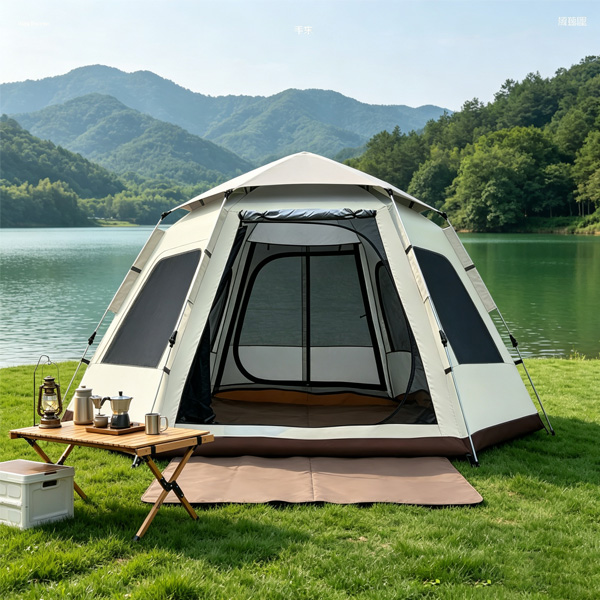

Photos from current listings. Actual item, color, and included accessories may vary.
Quick Set Up Tent Buying Guide
A quick set-up tent is a portable shelter engineered for deployment in seconds, typically using pre-assembled pole hubs, pop-up wire frames, or inflatable beams to eliminate traditional pole threading. The primary trade-off is between speed of deployment and long-term durability/weather resistance: faster mechanisms often use thinner fabrics and fewer Guy-out points, compromising storm-worthiness. Choose a quick set-up tent only if you prioritize frequent, short-duration use (festivals, beach, backyard); for multi-day backcountry or high-wind exposure, a conventional pole tent remains the durable choice.


At a glance
- Category
- Tents & Shelters
- Data updated
- Nov 16, 2026
Current offers
Highlights
- Pop-up tents use pre-bent spring-steel or fiberglass wire loops that unfold instantly but can fatigue and kink after repeated packing; instant tents use telescoping aluminum or steel poles with pre-attached hubs for a more robust but slightly heavier frame.
- Fabric quality is measured in denier (D) and hydrostatic head (mm): 68D polyester with 800–1500 mm HH suits light rain, while 150D+ with 2000 mm+ HH and taped seams is needed for sustained wet weather.
- Inflatable quick tents rely on TPU or PVC air beams inflated to 4–8 PSI; they offer the fastest solo pitch but require a pump and are vulnerable to punctures and temperature-related pressure loss.
- Most quick set-up tents are 3-season designs with partial mesh; look for full-coverage rainflies and factory-sealed seams on instant models, as pop-up models often omit them entirely.
Best use cases
- Best fit: car camping, beach days, festivals, and backyard shade—pick a pop-up or instant tent with a 68D–150D polyester shell and at least 1000 mm hydrostatic head; skip inflatable models if you lack a pump.
- Wrong fit: exposed alpine or multi-day backcountry trips where wind and rain are constant—choose a conventional low-profile pole tent with aluminum poles and a 3000 mm+ fly instead of any quick set-up type.
- Best fit for solo travelers wanting the absolute fastest pitch: an inflatable air-beam tent pitches in under 2 minutes and packs smaller than pop-up coils, but only if you carry the dedicated pump and a repair kit.
- Wrong fit: families needing standing height and privacy—most quick set-up tents top out around 4–5 ft center height and have limited room dividers; a cabin-style pole tent is more suitable.
Buying tips
- Match the packed length to your vehicle: pop-up tents typically pack to a 30–40 inch disc that may not fit compact trunks, while instant and inflatable tents pack into conventional duffel shapes.
- Check the hydrostatic head rating: below 800 mm is shower-resistant only; for real rain protection choose 1500–2000 mm on polyester or nylon with taped seams and a full-coverage fly.
- Verify pole material: aluminum poles (7000-series) resist bending and are repairable with a splint; fiberglass and spring-steel are cheaper but prone to splintering or kinking and are not field-repairable.
- Confirm the tent's footprint and peak height against your sleeping setup: a 2-person quick tent often fits two 20-inch-wide pads only; add 6–12 inches of length beyond your tallest sleeper for gear.
Specs
| Setup Mechanism | Pop-up coil / Instant hub / Inflatable beam |
|---|---|
| Fabric & HH | 68D–150D polyester, 800–2000 mm HH |
| Pole Material | Aluminum vs fiberglass vs spring-steel |
| Packed Shape | Flat disc vs duffel vs stuff sack |
Related searches
What to check before buying
- Measure your vehicle's trunk or roof box: pop-up tents pack as a flat disc (typically 30–40 inches diameter), so confirm it fits before choosing that style.
- Check local wind exposure: if sustained winds over 20 mph are common, prioritize instant tents with Guy-line loops and aluminum poles over pop-up wire frames.
- Confirm seam sealing and floor material: a bathtub floor (PE or 150D polyester with 2000 mm+ HH) prevents ground moisture; unsealed seams need immediate aftermarket sealing.
- For inflatable quick tents, verify pump compatibility (most use a Boston valve or dedicated adapter) and carry a patch kit; air beams lose pressure in cold temperatures and require top-ups.
FAQ
Data sources: eBay / Amazon listings and product attribute feeds Data updated Nov 16, 2026.
Some links on this page are affiliate links. If you buy after clicking one, we may earn a commission at no extra cost to you. This does not change which products appear here or their order. Affiliate disclosure.