Photos from current listings. Actual item, color, and included accessories may vary.
Indoor Exercise Bike Buying Guide
Indoor exercise bikes are stationary cycling machines for home cardio, and the core trade-off is flywheel mass and resistance type versus footprint and price. Magnetic resistance with a belt drive and a flywheel of at least 18 kg delivers smooth, quiet, low-maintenance operation, while felt-pad friction bikes are wear items. The decision rule: buy a magnetic-belt bike rated at 120 kg+ rider weight with a heavy flywheel; skip anything with a friction pad or a flywheel under 10 kg.


At a glance
- Category
- Cardio Machines
- Data updated
- Nov 16, 2026
Current offers
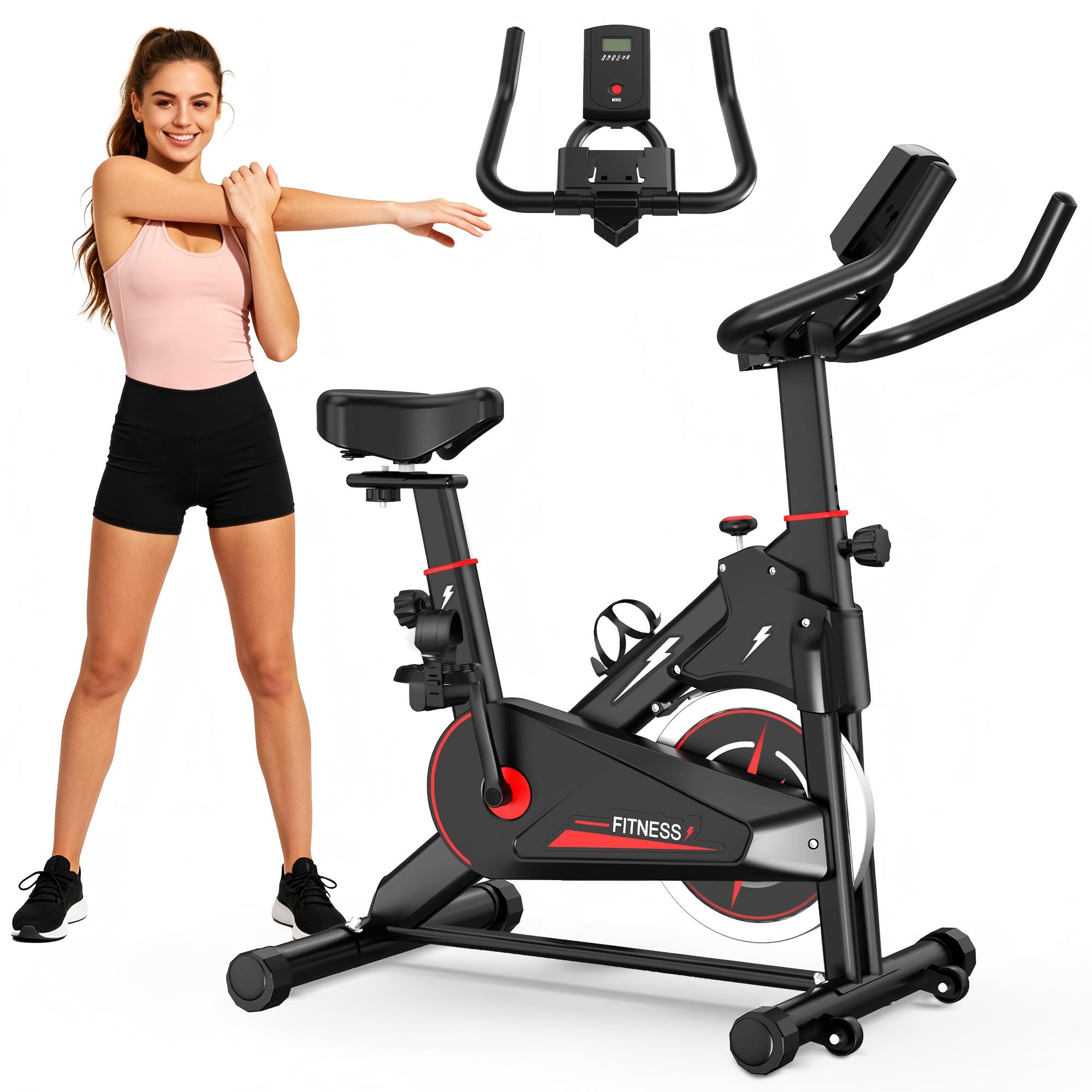 Indoor Exercise Bike, Stationary Cycling With Monitor, Adjustable Resistance, Comfortable Seat & Handlebars, Stable Base, Portable Design Home Fitness Workout Cycle For Daily Use$135.99
 View on Mallflare
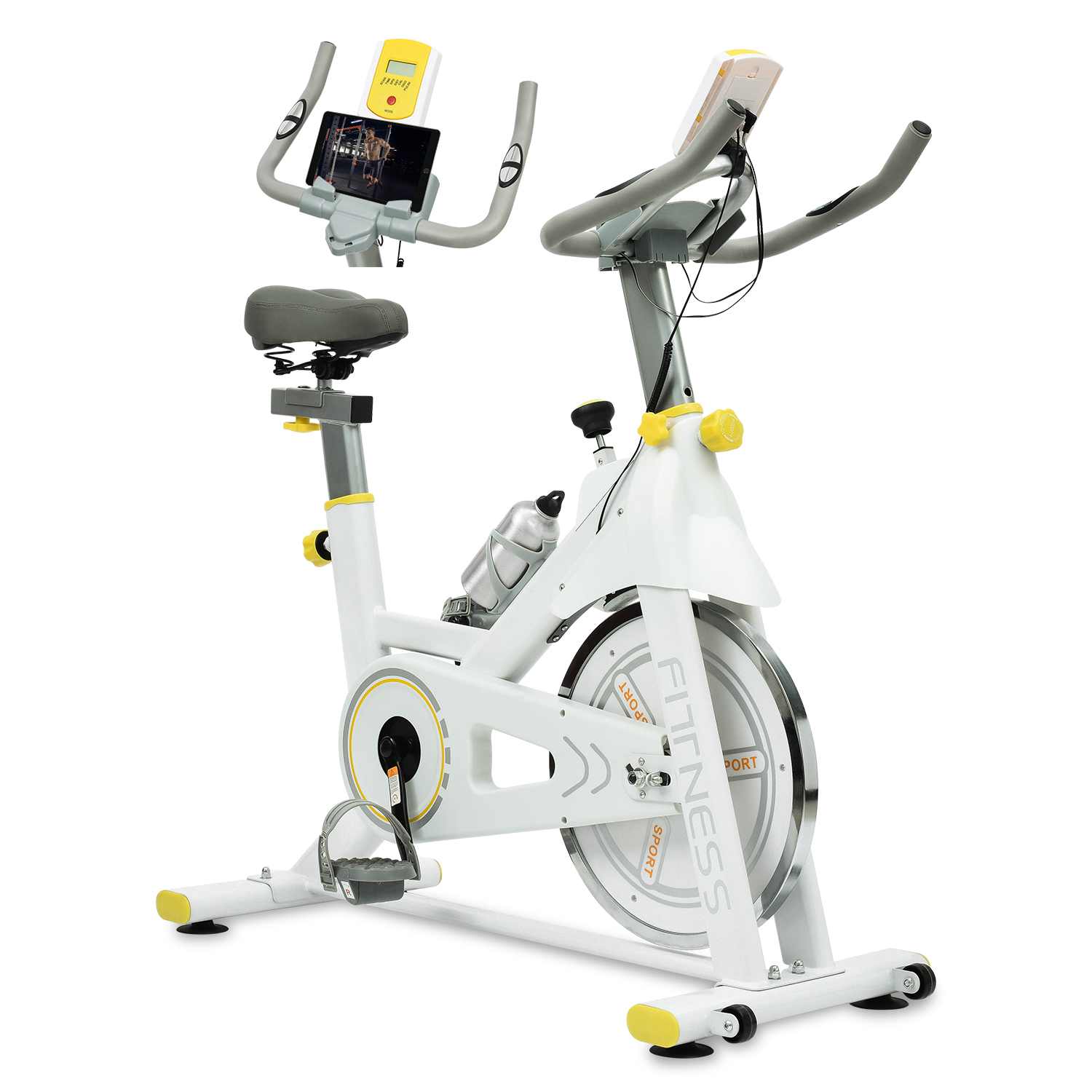 Indoor Exercise Bike Cycling with Comfortable Seat Cushion Yellow+White$243.99View on Mallflare
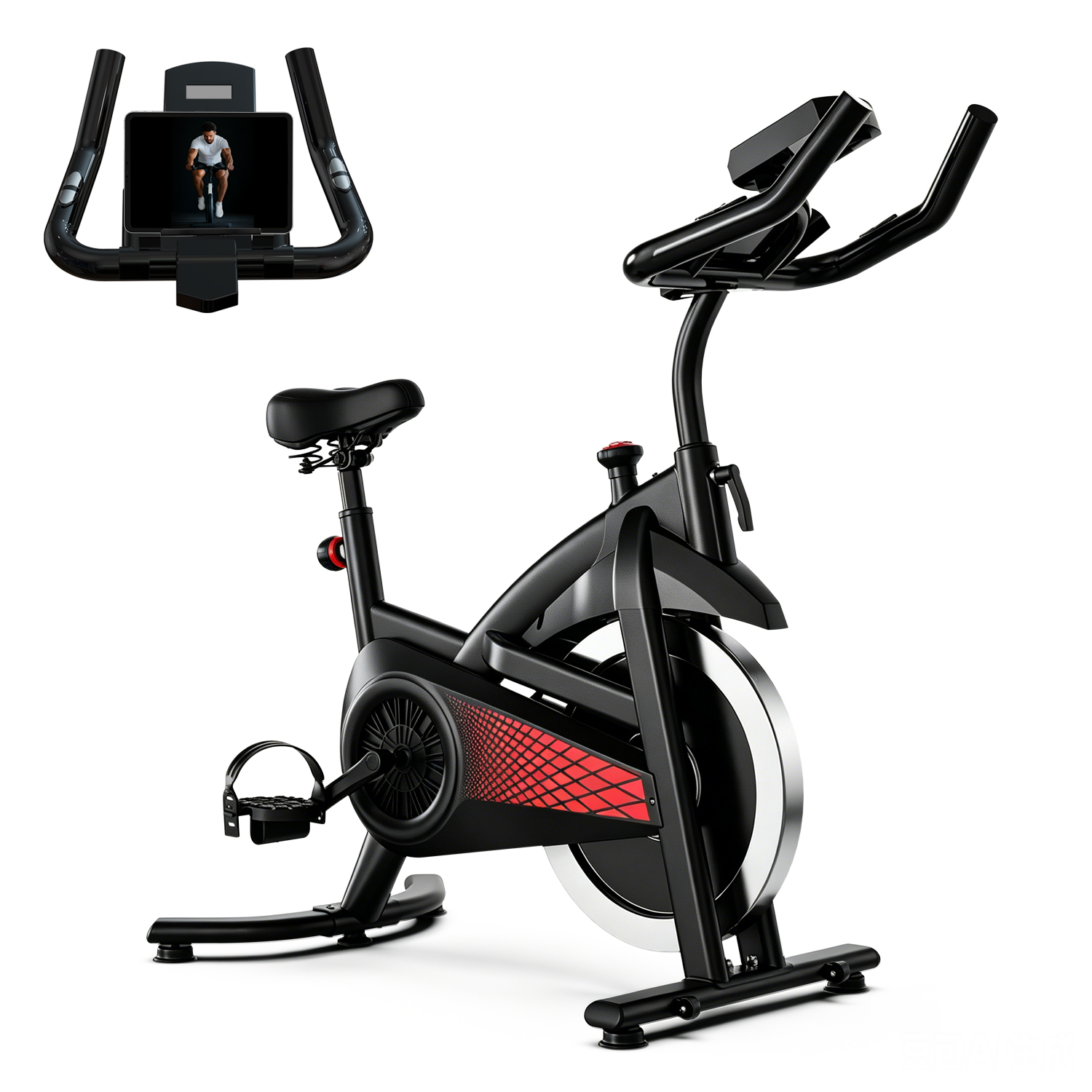 Exercise Bike, Adjustable Magnetic Resistance Stationary Bikes , Indoor With 330lbs Weight Capacity Comfortable Seat, Tablet Mount$121.99View on Mallflare
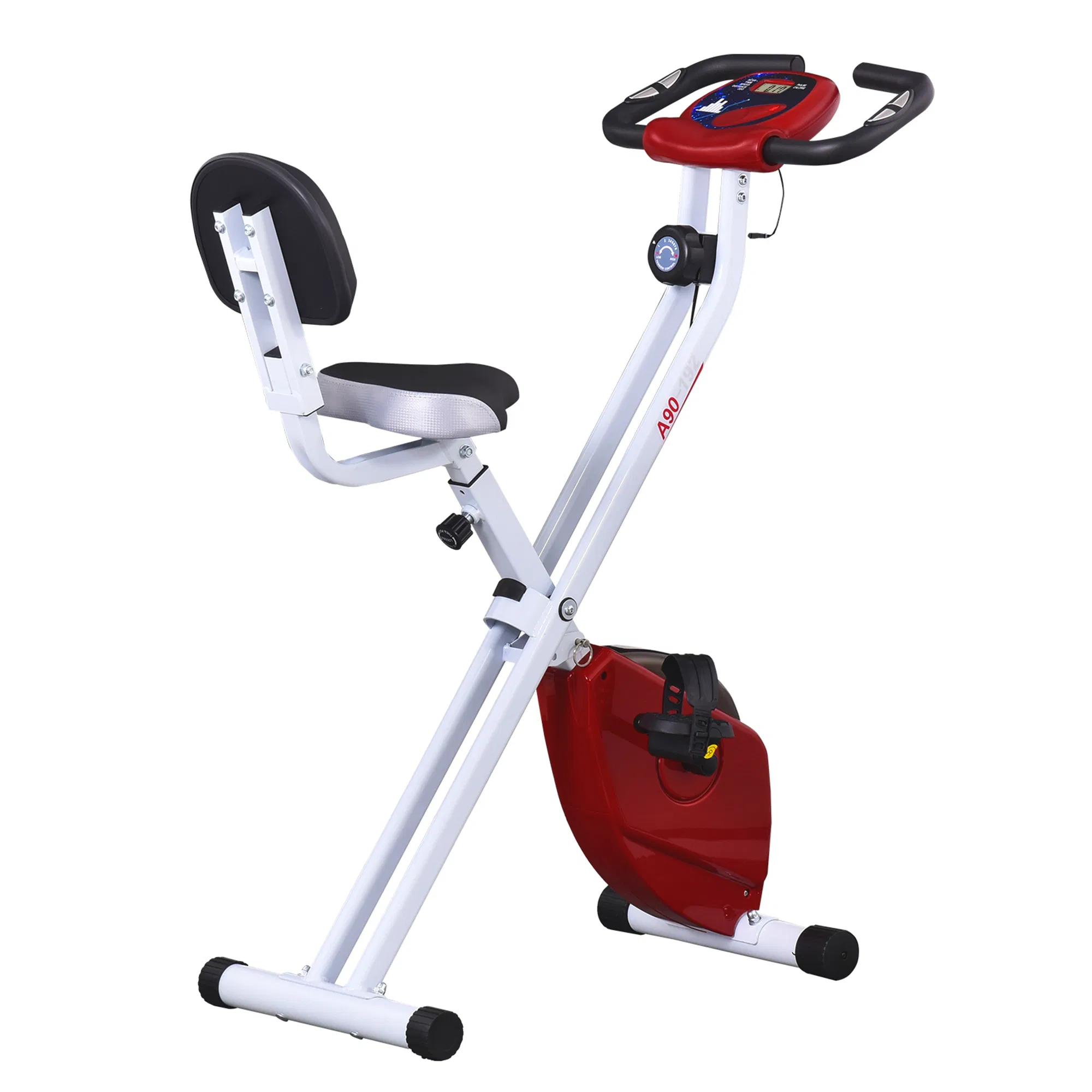 Foldable Indoor Stationary Bike with 8 Levels of Magnetic Resistance, Exercise for Cardio Workout, Red$220.99View on Mallflare
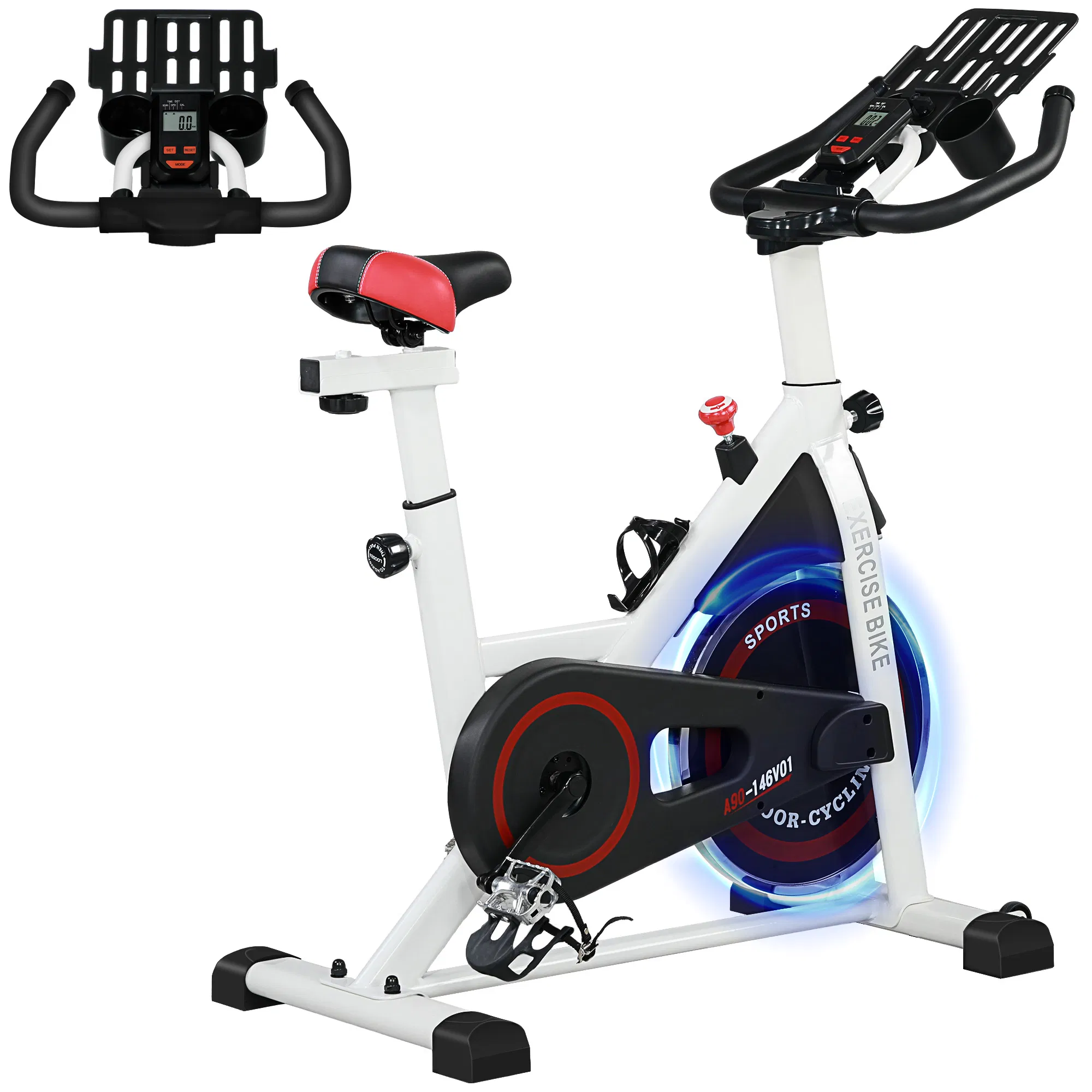 Adjustable Upright Stationary Exercise Bike w/ LCD Display, Indoor Cycling for Home w/ Resistance, White$350.99View on Mallflare
Highlights
- Resistance type is the durability divider: magnetic eddy-current systems have no wearing parts, while felt or leather friction pads wear and require replacement.
- Flywheel weight sets pedaling smoothness and momentum; 18–22 kg is the home-use sweet spot, and sub-10 kg wheels feel choppy at speed.
- Belt drives run quieter and need no lubrication; chain drives transmit more road feel but require periodic greasing and tension checks.
- Upright frames target cardio and calorie burn; spin-bike geometry with a 4-way adjustable seat and handlebar suits interval and standing climbs.
Best use cases
- Best fit for apartment cardio: a magnetic-belt upright bike with a 15–20 kg flywheel runs near-silent and needs no floor protection beyond a thin mat.
- Best fit for high-intensity interval training: a spin-style bike with a heavy 20 kg+ flywheel and 4-way adjustable seat/handlebar handles standing sprints without flex.
- Wrong fit: a folding bike or one with an 8-level micro-adjustment knob only is for light, low-resistance pedaling—skip it for structured training or riders over 100 kg.
- Wrong fit: a friction-pad bike is a poor choice for daily use because the pad wears, sheds dust, and resistance drifts as it heats.
Buying tips
- Match max rider weight rating to your body weight plus 20 kg headroom; a 150 kg rated frame is the safe tier for riders above 110 kg.
- Choose 4-way adjustable seat and handlebars (up/down and fore/aft); 2-way adjustment forces compromise and causes knee or lower-back strain.
- Prefer infinitely variable magnetic tension or 32+ resistance levels over 8-level knobs; finer steps matter for steady-state zone-2 riding.
- Confirm the flywheel is at least 18 kg and the drive is a belt for home use; a chain and sub-10 kg wheel belongs in a gym, not a bedroom.
Specs
| Resistance Type | Magnetic eddy-current vs felt friction |
|---|---|
| Flywheel Mass | 8-25 kg; 18-22 kg home sweet spot |
| Drive System | Belt (quiet) vs chain (serviceable) |
| Rider Capacity | 100-150 kg rated frame |
Related searches
What to check before buying
- Measure your floor space and ceiling height; upright bikes need roughly 120 x 55 cm of floor and 30 cm of clearance above your standing height for handlebar reach.
- Check your floor type: a 3–5 mm rubber mat under the bike protects hardwood and dampens vibration for downstairs neighbors.
- Verify the power standard: most consoles run on 2 AA batteries or a 5 V USB adapter; confirm the plug matches your 110 V or 220 V outlet.
- Confirm saddle compatibility: standard rails accept aftermarket saddles, but proprietary seat posts limit replacement options.
FAQ
Data sources: eBay / Amazon listings and product attribute feeds Data updated Nov 16, 2026.
Some links on this page are affiliate links. If you buy after clicking one, we may earn a commission at no extra cost to you. This does not change which products appear here or their order. Affiliate disclosure.