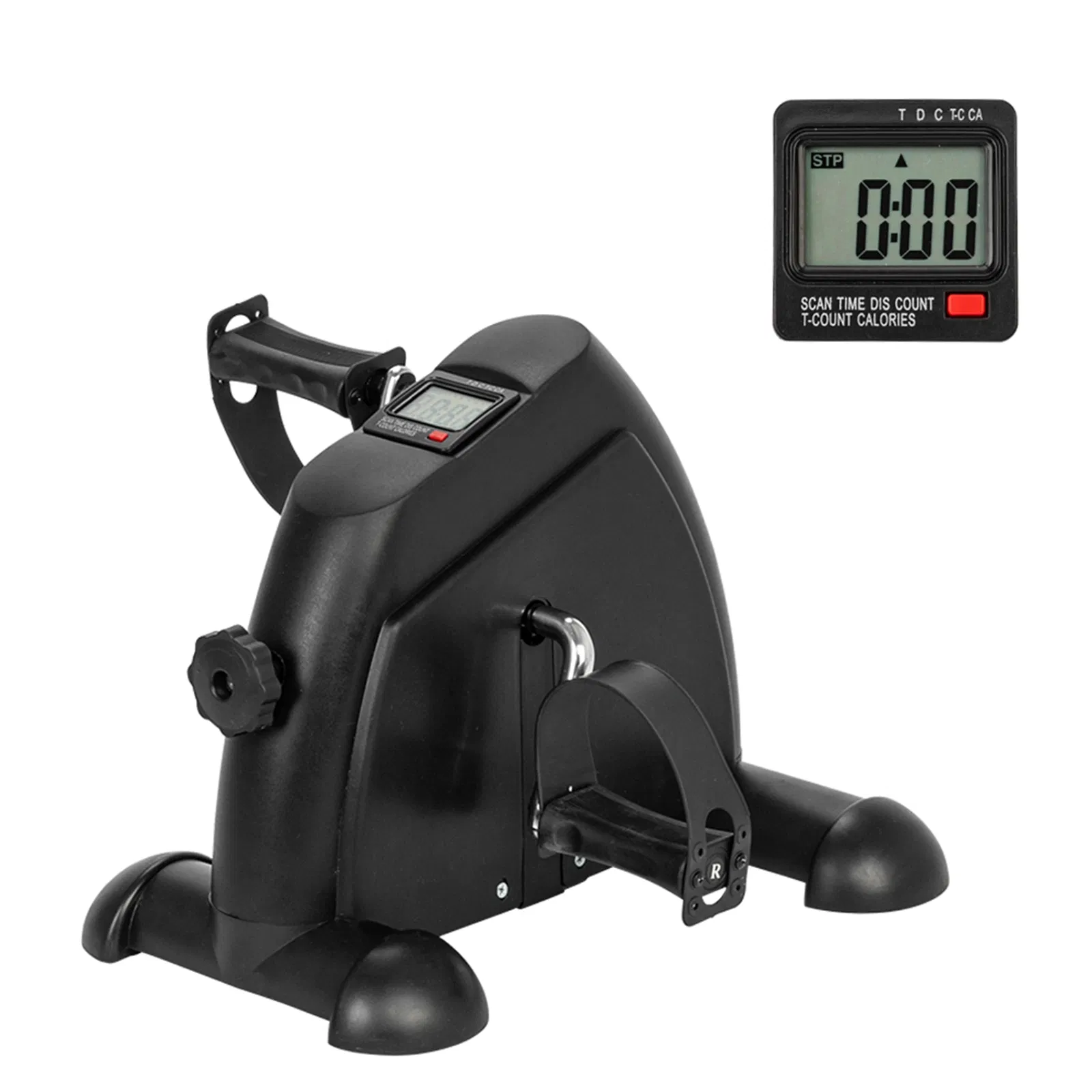

Photos from current listings. Actual item, color, and included accessories may vary.
Mini Exercise Bike Buying Guide
A mini exercise bike is a compact, pedal-only cardio and rehabilitation tool that drives a flywheel via a resistance mechanism, letting you train legs or arms from a chair or sofa. The core trade-off is between cheap friction-belt resistance that wears and slips, and magnetic or fan resistance that holds calibration and lasts. The decision rule: buy a magnetic or fan-resistance unit with weighted pedals and a stable, wide base; skip any friction-strap model with plastic pedal arms and a narrow footprint.


At a glance
- Category
- Cardio Machines
- Data updated
- Nov 16, 2026
Current offers
Highlights
- Resistance type is the durability divider: friction-belt units lose tension and shed fibers, while magnetic units use sealed magnets with no wear surface.
- Pedal arm construction separates tiers: steel arms with sealed cartridge bearings last, while plastic or bushing-mounted arms develop wobble and strip threads.
- Base stability comes from footprint and mass: wider, heavier bases with non-slip feet resist rocking during seated pedaling far better than narrow, light frames.
- Weighted pedals with adjustable toe straps keep feet or hands engaged, improving stroke quality and reducing the chance of slips at higher cadence.
Best use cases
- Best fit for desk-bound office workers or seniors: a magnetic mini bike with a wide base and weighted pedals for under-desk leg or arm pedaling; skip friction-strap models that loosen tension.
- Best fit for physical therapy or knee rehabilitation: a low-resistance magnetic unit with smooth sealed bearings and adjustable pedal straps; skip fan-resistance bikes that ramp resistance abruptly.
- Wrong fit for standing or high-intensity cardio: mini bikes are seated-only and cannot substitute for a full-size spin bike or treadmill; choose a full-size ergometer for standing sprints.
Buying tips
- Measure your under-desk clearance first: you need roughly 12–14 inches of knee clearance and a seat height that keeps thighs near parallel to the floor when pedaling.
- Choose magnetic resistance over friction-belt: magnets do not wear, hold tension settings, and run quieter, while friction straps stretch and glaze over time.
- Check pedal arm material: steel crank arms with sealed bearings outlast plastic arms, which develop play and can crack at the pedal spindle.
- Match resistance adjustment to your goal: dial-tension magnetic units suit steady pedaling and rehab, while fan-resistance units increase resistance with cadence for interval work.
Specs
| Resistance Type | Magnetic vs friction belt vs fan |
|---|---|
| Pedal Arm Material | Steel crank vs plastic arm |
| Base Footprint | Wide non-slip base vs narrow frame |
| Pedal Type | Weighted with straps vs flat plastic |
Related searches
What to check before buying
- Measure the space under your desk or table: confirm at least 12–14 inches of height clearance for your knees at the top of the pedal stroke.
- Check your chair or sofa seat height against the bike height so your thigh stays near horizontal and your foot reaches the pedal without overextending.
- Confirm the unit ships with non-slip feet or a floor mat, and that your floor type (hardwood, tile, carpet) will not let the base slide during pedaling.
- Verify pedal straps and pedal size fit your shoe or bare foot, and that the resistance dial is reachable from your seated position.
FAQ
Data sources: eBay / Amazon listings and product attribute feeds Data updated Nov 16, 2026.
Some links on this page are affiliate links. If you buy after clicking one, we may earn a commission at no extra cost to you. This does not change which products appear here or their order. Affiliate disclosure.