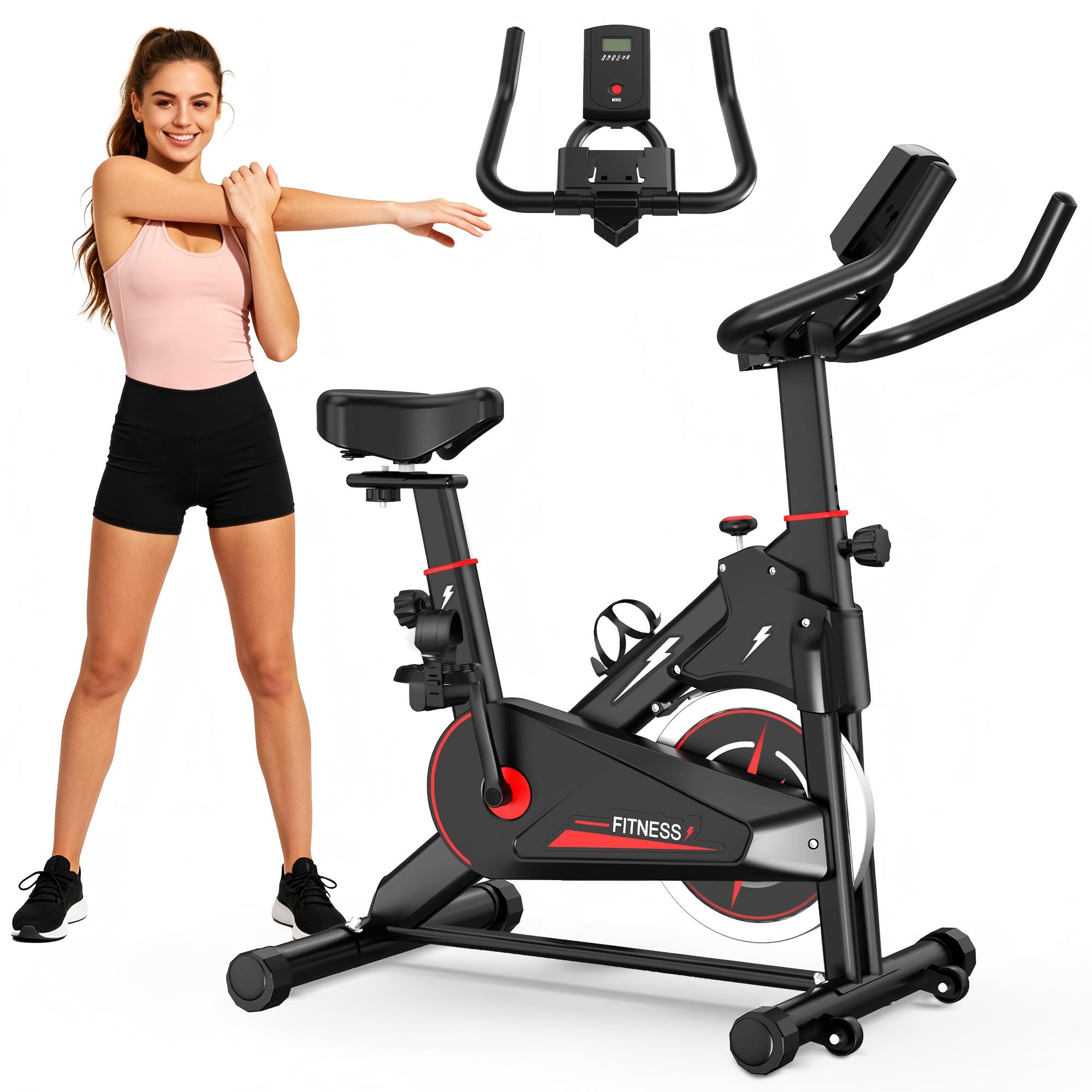

Photos from current listings. Actual item, color, and included accessories may vary.
Portable Exercise Bike Buying Guide
A portable exercise bike is a compact, often folding or lightweight indoor cycle designed for small spaces, easy storage, and low-impact cardio. The core trade-off is between a stable, durable frame with meaningful resistance and a lightweight, foldable design that may flex or lack flywheel inertia. Choose a folding frame with a rated user weight and magnetic resistance for apartment use; skip ultra-light models under 20 lb if you plan to stand or sprint.


At a glance
- Category
- Cardio Machines
- Data updated
- Nov 16, 2026
Current offers
Highlights
- Folding bikes typically use a steel or aluminum X-frame with a hinge; steel handles higher user weight (250–300 lb) while aluminum saves 5–10 lb but flexes more under sprinting.
- Magnetic resistance is quieter and smoother than friction felt pads; look for 8+ levels and a belt drive rather than a chain for apartment-friendly noise under 60 dB.
- Flywheel weight separates feel: 6–10 lb flywheels suit light pedaling and storage, while 15–20 lb flywheels give smoother momentum but add 10–15 lb to total bike weight.
- Seat and handlebar adjustability ranges matter: a 4-way seat post (up/down, fore/aft) fits inseams from roughly 27 to 37 inches; fixed-post models limit shorter or taller riders.
Best use cases
- Best fit: apartment dwellers with under 20 sq ft of floor space — pick a folding magnetic bike under 50 lb with a 250 lb user-weight rating and transport wheels.
- Best fit: desk-adjacent light pedaling under a standing desk or while reading — choose a compact under-desk pedal bike with 8 resistance levels rather than a full upright frame.
- Wrong fit: daily sprint or standing intervals — skip portable folding frames and choose a full-size spin bike with a 30+ lb flywheel and 300 lb weight capacity.
- Wrong fit: riders over 300 lb or taller than 6 ft 4 in — standard portable frames have short seat posts and lower weight ratings; select a full-size upright instead.
Buying tips
- Match user weight to frame rating: folding steel frames typically rate 250–300 lb; aluminum folders rate 200–250 lb. Stay 20% under the max for sprint stability.
- Measure folded footprint before buying: most folding bikes collapse to roughly 20 x 20 x 50 in; confirm the folded height fits your closet or behind a door.
- Choose magnetic resistance with a belt drive for shared living spaces — friction pads wear and squeak, while magnetic belt systems stay under 60 dB and need no lubrication.
- Check seat height range against your inseam: seat post travel should cover your inseam plus 1–2 inches of bend at the knee; fixed short posts rule out riders under 5 ft 2 in.
Specs
| Frame Type | Folding steel / Folding aluminum |
|---|---|
| Resistance System | Magnetic belt vs friction pad |
| User Weight Rating | 200–300 lb by frame material |
| Folded Footprint | Approx. 20 x 20 x 50 in |
Related searches
What to check before buying
- Floor space: confirm at least 2 x 3 ft of clear footprint when unfolded and a folded storage spot at least 20 x 50 in.
- Rider measurements: inseam and user weight must fall inside the seat-post range and frame weight rating with a 20% safety margin.
- Floor and noise: use a rubber mat on hardwood or tile; magnetic belt drives are the only quiet option for upstairs apartments.
- Power and parts: most portable bikes are self-powered with an LCD monitor using AA batteries — no outlet needed; confirm the monitor battery type and any included tools.
FAQ
Data sources: eBay / Amazon listings and product attribute feeds Data updated Nov 16, 2026.
Some links on this page are affiliate links. If you buy after clicking one, we may earn a commission at no extra cost to you. This does not change which products appear here or their order. Affiliate disclosure.