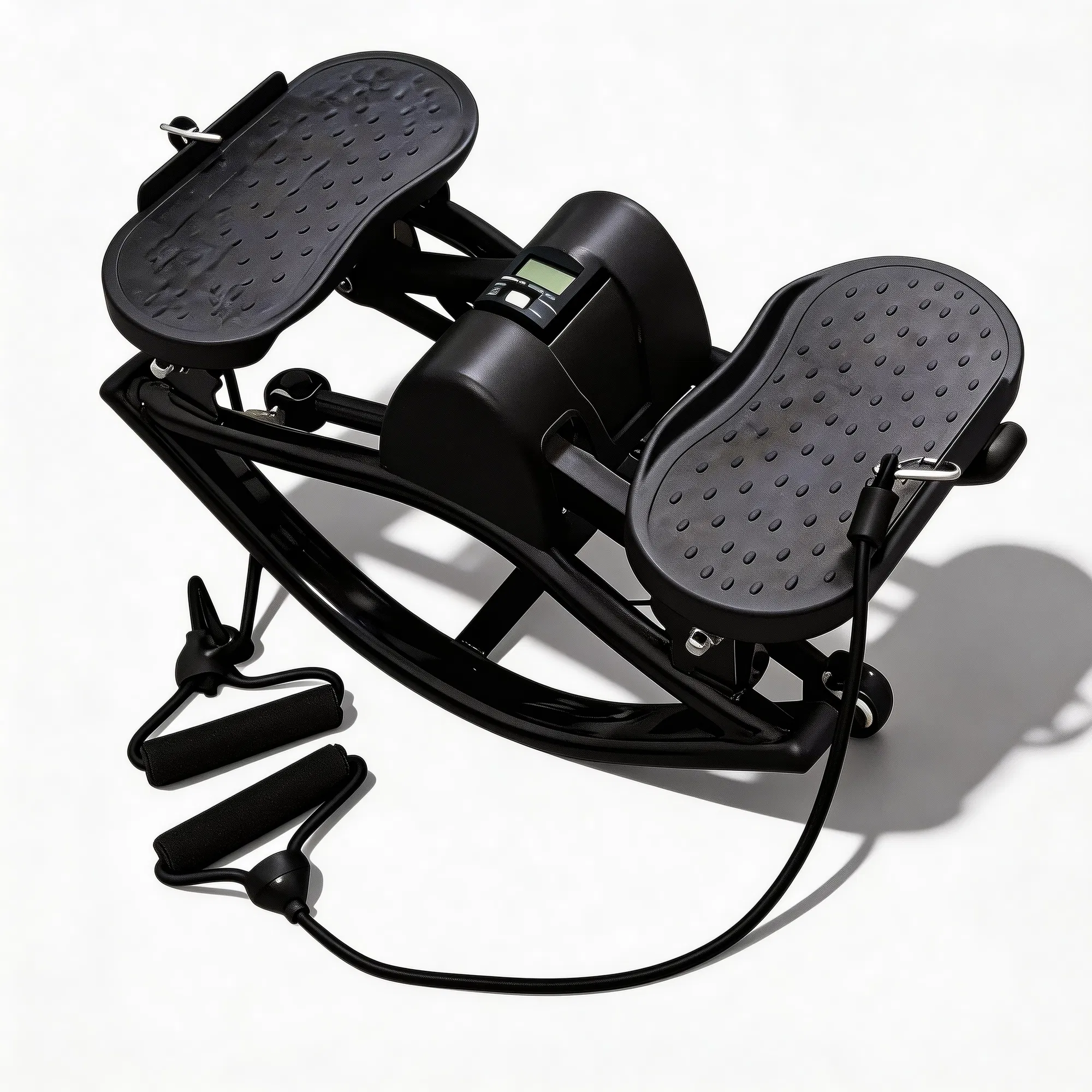

Photos from current listings. Actual item, color, and included accessories may vary.
Portable Stair Stepper Buying Guide
A portable stair stepper is a compact, low-impact cardio machine that mimics stair climbing using hydraulic resistance and a small footprint, typically under 2 feet wide. The core trade-off is hydraulic cylinder durability versus frame stability: cheap single-cylinder units leak and wobble, while dual-cylinder steel-frame models last years. The decision rule is simple: buy a dual-hydraulic-cylinder unit with a welded steel base and non-slip pedals if you weigh over 150 lb or plan daily use; skip any plastic-hinged or single-cylinder model.


At a glance
- Category
- Cardio Machines
- Data updated
- Nov 16, 2026
Current offers
Highlights
- Hydraulic cylinder count is the primary durability spec: dual-cylinder designs share load and last 2-3x longer than single-cylinder units that overheat and leak.
- Frame material determines stability: welded steel bases resist lateral wobble at full step extension, while plastic or stamped-metal hinges flex and crack under repeated load.
- Step height and pedal travel define workout intensity: 4-6 inch step depth with 8-12 inch vertical travel mimics real stair climbing; shallower travel reduces cardio benefit.
- Quiet operation depends on cylinder seals and pedal bushings: sealed hydraulic cylinders with nylon bushings run under 50 dB, while exposed springs and metal-on-metal pivots rattle.
Best use cases
- Best fit: apartment dwellers needing quiet, low-impact cardio in under 10 sq ft — choose a dual-cylinder sealed-hydraulic model with non-slip pedals and a digital step counter.
- Best fit: desk-bound workers adding movement breaks — pick a compact stepper under 25 lb with a built-in monitor and wide pedals for barefoot or sock use.
- Wrong fit: users over 250 lb or those wanting running-intensity cardio — skip portable steppers entirely; choose a full-size stair climber or treadmill with a rated user capacity above your weight.
- Wrong fit: buyers wanting adjustable resistance — most portable steppers have fixed hydraulic resistance; select a model with a resistance dial only if confirmed, otherwise expect one intensity level.
Buying tips
- Match user weight to frame rating: steel-frame dual-cylinder steppers typically support 220-300 lb; plastic-hinge units cap at 200 lb and should be avoided for daily use.
- Measure floor space first: most portable steppers need at least 20 x 16 inches of clear floor and 6 inches of side clearance for pedal swing.
- Prioritize sealed hydraulic cylinders over spring-loaded or friction-belt resistance — sealed hydraulics are quieter and require no maintenance.
- Check pedal dimensions: pedals under 10 inches long force heel overhang; choose pedals at least 12 inches long and 5 inches wide with textured rubber grips.
Specs
| Cylinder Type | Dual sealed hydraulic vs single/spring |
|---|---|
| User Weight Capacity | 200-300 lb (steel frame) / 200 lb max (plastic) |
| Footprint | 20 x 16 in approx. + 6 in side clearance |
| Step Travel | 8-12 in vertical / 4-6 in step depth |
Related searches
What to check before buying
- Confirm your weight is at least 20% below the stepper's rated user capacity for frame longevity and safety margin.
- Measure available floor space including pedal swing arc — minimum 20 x 16 inches footprint plus 6 inches clearance on each side.
- Verify the unit ships with non-slip pedals and a digital monitor; these are not universal add-ons and vary by model.
- Check assembly requirements: most portable steppers need 15-30 minutes of bolt-together assembly with included tools; confirm box dimensions fit your entryway.
FAQ
Data sources: eBay / Amazon listings and product attribute feeds Data updated Nov 16, 2026.
Some links on this page are affiliate links. If you buy after clicking one, we may earn a commission at no extra cost to you. This does not change which products appear here or their order. Affiliate disclosure.