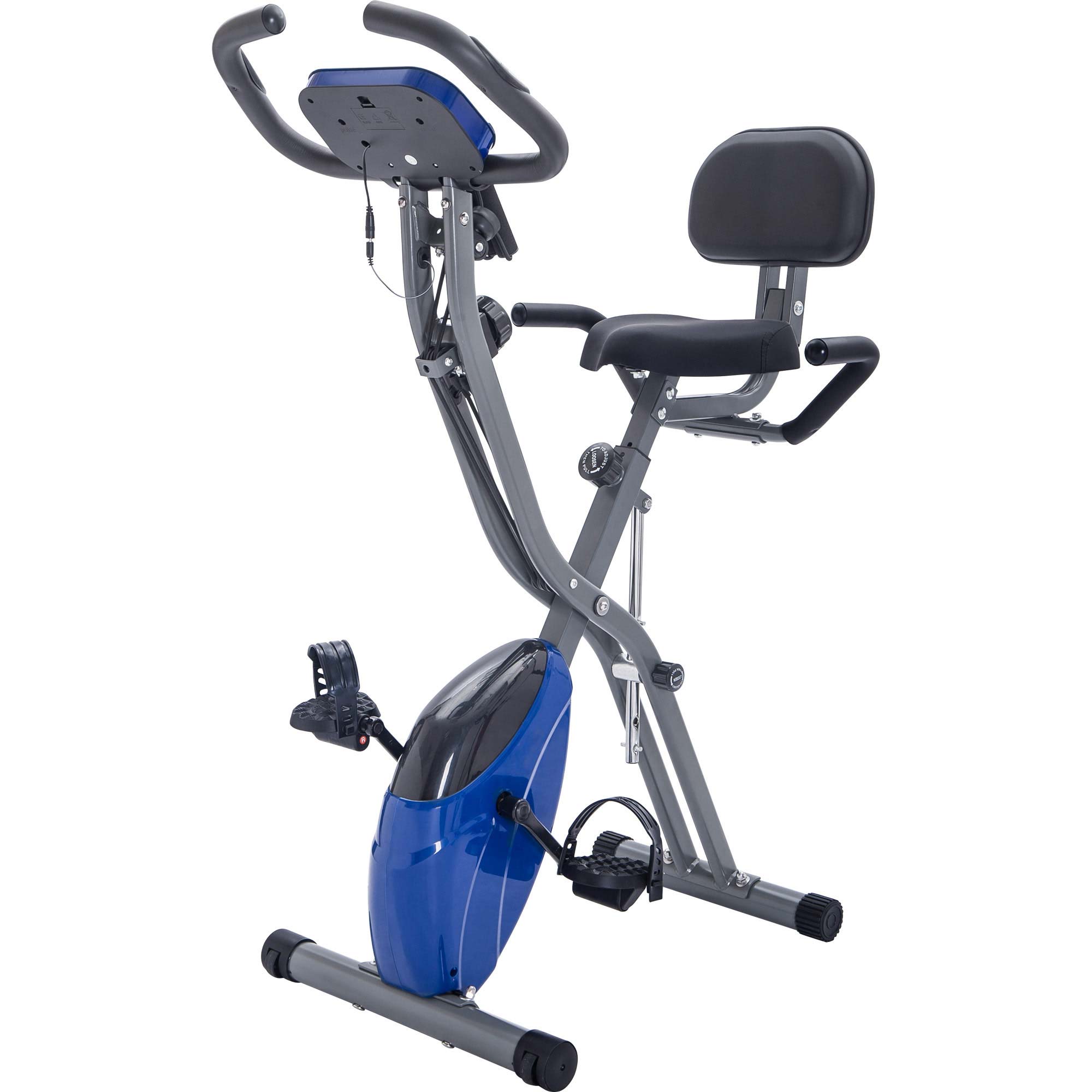

Photos from current listings. Actual item, color, and included accessories may vary.
Recumbent Exercise Bike Buying Guide
A recumbent exercise bike is a seated cardio machine with a wide bucket seat, backrest, and pedals positioned forward rather than below the hips, reducing spinal and wrist load. The core trade-off is frame rigidity and seat adjustability versus folding convenience: fixed-frame steel models deliver stable, low-step-through riding, while folding X-bikes trade some pedaling stiffness for storage. Buy fixed-frame for daily senior use; choose folding only where floor space truly dictates it.


At a glance
- Category
- Cardio Machines
- Data updated
- Nov 16, 2026
Current offers
Highlights
- Fixed-frame recumbents use welded steel or aluminum rails with a step-through center, while folding X-bikes hinge mid-frame and convert between upright and recumbent seating.
- Seat-to-pedal distance on recumbents is set by sliding the seat along the main rail, so inseam fit range matters more than overall bike length.
- Magnetic resistance with 8-10 levels is standard on folding X-bikes; heavier fixed-frame recumbents use heavier flywheels for smoother momentum.
- Recumbent geometry places the crank forward of the seat, reducing hip flexor strain and back pressure compared with upright bikes.
Best use cases
- Best fit: seniors or riders with back, hip, or balance limitations should pick a fixed-frame recumbent with a wide padded seat, full backrest, and low step-through rail.
- Wrong fit: buyers wanting sprint intervals or standing climbs should skip recumbents entirely—upright or indoor cycles suit high-cadence, high-wattage work.
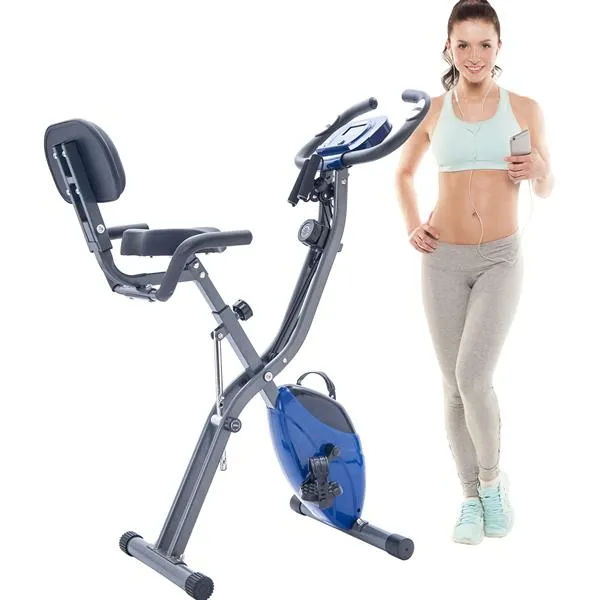
- Best fit: apartments or rooms under about 10 ft wide where the bike must fold away between sessions can use a folding X-bike in recumbent mode, accepting lighter frame stiffness.
- Wrong fit: riders over the frame's stated user-weight limit or with long inseams beyond the seat-rail travel should move to a fixed-frame model with a longer rail and higher capacity.
Buying tips
- Measure inseam and confirm the seat rail travel covers it; recumbent fit is seat-to-forward-crank distance, not standover height.
- Choose magnetic resistance over friction pads for quiet, consistent levels; 8+ levels give usable progression for rehab and general cardio.
- Prioritize a wide seat pan (roughly 12-14 in) and a backrest that reaches mid-back; narrow saddles defeat the recumbent advantage.
- For folding X-bikes, check the hinge and frame gauge—thicker steel and a locking pin reduce flex under pedaling load.
Specs
| Frame Type | Fixed recumbent vs folding X-bike |
|---|---|
| Resistance | Magnetic 8-10 levels / friction pad |
| Seat Adjust | Sliding rail, inseam-based fit |
| Drive | Belt (quiet) vs chain (serviceable) |
Related searches
What to check before buying
- Room footprint: fixed recumbents run long (often 55-70 in); confirm floor length plus clearance to swing legs onto the seat.
- User weight and inseam: match the frame's stated capacity and seat-rail range before choosing fixed versus folding.
- Floor and neighbors: magnetic resistance is near-silent; place on a mat over hardwood or upper-floor rooms to damp vibration.
- Assembly and tools: most ship partially assembled; confirm included tools and that the seat rail and console wiring are pre-routed.
FAQ
Data sources: eBay / Amazon listings and product attribute feeds Data updated Nov 16, 2026.
Some links on this page are affiliate links. If you buy after clicking one, we may earn a commission at no extra cost to you. This does not change which products appear here or their order. Affiliate disclosure.