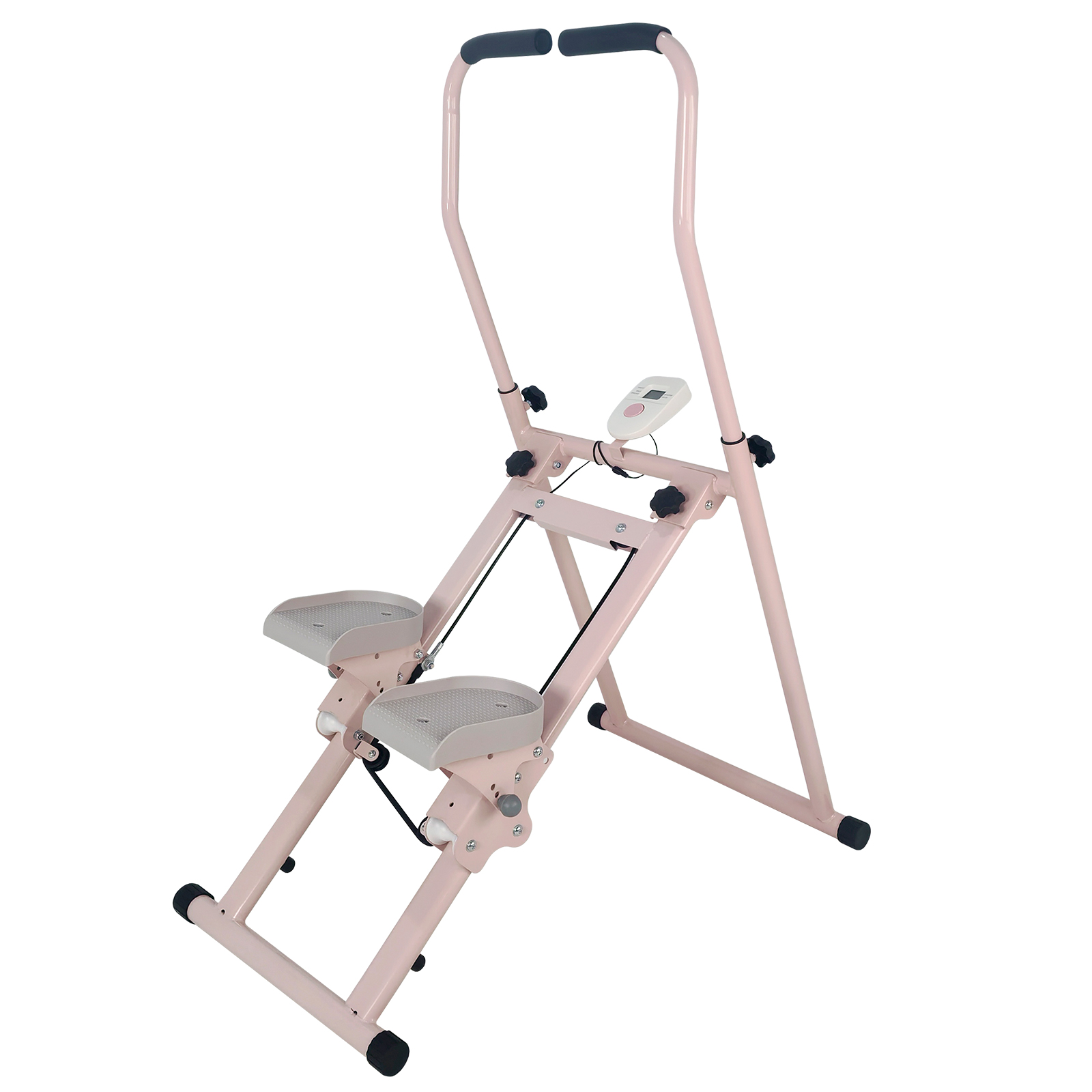

Photos from current listings. Actual item, color, and included accessories may vary.
Stair Master Machine Buying Guide
A stair master machine (also called a stair climber or stepper) simulates continuous stair climbing via a motorized revolving staircase or a pedal-based vertical climber. The primary trade-off is between a full-size motorized revolving-stair unit (gym-grade, high ceiling, dedicated circuit) and a compact pedal climber (home-friendly, lower step height, lighter flywheel). Durable options use steel frames rated to 300 lb+, commercial-grade belts/chains, and at least 10 resistance levels; compromises use thin-gauge tubing, short stroke length, and plastic pivot bushings.


At a glance
- Category
- Cardio Machines
- Data updated
- Nov 16, 2026
Current offers
Highlights
- Revolving-stair (escalator-style) machines use a 1-2 HP AC motor driving a chain/belt staircase; pedal climbers use air or magnetic resistance with no motor.
- Commercial stair climbers carry 350-400 lb user weight ratings and 11-14 inch step height; home pedal climbers typically rate 220-300 lb with 8-12 inch stroke.
- Step rate range of 20-165 steps per minute (SPM) separates full gym machines from fixed-resistance home steppers limited to ~120 SPM.
- Frame tubing gauge matters: 14-16 gauge steel with welded joints outlasts 18-gauge bolt-together frames that flex and loosen at pivot points.
Best use cases
- Best fit: a dedicated home gym with 9 ft+ ceiling and 20A circuit — choose a motorized revolving-stair climber with 300 lb+ rating and 10+ programs.
- Best fit: apartment or low-ceiling room — choose a compact pedal vertical climber with folding frame, under 60 lb, and magnetic or air resistance.
- Wrong fit: users over 250 lb on a budget folding stepper — skip folding pedal units and choose a fixed steel-frame climber rated to 300 lb+.
- Wrong fit: rehab or low-impact knee recovery — skip stair climbers and choose a recumbent bike or elliptical; stair climbing imposes 1.5-2x body weight per step.
Buying tips
- Match user weight to frame rating with 20% headroom: a 200 lb user needs a 250 lb+ rated machine; folding pedal climbers under 250 lb rating are light-duty only.
- Measure ceiling height: revolving-stair machines need 9-10 ft clearance for the average user; pedal climbers need only 7-8 ft but require 4 ft of rear clearance.
- Choose magnetic resistance over air resistance for quiet operation: air climbers are loud (70+ dB) and resistance rises with speed; magnetic offers 8-16 discrete levels.
- Verify power: motorized stair climbers draw 15-20A at 120V; confirm a dedicated 20A circuit — sharing a 15A bedroom circuit trips breakers under load.
Specs
| Drive Type | Motorized revolving stair vs pedal |
|---|---|
| Weight Capacity | 220-400 lb (home vs commercial) |
| Step Height | 8-14 in (pedal vs revolving) |
| Resistance Levels | 8-16 magnetic / air / motor |
Related searches
What to check before buying
- Floor space: motorized units need a 3 ft x 5 ft footprint plus 2 ft side clearance; pedal climbers need 2 ft x 4 ft.
- Ceiling height: measure from floor to ceiling; subtract 12 inches for headroom; revolving-stair units need 9-10 ft, pedal climbers 7-8 ft.
- Floor load: a 250 lb machine plus 200 lb user on 4 contact points stresses flooring; use a 6mm rubber mat over concrete or joist-reinforced floors.
- Electrical: confirm a grounded 120V 20A dedicated outlet within 6 ft of the machine; avoid extension cords for motorized units.
FAQ
Data sources: eBay / Amazon listings and product attribute feeds Data updated Nov 16, 2026.
Some links on this page are affiliate links. If you buy after clicking one, we may earn a commission at no extra cost to you. This does not change which products appear here or their order. Affiliate disclosure.