Photos from current listings. Actual item, color, and included accessories may vary.
Trampoline Buying Guide
Trampolines for cardio are rebounders or mini-trampolines sized for indoor adult fitness, where the core trade-off is spring vs bungee suspension: springs give firmer, faster rebound and higher durability but are louder, while bungees are quieter and gentler but wear and stretch over time. The decision rule: pick a bungee model only if noise and joint comfort matter most, pick a spring model if you want consistent bounce and long-term durability, and always match deck diameter and weight rating to your height and workout intensity.


At a glance
- Category
- Cardio Machines
- Data updated
- Nov 17, 2026
Current offers
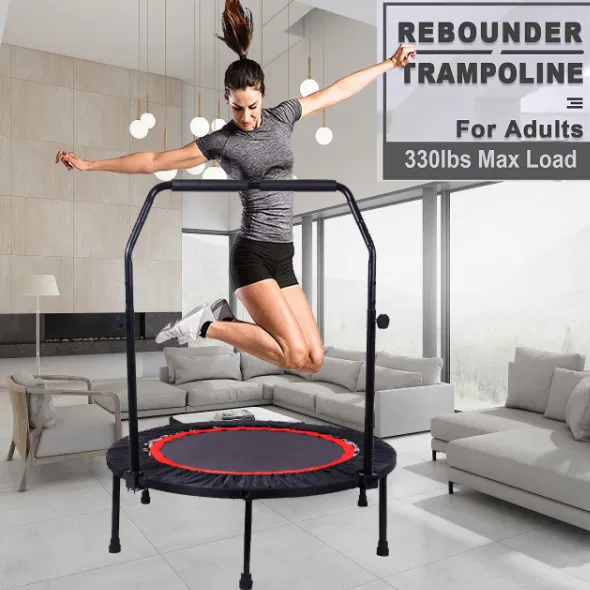 40 Inch Mini Exercise Trampoline For Adults Or Kids Indoor Fitness Rebounder With Safety Pad Max. Load 300LBS$75.99
 View on Mallflare
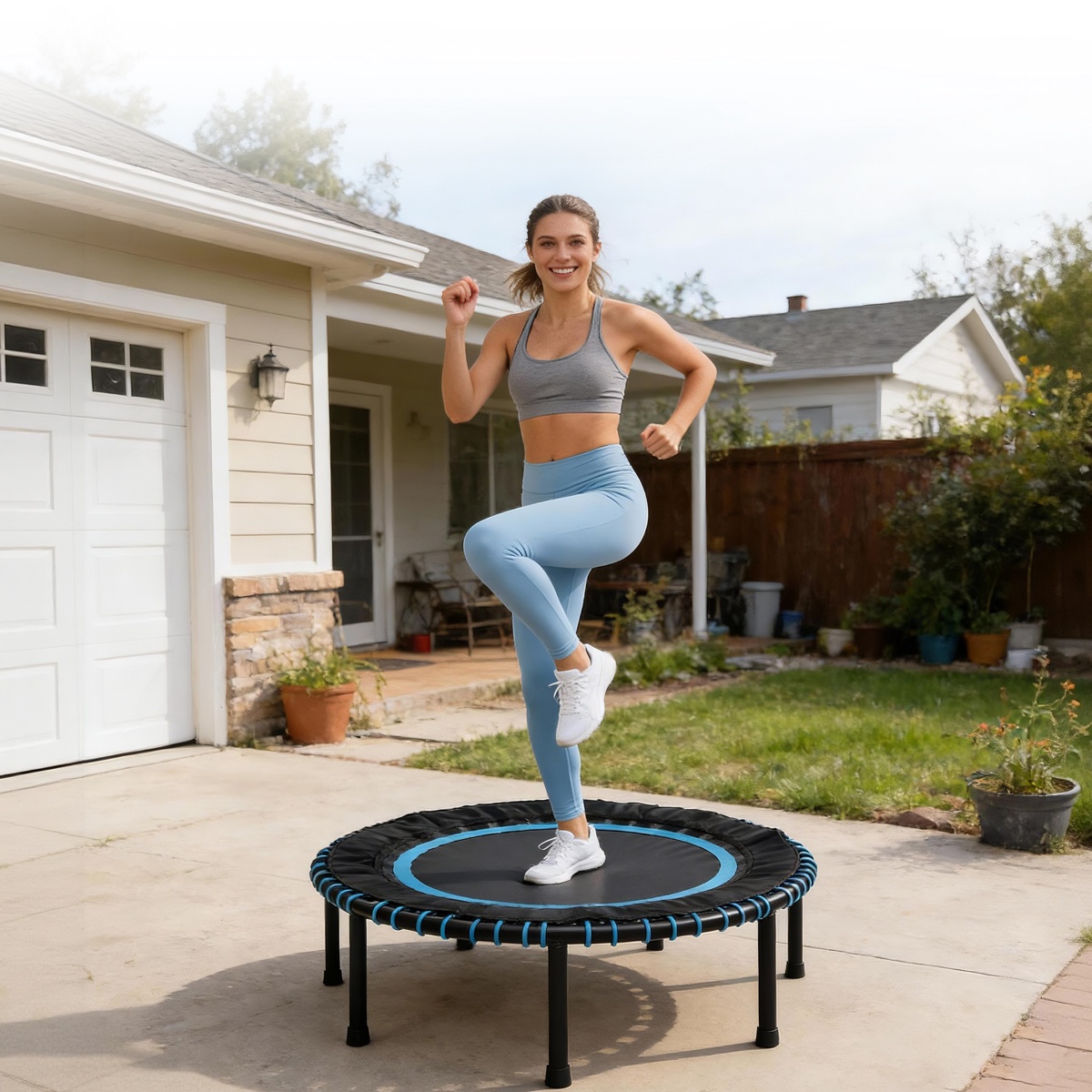 40 inch Adult Fitness Trampoline with Durable Bungees, Stable & Quiet Exercise Rebounder,Great Mini for Indoor/Garden Workout,Max Load 330 lbs for Cardio, Balance & Family$112.99View on Mallflare
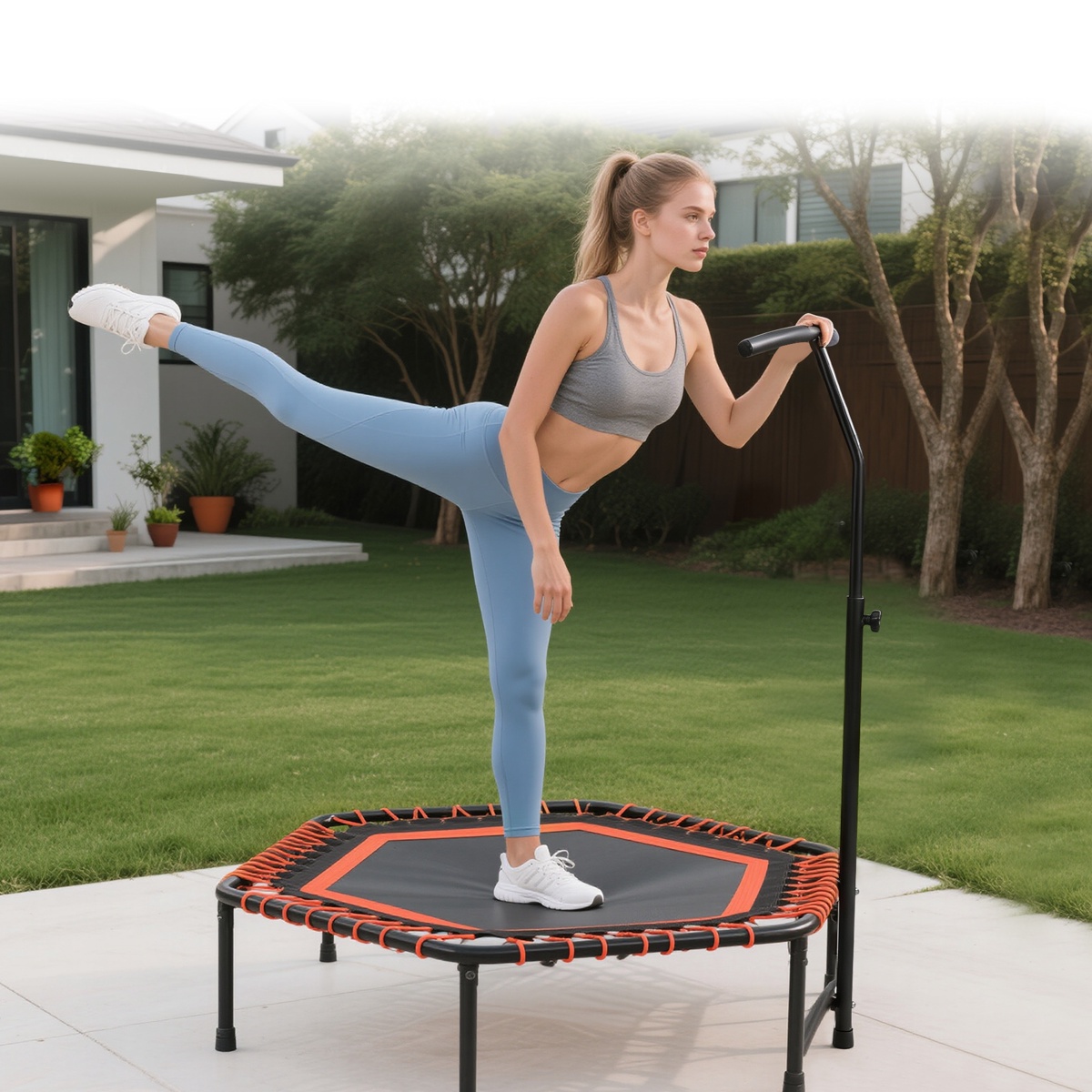 48 Mini Rebounder For Adults With Adjustable Handle Bar, Bungee Ropes, Stable & Quiet, Indoor Outdoor, Whole-Body Workout & Relaxation ,Fitness Trampoline For Home And Gym, Cardio & Strength Training$119.99View on Mallflare
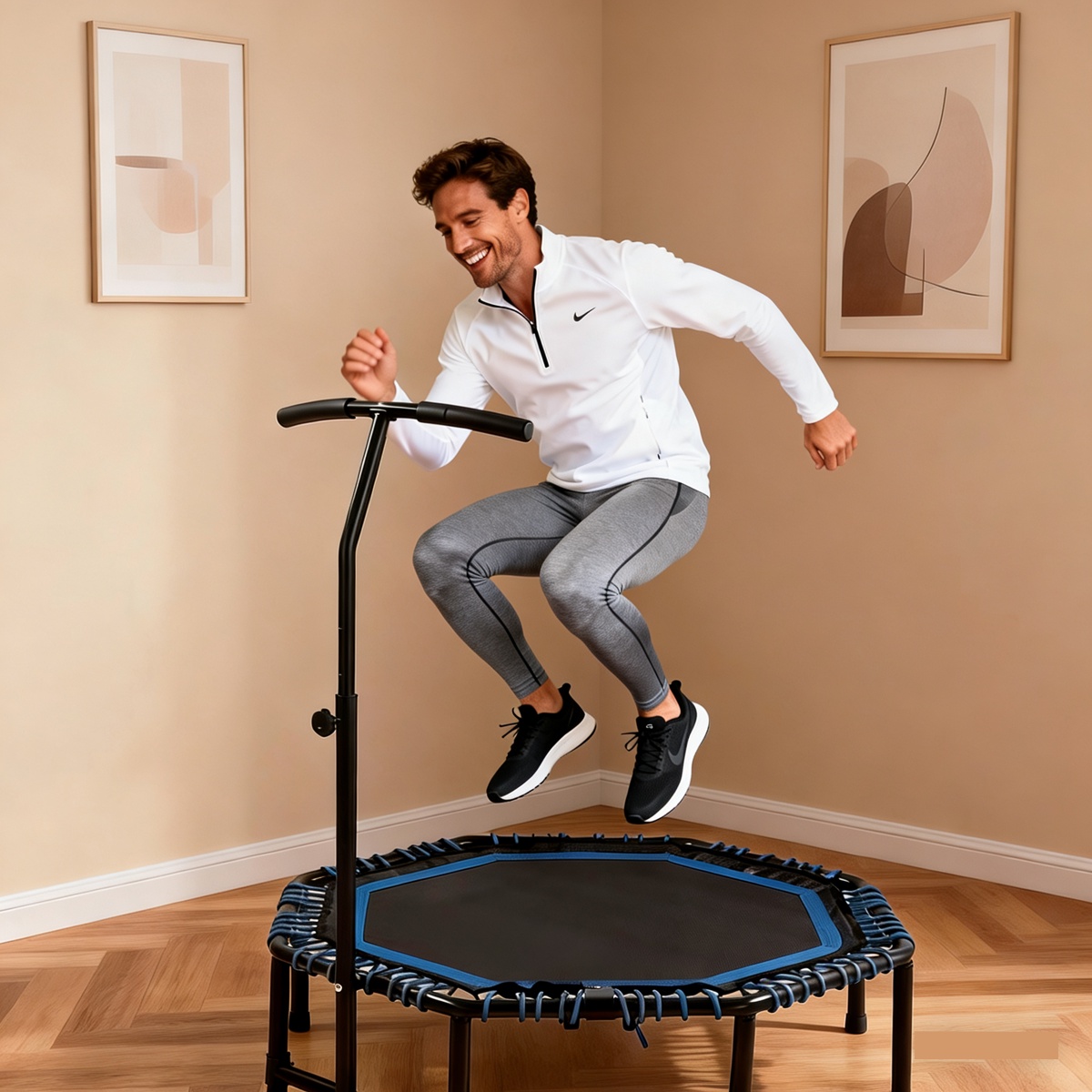 48 Inch Foldable Fitness Trampoline With Adjustable Handlebar For Adults, Max Load 450lbs,With Durable Bungee Ropes,Stable & Quiet, Rebounder For Cardio & Strength Training, Home Gym,Jumping Exercise$126.99View on Mallflare
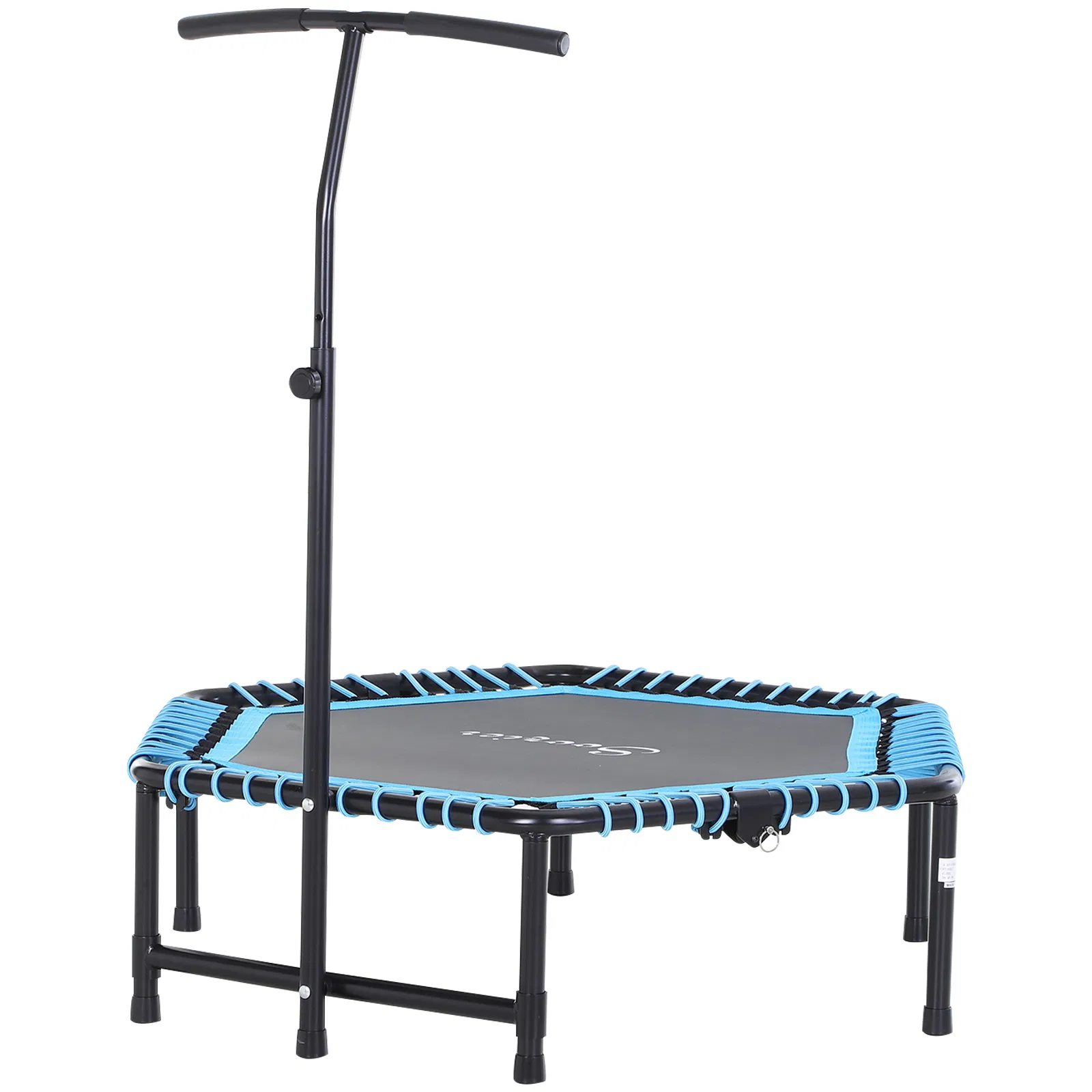 4.5ft Exercise Trampoline, Portable & Foldable Fitness with Adjustable T-Bar and Heavy-Duty Design, Blue$138.99View on Mallflare
Highlights
- Suspension type defines feel and lifespan: steel springs deliver firmer, more consistent rebound and last years; elastic bungees are quieter and softer but stretch and need replacement every 1-3 years under daily use.
- Deck diameter drives usable bounce area: 40-inch models suit single-user low-impact cardio in tight rooms; 48-inch and 4.5 ft decks give more landing room for jogging and higher-weight users.
- Weight ratings cluster in tiers: 300 lb for 40-inch spring models, 330 lb for 40-inch bungee models, and 450 lb for 48-inch bungee models with reinforced frames—choose a rating at least 50 lb above the heaviest user.
- Handle bars are bolt-on T-bars or adjustable U-bars; they add stability for beginners and balance work but reduce clearance for flips and advanced rebounding, so pick a model whose bar is removable if you progress.
Best use cases
- Best fit: a 40-inch bungee rebounder with a 330 lb rating for a single adult doing low-impact jogging, walking, and balance work in an apartment—quiet suspension and compact footprint suit shared floors.
- Best fit: a 48-inch or 4.5 ft model with a 450 lb rating and adjustable handlebar for heavier users or those who want full jogging strides, handle-assisted balance, and family use in a garage or garden.
- Wrong fit: skip a 40-inch spring model for a user over 250 lb or for high-impact jumping—firmer springs plus a small deck concentrate load and increase injury risk at higher body weight.
- Wrong fit: skip any rebounder with a non-removable tall handlebar if the goal is advanced rebounding, trampoline fitness classes, or low-ceiling rooms—the bar limits movement and head clearance.
Buying tips
- Match deck size to stride: users under 5'10" can jog on a 40-inch deck; users 5'10" and taller or those doing high-knee drills need 48 inches or 4.5 ft to avoid landing on the frame pad.
- Choose a weight rating at least 50 lb above the heaviest user—a 300 lb rating for a 250 lb user leaves little margin for dynamic jump loads, so step up to a 450 lb tier.
- Prefer bungee models for apartments and shared floors (quiet, no metal-on-metal squeak) and spring models for garages or dedicated gyms where firm, fast rebound and long service life matter more than noise.
- Check frame construction: welded steel frames with six or more legs and a full-coverage safety pad are the durability baseline; folding frames add portability but introduce hinge wear, so pick folding only if storage space is tight.
Specs
| Suspension Type | Steel springs vs elastic bungees |
|---|---|
| Deck Diameter | 40 in / 48 in / 4.5 ft |
| Weight Rating | 300-450 lb by tier |
| Handlebar | None / fixed T-bar / adjustable |
Related searches
What to check before buying
- Measure the room and ceiling: a 48-inch deck needs roughly 5 ft of clear floor diameter plus 2-3 ft overhead clearance for handlebar models; a 40-inch deck fits in about 4 ft.
- Confirm floor type and neighbors: bungee suspension is the safe choice for upper-floor apartments and hardwood; springs are acceptable on carpeted concrete or in garages.
- Verify the weight rating against the heaviest user plus 50 lb, and check that the handlebar height adjusts to roughly hip-to-waist level for balance support.
- Confirm assembly and parts: folding models need hinge-lock checks, spring models need a spring-pull tool, and bungee models need replacement cords available in the correct length.
FAQ
Data sources: eBay / Amazon listings and product attribute feeds Data updated Nov 17, 2026.
Some links on this page are affiliate links. If you buy after clicking one, we may earn a commission at no extra cost to you. This does not change which products appear here or their order. Affiliate disclosure.