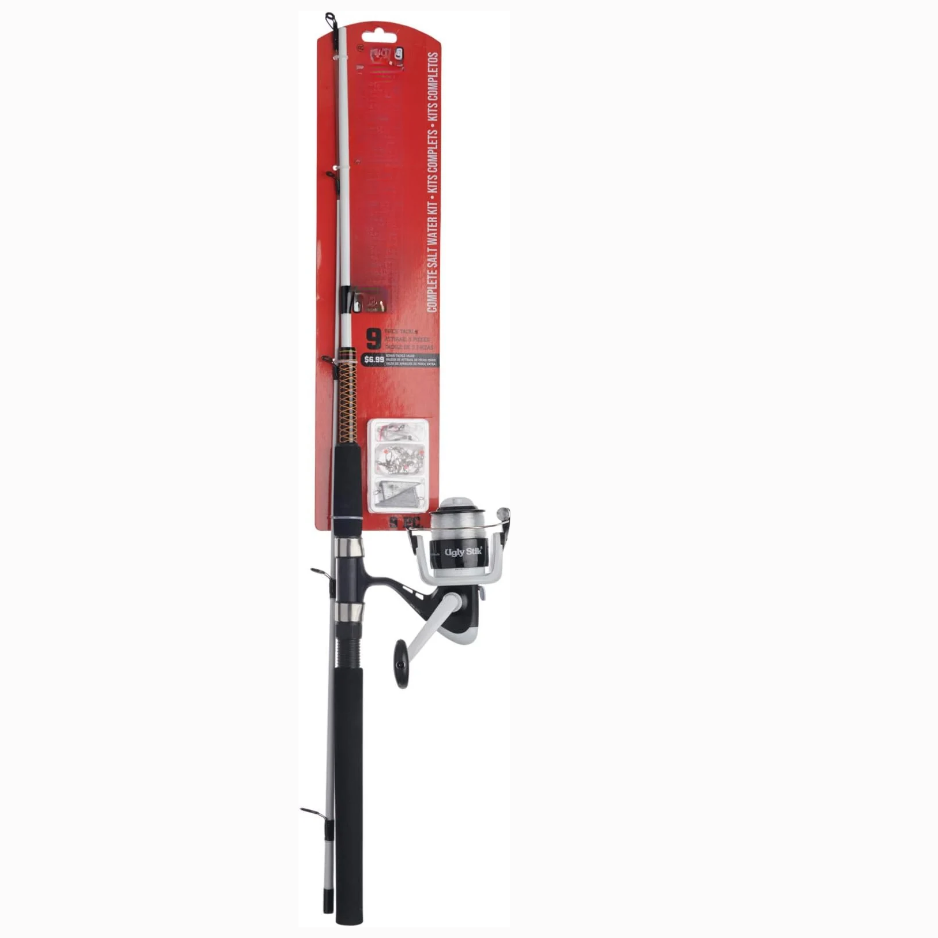

Photos from current listings. Actual item, color, and included accessories may vary.
Beginner Fishing Rod Buying Guide
A beginner fishing rod is a complete, pre-rigged combo designed to reduce setup errors while you learn casting, hooksets, and fish fighting. The primary trade-off is spincast convenience versus spinning versatility, and the clear rule is: buy a spincast combo only for push-button simplicity, and step to a spinning combo if you plan to fish regularly or target varied species.


At a glance
- Category
- Fishing Rods
- Data updated
- Nov 16, 2026
Current offers
Highlights
- Spincast reels enclose the line in a nose cone with a push-button release, eliminating backlash but limiting casting distance and line visibility.
- Spinning reels hang below the rod with an exposed spool and bail wire, handling lighter lines and finesse presentations with far less birdnest risk than baitcasters.
- Rod power and action are the real performance specs: medium power with fast action covers most freshwater species from panfish to bass.
- Fiberglass blanks flex and forgive erratic hooksets; graphite blanks transmit more sensitivity but snap under abuse—beginner combos should favor fiberglass or composite.
Best use cases
- Best fit: kids, occasional anglers, and pond panfish—pick a spincast combo in light or medium-light power with 4-8 lb line.
- Best fit: adults who will fish weekly for bass and trout—choose a spinning combo in medium power, fast action, 6-8 lb mono or 10-15 lb braid.
- Wrong fit: saltwater surf or heavy cover—skip beginner spincast kits; their drag and line capacity are too low for 15+ lb fish and long casts.
- Wrong fit: anglers who want to learn baitcasting—beginner combos almost never include a quality baitcaster, and backlash frustration stalls learning.
Buying tips
- Match rod length to shore cover: 5'6"-6'6" one-piece rods cast accurately in tight spots; 7' two-piece rods add distance and packability.
- Line rating printed on the blank is the hard limit—stay within it or risk rod breakage and poor casting; 6-10 lb is the beginner sweet spot.
- Spincast reels typically max out at 8-10 lb line; spinning reels in the 2000-3000 size class handle 6-12 lb line and freshwater species cleanly.
- Choose a combo with a rear drag knob on spincast or a front drag on spinning—both are simpler to set than baitcaster star drags for new anglers.
Specs
| Reel Type | Spincast vs Spinning vs Baitcast |
|---|---|
| Rod Power | UL / L / ML / M / MH / H |
| Rod Length | 5'6"–7'6" (freshwater) |
| Line Rating | 4–12 lb mono (beginner) |
Related searches
What to check before buying
- Measure your transport space: one-piece rods over 6' need a truck bed or roof rack; two-piece rods fit most sedans.
- Confirm the rod's line weight and lure weight ratings match the species and baits you plan to use—mismatches cause breakoffs and poor casting.
- Check the reel's line capacity in yards/lb against your target fish: spincast needs 80+ yards of 6 lb for pond bass.
- Verify the combo includes pre-spooled line and a hook keeper; missing hook keepers snag guides and line on budget kits.
FAQ
Data sources: eBay / Amazon listings and product attribute feeds Data updated Nov 16, 2026.
Some links on this page are affiliate links. If you buy after clicking one, we may earn a commission at no extra cost to you. This does not change which products appear here or their order. Affiliate disclosure.