Photos from current listings. Actual item, color, and included accessories may vary.
Carbon Fiber Fishing Rod Buying Guide
Carbon fiber fishing rods use layered carbon-fiber cloth bonded in epoxy, delivering far higher stiffness-to-weight than fiberglass or composite blanks. The core trade-off is carbon modulus and wall thickness: high-modulus, thin-wall blanks are lighter and more sensitive but brittle, while lower-modulus or thicker blanks are heavier but tougher. Choose a rod rated for your target species and lure weight with a real carbon percentage and a forgiving tip; skip no-name 'carbon' rods that are mostly fiberglass with a cosmetic carbon weave.

At a glance
- Category
- Fishing Rods
- Data updated
- Nov 16, 2026
Current offers
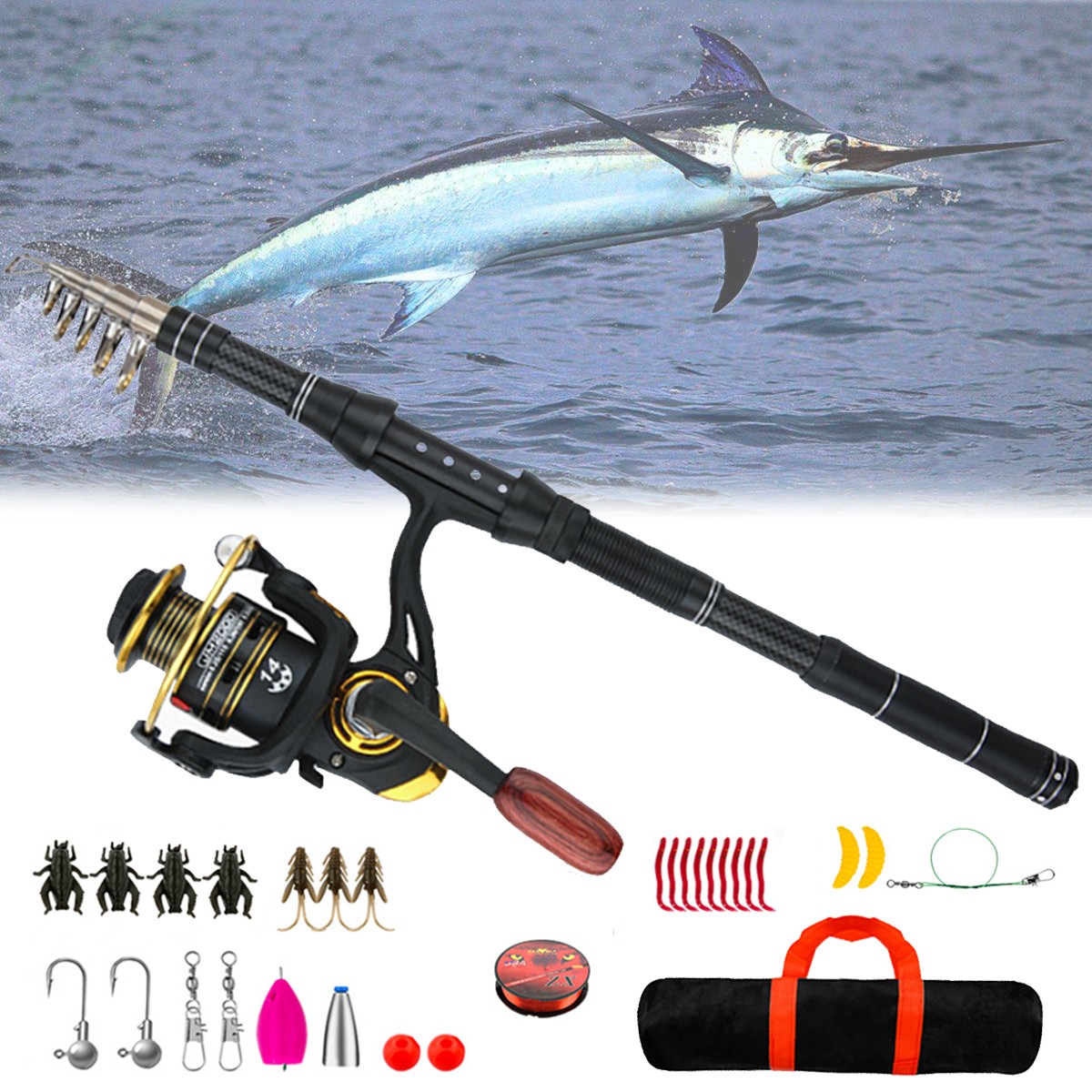 Carbon Fiber Telescopic Fishing Rod Pole Reel Combo Sea Saltwater Freshwater$27.90
 View on eBay
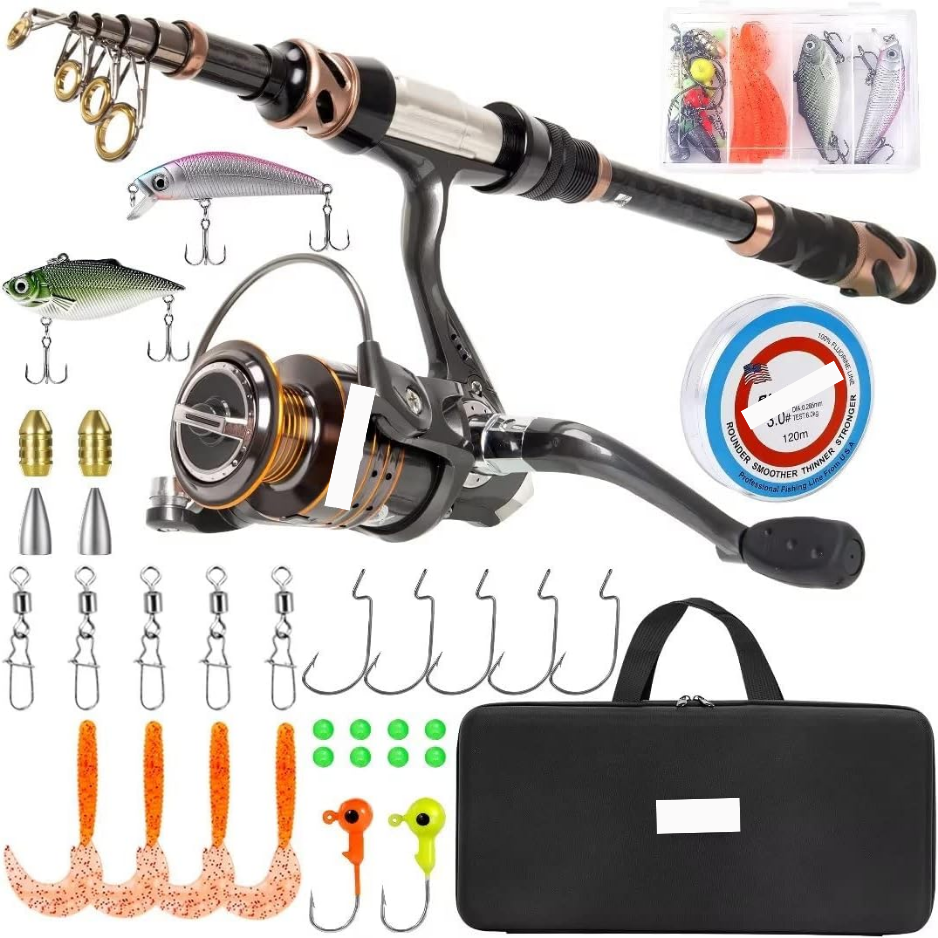 Telescopic Carbon Fiber Fishing Rod & Spinning Reel Combo$145.99
 View on Mallflare
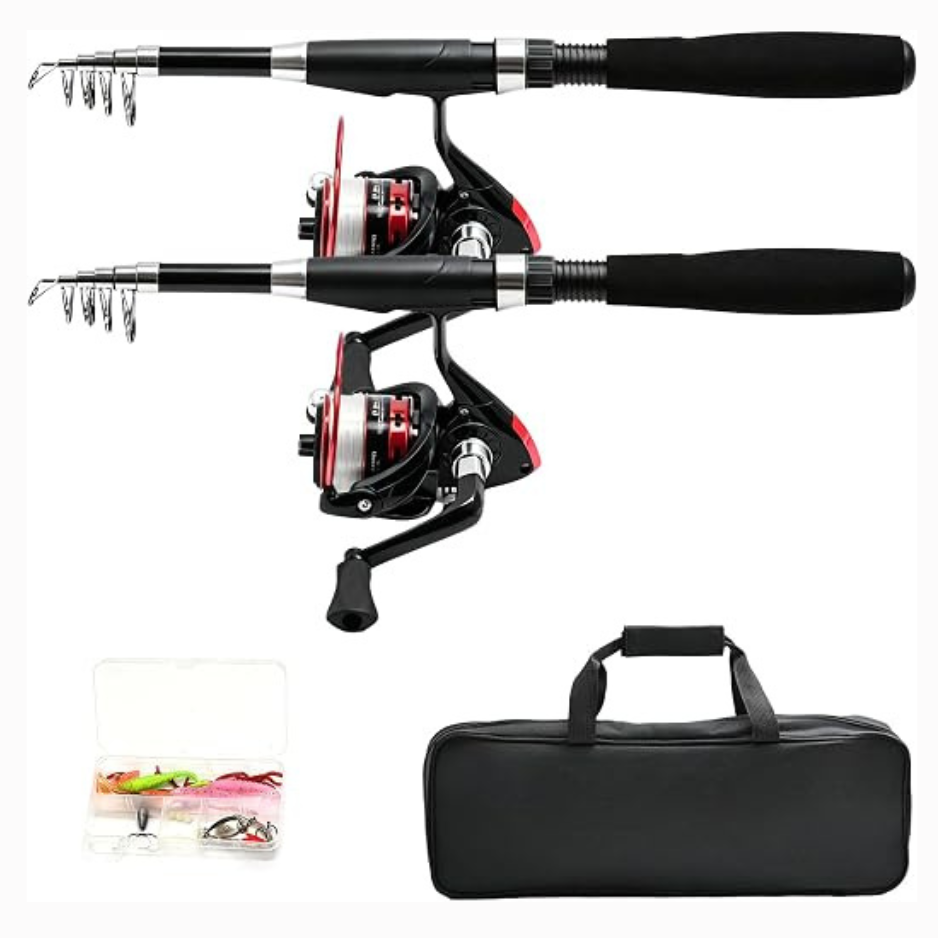 2-Piece 5.9-Foot Telescopic Carbon Fiber Fishing Rod And Reel Combo Set, Portable Collapsible Poles For Saltwater And Freshwater$187.99View on Mallflare
Highlights
- Blank modulus drives performance: 24-30T carbon is durable and forgiving, 36-40T is lighter and crisper, 46T+ is tournament-grade but brittle and expensive.
- Construction method matters more than the word 'carbon': rolled and cured one-piece blanks outperform telescopic ferrules, which add dead spots and failure points.
- Guide quality separates tiers: stainless-steel frames with silicon-carbide or alconite inserts resist braid grooves; cheap chrome guides flatten and cut lines.
- Reel seats and handles are the second failure point: graphite seats with stainless hoods and EVA or cork grips outlast plastic seats and foam grips.
Best use cases
- Freshwater bass and trout: pick a 6'6"-7' medium-power, fast-action 2-piece rod in 30-36T carbon; skip telescopic models for frequent casting accuracy.
- Saltwater inshore and surf: choose a 7'-9' rod with stainless guides, a sealed reel seat, and 30-40T blank; skip lightweight 46T blanks that chip on rocks and boat gunwales.
- Travel and backpacking: a telescopic carbon rod in a hard tube is the right call only when portability outweighs sensitivity; skip it for daily casting where a 2-piece rod casts better.
Buying tips
- Match lure rating to your actual tackle: a rod rated 1/4-3/4 oz loads properly with those weights; overloading a light carbon blank causes tip failure.
- Use the line-rating window as a hard limit: braid above the rod's max rating can crush thin-wall carbon guides and blank edges.
- For two-piece rods, confirm the ferrule is reinforced and overlaps at least 2-3 inches; loose or short ferrules loosen and snap under load.
- Choose guide count by length: 6'6"-7' rods need 7-9 guides plus tip; fewer guides create line slap and uneven load on carbon blanks.
Specs
| Blank Material | Carbon fiber 24T-46T modulus |
|---|---|
| Construction | 1-piece / 2-piece / telescopic |
| Guide Type | Stainless frame + SiC/Alconite insert |
| Power Rating | UL / L / M / MH / H |
Related searches
What to check before buying
- Measure your transport space: a 2-piece 7' rod breaks to about 43-44 inches; a telescopic rod collapses to 16-24 inches — confirm it fits your vehicle or pack.
- Check reel seat size against your reel foot: standard seats fit most spinning and baitcasting reels, but oversized saltwater reels need a larger seat.
- Match guides and seat to your environment: saltwater requires stainless or titanium frames with corrosion-resistant inserts; freshwater can use standard stainless.
- Confirm the rod's power and action suit your lure weights and target species before buying; a mismatched rod feels dead and risks breakage.
FAQ
Data sources: eBay / Amazon listings and product attribute feeds Data updated Nov 16, 2026.
Some links on this page are affiliate links. If you buy after clicking one, we may earn a commission at no extra cost to you. This does not change which products appear here or their order. Affiliate disclosure.