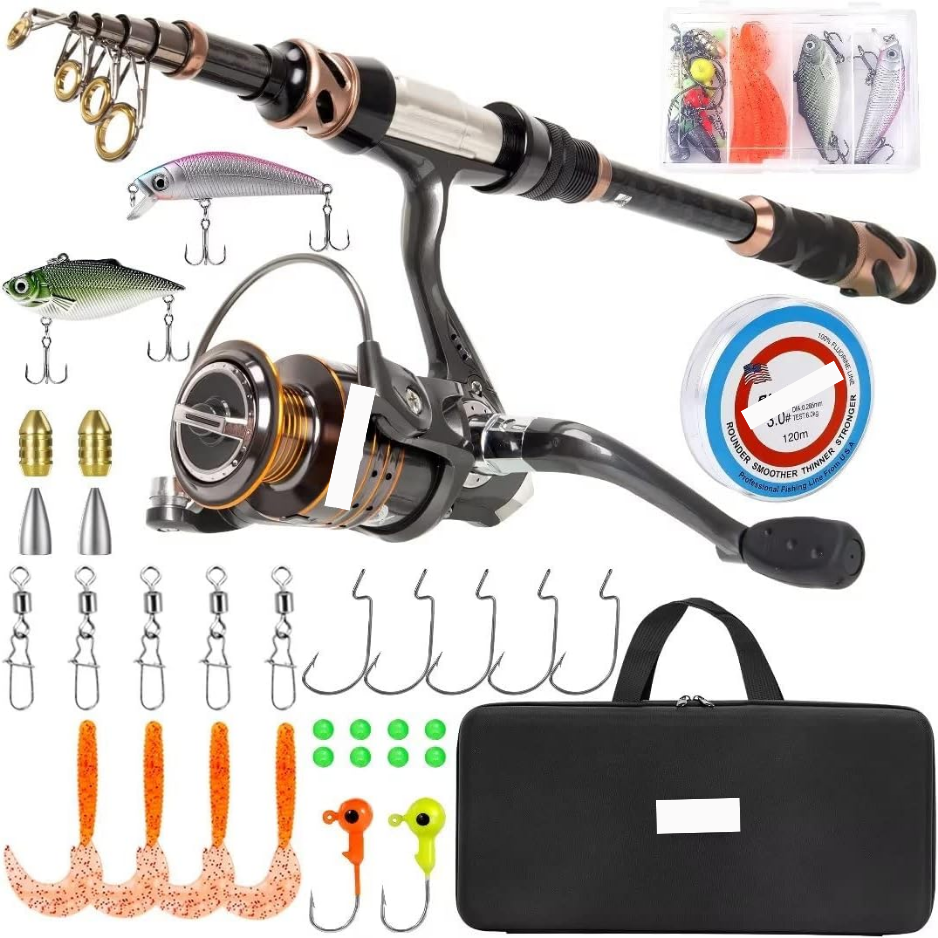

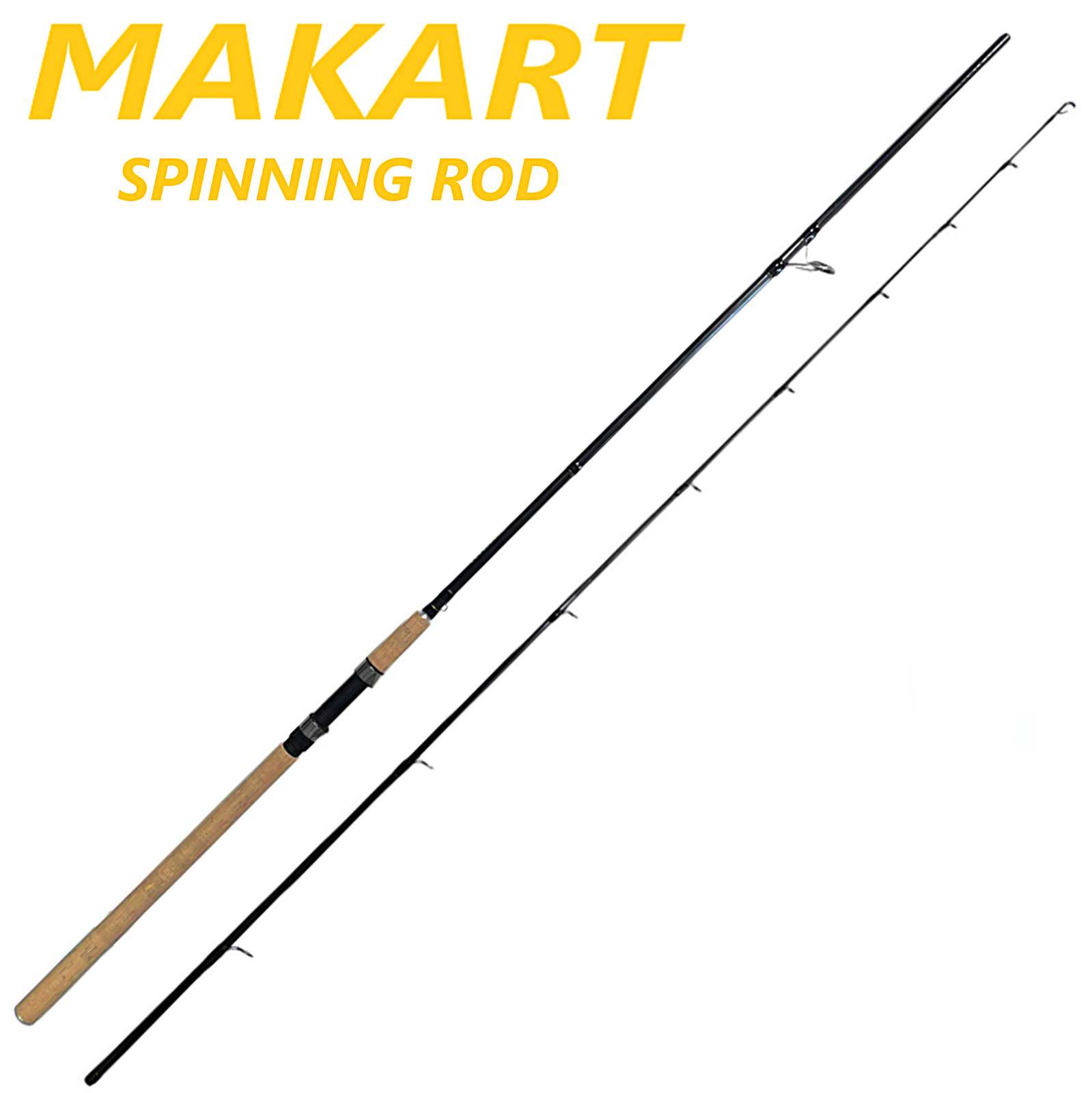
Photos from current listings. Actual item, color, and included accessories may vary.
Fishing Rod Spinning Reel Buying Guide
A spinning reel rod combo pairs a fixed-spool reel with a rod engineered around its balance point and line path. The decisive trade-off is blank material and guide quality versus reel bearing count and drag stack: carbon blanks with stainless guides and a sealed multi-disc drag outlast budget fiberglass with nylon guides and felt washers. Buy a combo only when the reel's spool capacity and drag rating match the rod's line and lure weight window.


At a glance
- Category
- Fishing Rods
- Data updated
- Nov 16, 2026
Current offers
Highlights
- Blank material: carbon fiber (IM6-IM8 grade) is lighter and more sensitive than fiberglass; higher modulus means faster action but more brittle under impact.
- Reel bearings: 5+1 stainless ball bearings with a sealed one-way clutch resist salt and grit; 1-3 bearing reels use bushings that develop play.
- Guide type: stainless steel frames with ceramic or SiC inserts survive braid abrasion; stamped chrome or nylon guides groove under braided line.
- Drag system: carbon-fiber or oiled felt multi-disc stacks deliver smooth pressure; single felt washers heat up and stutter under sustained runs.
Best use cases
- Freshwater bass and trout in ponds and streams: pick a 6.5-7 ft medium-power fast-action carbon blank with a 2500-size reel holding 8-10 lb mono.
- Surf and inshore saltwater: choose a 9 ft two-section rod with a 4000-5000 reel, sealed drag, and stainless guides rated for 15-20 lb braid; skip unsealed budget reels.
- Telescopic travel and backpacking: a collapsible carbon rod with a 2000-3000 reel fits carry-on luggage, but skip it for heavy cover where ferrule joints flex and crack.
- Heavy freshwater or light salt trolling: step up to a 5000-6000 reel with 20 lb braid and a medium-heavy rod; a 2500 combo will run out of line and drag.
Buying tips
- Match reel size to line: 1000-2500 for 4-10 lb mono, 3000-4000 for 8-15 lb, 5000-6000 for 15-25 lb braid; oversized reels unbalance short rods.
- Check the rod's lure weight and line rating printed above the handle; a 9 ft heavy-fast rod typically rates 1/2-2 oz lures and 12-25 lb line.
- Choose a two-section rod for transport and a one-piece for sensitivity; a 9 ft two-section rod needs a 5 ft+ case when broken down.
- Count stainless bearings and confirm a sealed drag knob; 5+1 bearings is the practical minimum for smooth retrieves and saltwater rinsing.
Specs
| Blank Material | Carbon fiber IM6-IM8 vs fiberglass |
|---|---|
| Reel Bearings | 5+1 stainless (min) vs 1-3 bushings |
| Guide Inserts | Stainless + ceramic/SiC vs chrome/nylon |
| Reel Size Match | 1000-2500 / 3000-4000 / 5000-6000 |
Related searches
What to check before buying
- Measure your storage and vehicle space: a 9 ft two-section rod breaks to roughly 4.5-5 ft, while a telescopic collapses to 1.5-2.5 ft.
- Confirm reel seat and guide inserts are stainless or ceramic if fishing saltwater; rinse with fresh water after every trip.
- Check the reel's spool capacity against your target line diameter so you can fill to within 1/8 inch of the lip.
- Verify the combo includes the correct line already spooled or budget for a bulk spool matching the rod's line rating.
FAQ
Data sources: eBay / Amazon listings and product attribute feeds Data updated Nov 16, 2026.
Some links on this page are affiliate links. If you buy after clicking one, we may earn a commission at no extra cost to you. This does not change which products appear here or their order. Affiliate disclosure.