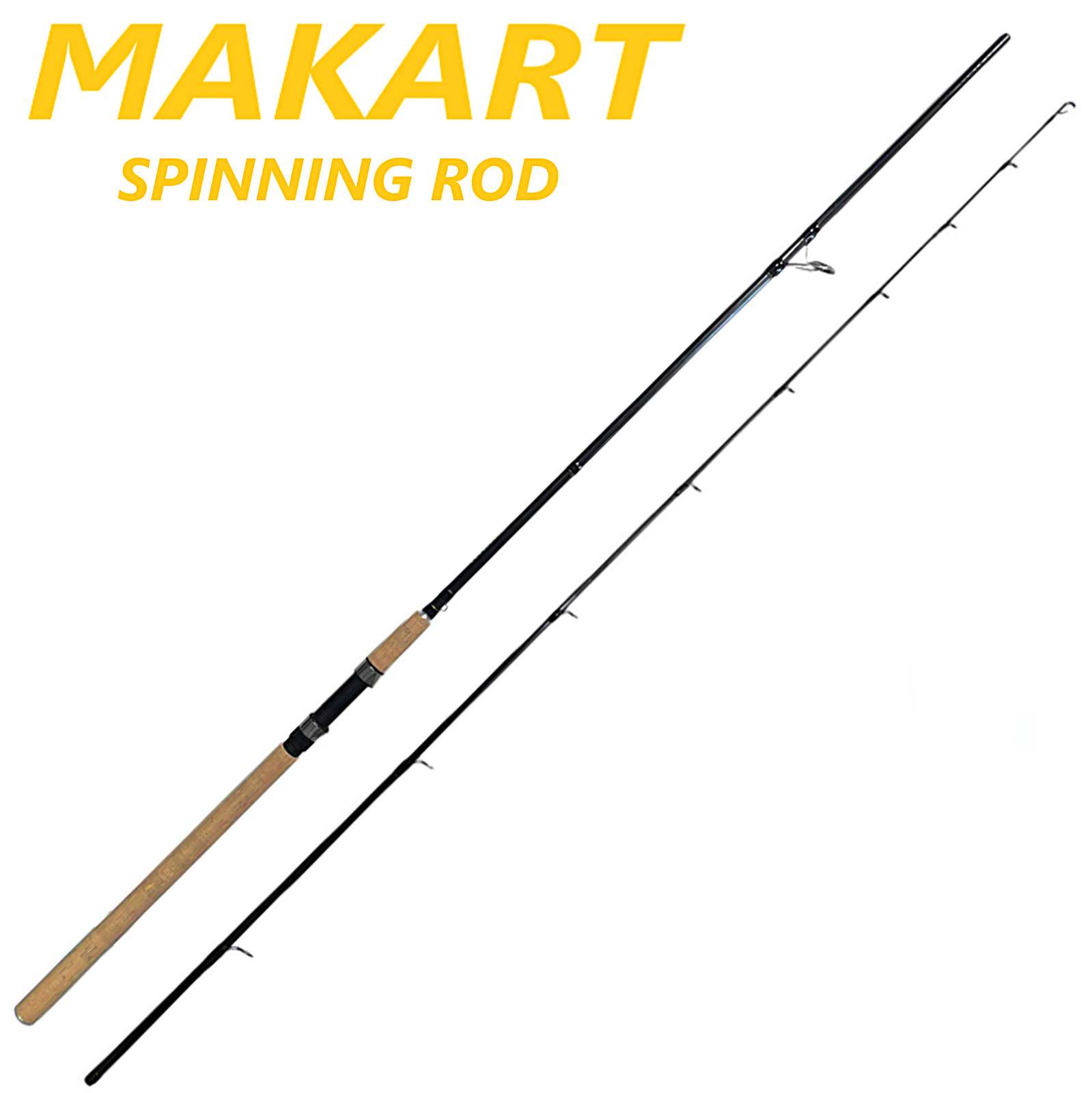

Photos from current listings. Actual item, color, and included accessories may vary.
Heavy Fishing Rod Buying Guide
Heavy fishing rods are built to handle big fish, heavy baits, and high-stress combat—typically rated for 30–80 lb line and power tiers from Heavy to Extra Heavy. The core trade-off is blank material and construction: high-modulus carbon fiber delivers the lifting power and sensitivity needed for big-game species, while low-grade composites or fiberglass add weight and reduce hook-setting authority. Choose a rod explicitly rated Heavy or above with a fast-to-extra-fast action and a reinforced butt section; skip anything labeled medium-heavy or medium if your target is sturgeon, big catfish, or saltwater jigging.


At a glance
- Category
- Fishing Rods
- Data updated
- Nov 16, 2026
Current offers
Highlights
- Power rating is the primary spec: Heavy rods handle 30–50 lb line and 2–8 oz lures; Extra Heavy steps to 50–80 lb line and 6–16 oz lures for sturgeon and large catfish.
- Carbon fiber modulus determines sensitivity and lifting power—high-modulus graphite (40+ ton) blanks are stiffer and lighter than standard 24-ton composites, critical when winching big fish from deep structure.
- Fast or extra-fast action concentrates bend in the top third, giving faster hook sets and better lure control; moderate action is more forgiving but reduces power transfer.
- Two-piece construction with a reinforced ferrule joint is standard for travel and storage; the joint must be tight and aligned, as a loose ferrule is the most common failure point on heavy rods.
Best use cases
- Best fit: catfish or sturgeon from a boat—pick a 7'6"–8'6" Heavy or Extra Heavy casting rod with 50–80 lb braid rating and a fast action for lifting fish away from bottom structure.
- Best fit: surf or pier fishing for big stripers or sharks—choose a 9'–12' Heavy spinning rod rated 30–50 lb line and 4–8 oz sinkers, with a long butt for leverage.
- Wrong fit: bass or walleye finesse fishing—a Heavy rod will rip light hooks and reduce casting distance; step down to medium or medium-heavy.
- Wrong fit: kayak or tight-quarters bank fishing—extra-heavy 9' blanks are unwieldy; choose a 6'6"–7' heavy rod or a telescopic travel model instead.
Buying tips
- Match line rating to your reel's drag: a Heavy rod rated 30–50 lb pairs with a 4000–6000 size spinning reel or a 300–400 size low-profile casting reel with 15–20 lb drag.
- Check lure weight range before buying—heavy rods typically cover 2–8 oz; if you throw 8–16 oz sinkers or big swimbaits, move to an Extra Heavy rating.
- Carbon fiber grade matters: 30–40 ton graphite gives the best strength-to-weight for heavy use; avoid unmarked 'carbon' blanks that are often fiberglass composites with graphite wraps.
- Two-piece rods with metal ferrule wraps or reinforced joints resist twisting under load; one-piece rods are stronger but impractical for transport—pick based on storage constraints.
Specs
| Power Rating | Heavy 30-50 lb / X-Heavy 50-80 lb |
|---|---|
| Action | Fast or Extra-Fast |
| Blank Material | High-modulus carbon fiber 30-40 ton |
| Lure Weight | 2-8 oz heavy / 6-16 oz X-heavy |
Related searches
What to check before buying
- Measure your vehicle's interior or rod locker—a 9' two-piece rod breaks down to roughly 4'7"–5' sections; confirm the collapsed length fits before buying.
- Verify reel seat compatibility: heavy spinning rods use a standard 16–20 mm reel seat; casting rods use a trigger seat—match to your reel foot size.
- Check guide material—stainless steel frames with silicon carbide or aluminum oxide inserts resist braid grooving and corrosion in saltwater.
- Confirm the rod's line and lure ratings on the blank near the handle; do not rely on the product title alone, as 'heavy' is often misused in listings.
FAQ
Data sources: eBay / Amazon listings and product attribute feeds Data updated Nov 16, 2026.
Some links on this page are affiliate links. If you buy after clicking one, we may earn a commission at no extra cost to you. This does not change which products appear here or their order. Affiliate disclosure.