Photos from current listings. Actual item, color, and included accessories may vary.
Saltwater Fishing Pole Buying Guide
Saltwater fishing poles are built to fight corrosion, big fish, and long casts, unlike freshwater rods that prioritize light sensitivity. The core trade-off is between corrosion-proof hardware and weight: sealed stainless guides and graphite blanks resist salt but cost more, while cheap telescopic combos save space but rust and snap under load. Choose a rod rated for your target species and reel class with sealed stainless guides and a graphite or fiberglass blank; skip anything with painted steel guides or unspecified blank material for serious saltwater use.

At a glance
- Category
- Fishing Rods
- Data updated
- Nov 16, 2026
Current offers
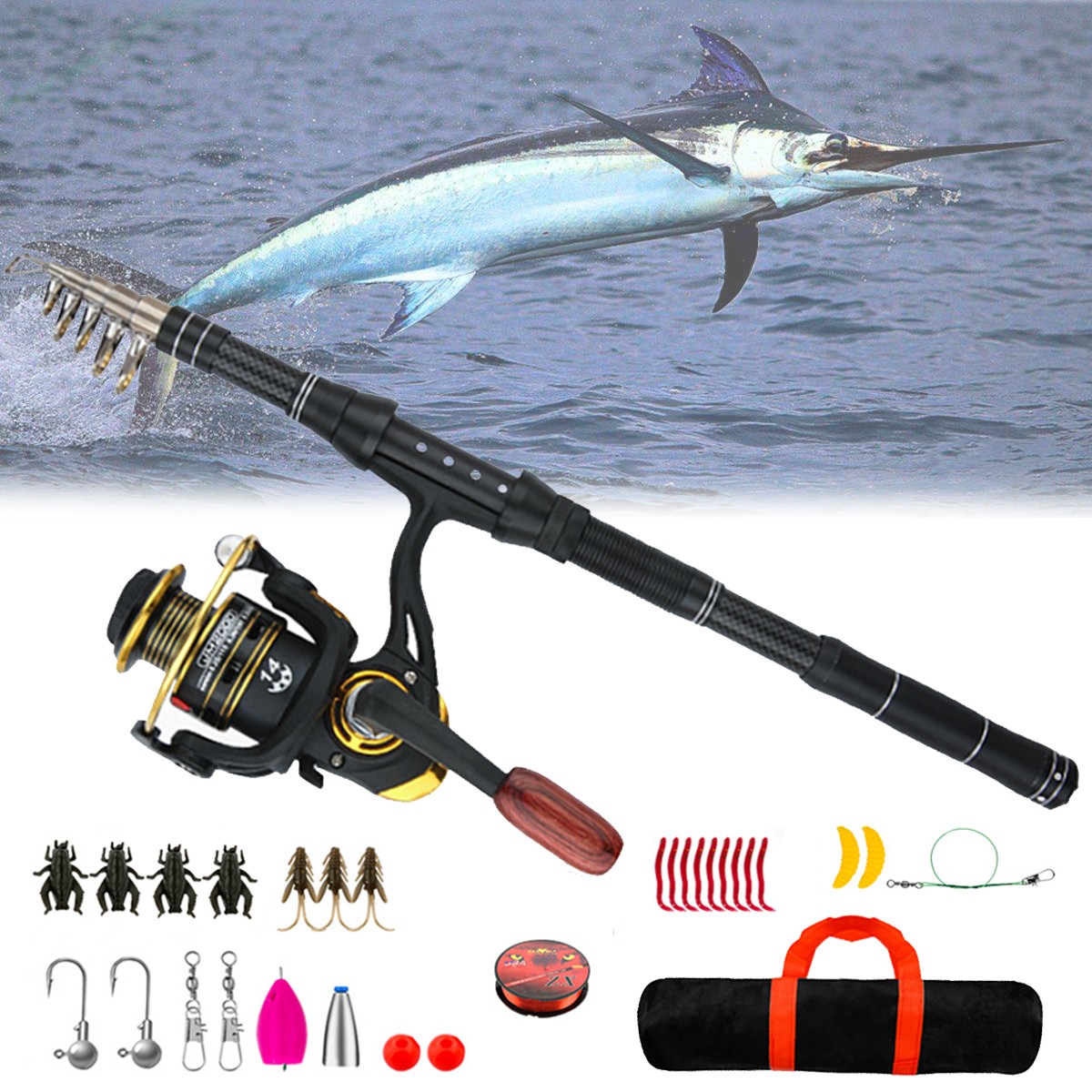 Carbon Fiber Telescopic Fishing Rod Pole Reel Combo Sea Saltwater Freshwater$27.90
 View on eBay
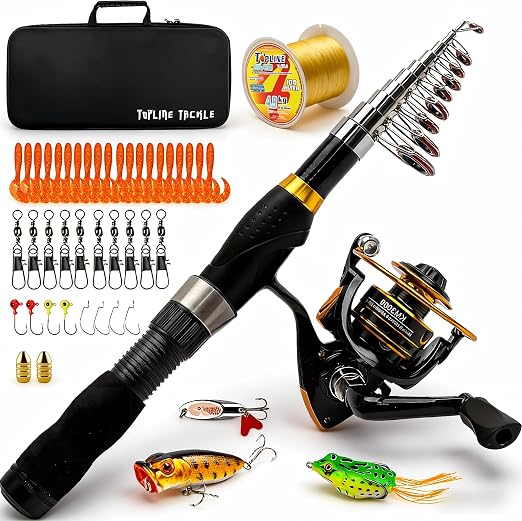 Collapsible Telescopic Fishing Rod And Reel Combo, Portable Retractable Pole Set For Freshwater And Saltwater Travel, And Outdoor$151.99
 View on Mallflare
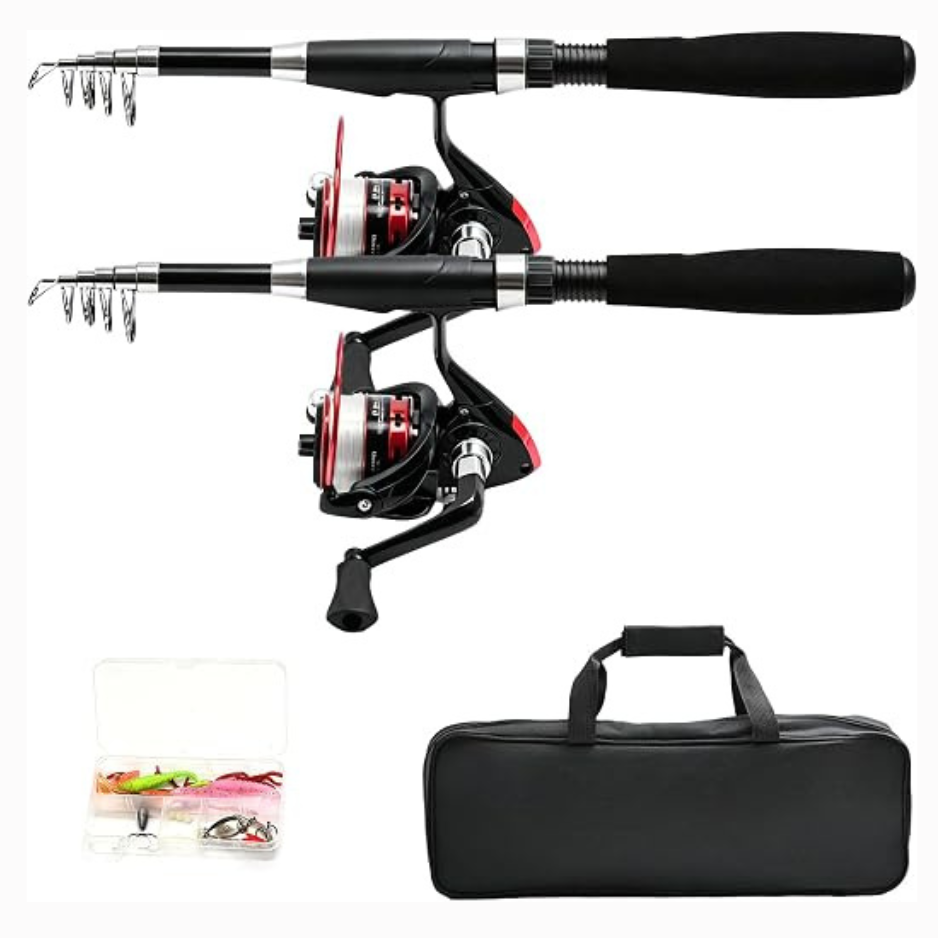 2-Piece 5.9-Foot Telescopic Carbon Fiber Fishing Rod And Reel Combo Set, Portable Collapsible Poles For Saltwater And Freshwater$187.99View on Mallflare
Highlights
- Saltwater rods need sealed stainless-steel guides and reel seats (316 or 304 grade) because plain steel or painted guides pit and fail within a season of salt exposure.
- Blank material drives durability: graphite (IM6 to IM8) gives sensitivity and lighter weight, while fiberglass (E-glass or S-glass) survives abuse and bending; cheap telescopic rods often use low-modulus blends that snap under a heavy drag load.
- Telescopic and collapsible poles trade portability for power: fewer ferrules means fewer failure points, but multi-section travel rods flex differently and are rated for lighter lines and smaller fish.
- Rod power and action ratings (light, medium, heavy; fast vs moderate) must match target species and lure weight; a medium-heavy fast rod handles inshore stripers and redfish, while a light rod is for trout and small surf species.
Best use cases
- Inshore saltwater (redfish, speckled trout, snook): pick a 7-foot medium-power fast-action spinning rod with sealed stainless guides and a 2500-3000 size reel; skip heavy surf rods and ultralight telescopics that lack backbone.
- Surf and pier fishing: choose a 9-12 foot medium-heavy conventional or spinning rod rated for 2-6 oz sinkers and 15-30 lb line; skip short telescopic combos — they cannot cast far or fight current.
- Boat and kayak saltwater: a 6.5-7 foot medium-heavy casting rod with a low-profile reel and corrosion-proof guides fits tight quarters; skip long two-handed surf sticks that are unwieldy on deck.
- Travel and backpack saltwater: a 4-5 piece travel rod or quality telescopic with graphite blank and stainless guides works for occasional trips; skip ultra-cheap telescopic combos with painted steel guides if you fish salt regularly.
Buying tips
- Match rod power to lure weight: a medium rod typically casts 1/4-5/8 oz, medium-heavy 3/8-1 oz, and heavy 1-4 oz; exceeding the rating risks blank failure on the cast.
- Line rating matters more than length: a rod rated for 10-20 lb braid pairs with a 3000-4000 size reel; undersizing the reel or overloading the rod causes guide pressure and breakage.
- Check guide material explicitly: stainless steel frames with stainless or ceramic inserts resist salt; aluminum-oxide rings in stainless frames are fine, but painted steel guides rust from the inside out.
- For telescopic rods, count sections: 2-piece rods are stronger and cast better than 5-6 section telescopics; if portability is mandatory, choose a telescopic with graphite blank and at least 4 sections for a compromise.
Specs
| Blank Material | Graphite (IM6-IM8) vs Fiberglass |
|---|---|
| Guide Type | Sealed stainless vs painted steel |
| Rod Power | Light / Medium / Medium-Heavy / Heavy |
| Rod Sections | 1-piece / 2-piece / Telescopic 4-6 |
Related searches
What to check before buying
- Measure your transport space: a 7-foot two-piece rod breaks down to about 3.5-4 feet; a telescopic collapses to 1.5-2.5 feet but adds flex and weight.
- Confirm reel seat size matches your reel foot: most saltwater spinning reels (2500-5000) fit standard seats, but large conventional reels need a larger seat or clamping reel.
- Check guide ring material for saltwater: stainless steel frames and silicon-carbide or stainless inserts are required; avoid painted steel or unsealed aluminum-oxide rings in salt.
- Verify line and lure ratings on the blank: printed line weight (lb) and lure weight (oz) must cover your target species and typical tackle; no rating means no saltwater guarantee.
FAQ
Data sources: eBay / Amazon listings and product attribute feeds Data updated Nov 16, 2026.
Some links on this page are affiliate links. If you buy after clicking one, we may earn a commission at no extra cost to you. This does not change which products appear here or their order. Affiliate disclosure.