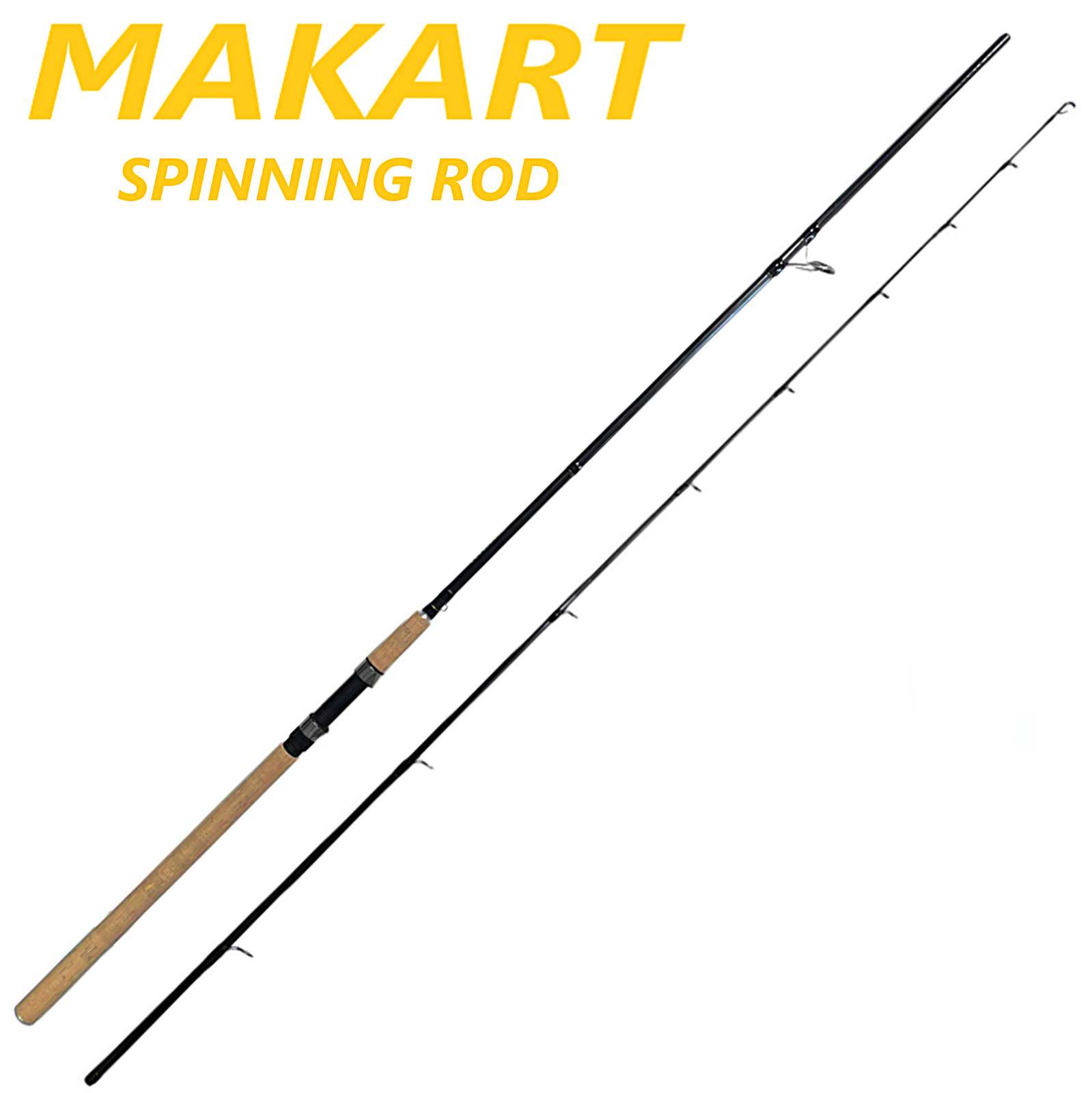

Photos from current listings. Actual item, color, and included accessories may vary.
Spinning Rod Buying Guide
Spinning rods are the most versatile fishing tool, but the market splits sharply between low-modulus carbon blanks with heavy hardware and high-modulus blanks with quality guides and reel seats. The core trade-off is sensitivity and weight versus durability and cost, so the decision rule is simple: choose a rod with a stated carbon modulus and branded guides if you fish often, and skip generic 'carbon fiber' blanks with no material grade or guide specification.


At a glance
- Category
- Fishing Rods
- Data updated
- Nov 16, 2026
Current offers
Highlights
- Blank material: 24T-30T carbon is the durability baseline; 36T-46T increases sensitivity but is more brittle and demands careful handling.
- Guide quality: stainless steel frames with silicon carbide or alumina inserts resist line grooving; cheap chrome guides flatten and fray braid.
- Reel seat: exposed-blank graphite or quality polymer seats transmit vibration better than covered plastic seats and reduce overall weight.
- Power and action: fast action with medium-heavy power suits bass and heavy cover; moderate action with medium power suits treble-hook lures and longer casts.
Best use cases
- Bass fishing from shore or boat: pick a 7ft to 7ft-3in medium-heavy fast spinning rod rated for 8-17lb line and 1/4-3/4oz lures; skip 9ft heavy rods that tire your wrist.
- Surf and pier fishing: choose a 9ft or 10ft medium-heavy rod rated 15-30lb line and 1-4oz cast weight; skip short bass rods that cannot reach beyond the breakers.
- Trout and finesse: select a 6ft-6in to 7ft medium-light rod with 4-10lb line rating; skip heavy-power 9ft combos marketed as all-purpose.
- Travel and two-section transport: a 2-piece 9ft rod fits most vehicles but check assembled length against ceiling height; skip 1-piece rods over 7ft if storage is tight.
Buying tips
- Match rod length to technique: 6ft-7ft for accuracy and bass, 8ft-9ft for distance and surf, 10ft+ for heavy surf; longer rods increase leverage but reduce casting accuracy.
- Line rating must bracket your actual line: a rod rated 8-17lb works with 10-15lb braid; exceeding the rating risks blank failure on hooksets.
- Lure weight rating is the true action guide: stay within the stated range; throwing 1/8oz on a heavy rod will not load the blank and kills casting distance.
- Two-section rods are the practical standard for 9ft models; joint ferrules add a slight flat spot but modern ferrules hold up if kept clean and waxed.
Specs
| Blank Material | 24T-46T carbon fiber |
|---|---|
| Guide Inserts | SiC / alumina / chrome |
| Power Rating | Medium-light to heavy |
| Length Range | 6ft to 10ft (2-piece common) |
Related searches
What to check before buying
- Measure your vehicle interior and storage space against assembled length: a 9ft rod needs over 9ft of diagonal clearance or a 2-piece breakdown.
- Confirm reel size compatibility: 2500-3000 size reels balance 7ft medium rods; 4000-5000 size reels balance 9ft medium-heavy rods.
- Check guide type for your line: braid requires hard inserts like SiC or alumina; mono is more forgiving of stainless steel rings.
- Verify handle length and grip material: split-grip EVA reduces weight but full EVA or cork suits cold, wet hands better.
FAQ
Data sources: eBay / Amazon listings and product attribute feeds Data updated Nov 16, 2026.
Some links on this page are affiliate links. If you buy after clicking one, we may earn a commission at no extra cost to you. This does not change which products appear here or their order. Affiliate disclosure.