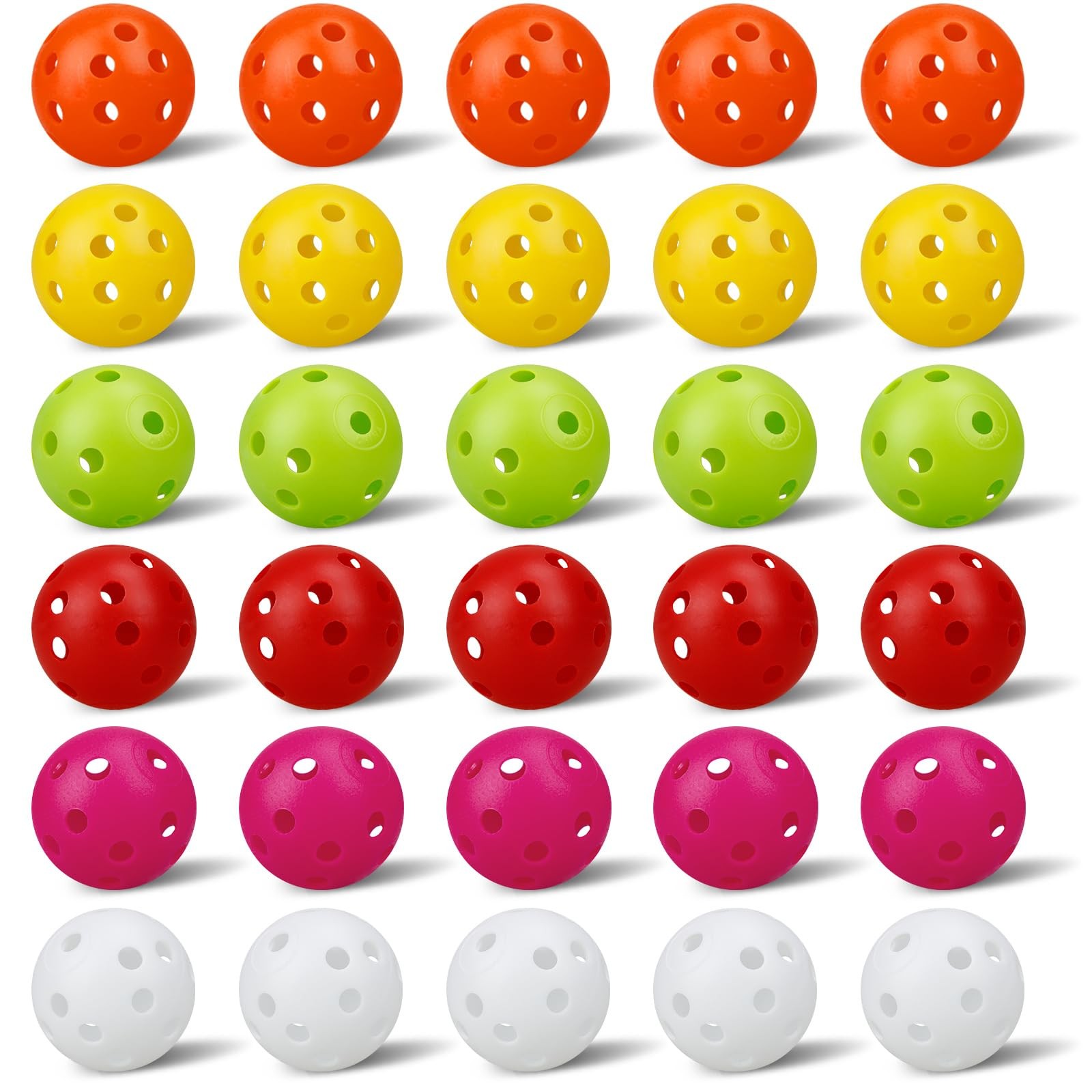

Photos from current listings. Actual item, color, and included accessories may vary.
Practice Golf Ball Buying Guide
Practice golf balls are training tools built from hollow plastic, foam, or low-compression rubber to simulate ball flight and feel at reduced distance and indoor-safe impact. The core trade-off is between realistic feedback (spin, trajectory, short-game feel) and safety/durability (low mass, hollow airflow design, soft foam). Choose hollow perforated plastic for full-swing distance control and foam for indoor/close-range safety; skip solid two-piece surlyn balls when space or breakage risk is the constraint.


At a glance
- Category
- Golf Balls
- Data updated
- Nov 16, 2026
Current offers
Highlights
- Hollow plastic practice balls use perforated airflow shells (typically ~40mm diameter, 20-40g) that cut flight distance by roughly 60-80% versus a real ball.
- Foam practice balls (often 40-70mm, 5-25g) are the only safe choice for indoor chipping and putting drills where a hard shell would damage walls or furniture.
- Low-compression rubber practice balls (around 55-70 compression vs 90-100 tour balls) mimic real short-game feel while limiting driver distance.
- Perforated hollow balls self-correct trajectory and are wind-sensitive; solid or limited-flight rubber balls give more repeatable feedback for swing-path work.
Best use cases
- Backyard full-swing practice with a driver or mid-iron: pick hollow perforated plastic balls in bulk; they stay under ~30% of normal distance and won't break windows at typical yard spacing.
- Indoor chipping, putting, or apartment drills: use soft foam balls (low-density PU or EVA); skip hollow plastic, which can still knock over lamps and scuff drywall.
- Short-game feel and wedge-spin practice on real turf: choose low-compression rubber practice balls; skip foam, which gives no meaningful spin or turf interaction feedback.
- Junior or beginner swing training in tight spaces: foam or very light hollow balls only; skip any practice ball over ~45g if the hitting area is smaller than 15 yards.
Buying tips
- Match ball mass to distance: under ~10g (foam) for indoors, 15-35g (hollow plastic) for backyard, 40-50g (rubber) for short-game realism.
- Buy hollow plastic in 50-100 packs only if the shell thickness is consistent; thin-walled perforated balls crack at the seam within a few dozen driver hits.
- For putting drills, choose foam balls with a smooth seam-free surface; textured or perforated balls roll inconsistently on carpet and putting mats.
- Check diameter against your training aid: hollow plastic balls at ~40mm fit standard putting cups and launch monitors; oversized foam balls (60mm+) do not.
Specs
| Ball Construction | Hollow plastic / Foam / Rubber |
|---|---|
| Typical Weight | 5-25g foam / 15-40g hollow plastic |
| Flight Distance | 20-40% of real ball distance |
| Standard Diameter | ~40-43mm (foam up to 70mm) |
Related searches
What to check before buying
- Measure your practice space: keep full-swing hollow-ball use to at least 10-15 yards of clear depth; foam only under 10 yards.
- Confirm surface: foam balls on carpet or mat; hollow plastic on grass or net; rubber balls on turf or mat, never on hardwood.
- Verify ball diameter (~40-43mm) if using a launch monitor, putting cup, or ball-return net that expects standard-size balls.
- Check the pack quantity against your retrieval rate: hollow balls scatter and are easily lost; 50-100 packs suit net practice, small packs suit chipping.
FAQ
Data sources: eBay / Amazon listings and product attribute feeds Data updated Nov 16, 2026.
Some links on this page are affiliate links. If you buy after clicking one, we may earn a commission at no extra cost to you. This does not change which products appear here or their order. Affiliate disclosure.