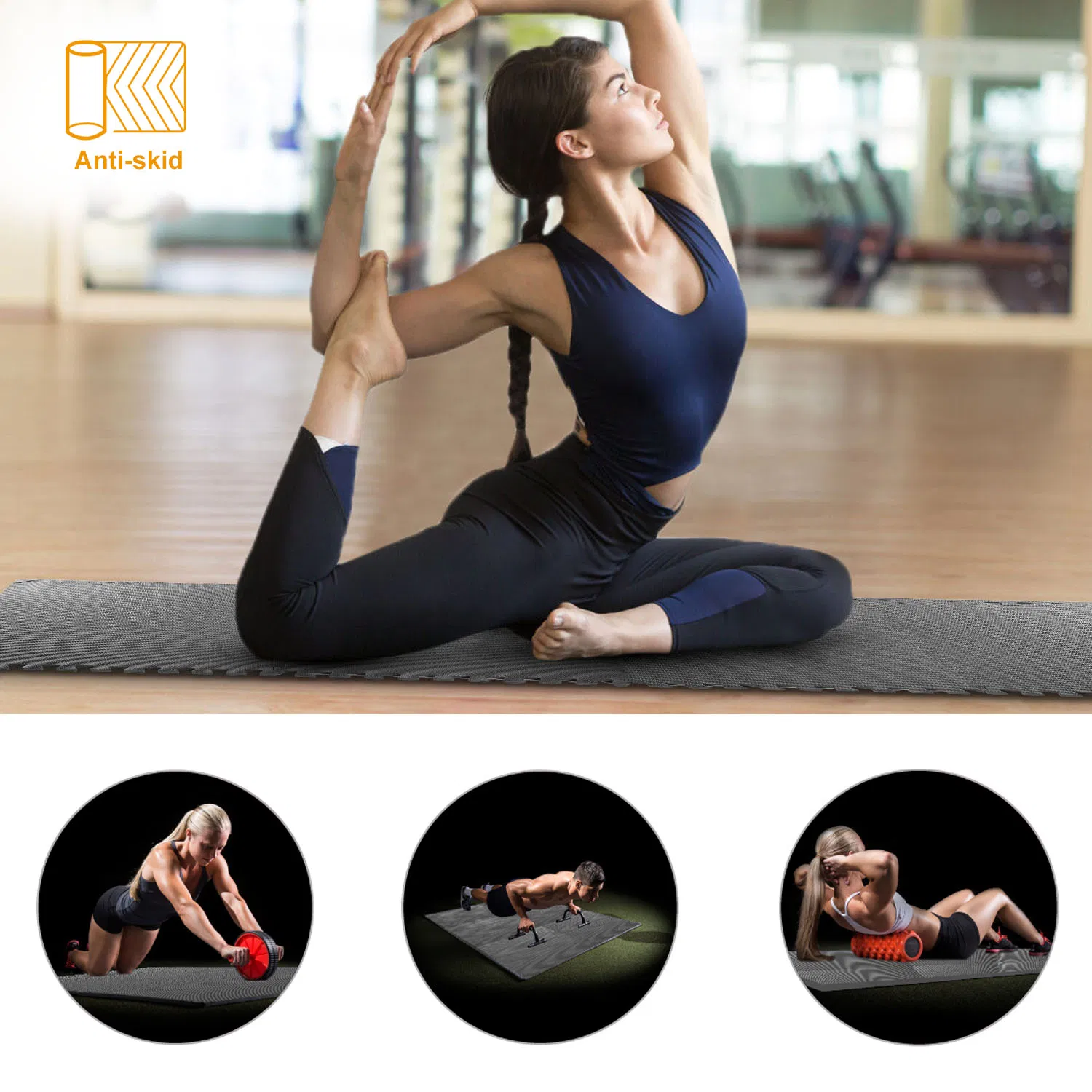

Photos from current listings. Actual item, color, and included accessories may vary.
Workout Mat Buying Guide
Workout mats are floor protection and joint-cushioning layers differentiated by foam density and thickness, not by brand marketing. The primary trade-off is cushioning versus stability: thinner high-density mats suit standing lifting and balance work, while thicker low-density foam suits floor contact and impact absorption. The decision rule is to match mat thickness and density to your primary activity, and to use interlocking EVA tiles only for equipment protection rather than barefoot stability work.


At a glance
- Category
- Gym Flooring & Storage
- Data updated
- Nov 16, 2026
Current offers
Highlights
- EVA foam interlocking tiles typically run 0.4–0.8 in thick at 3–5 lb/ft³ density; high-density 1/2 in mats resist compression for standing lifts while soft 1 in foam bottoms out under load.
- PVC/nitrile rubber mats at 1/4–3/8 in and 60–70 Shore A durometer deliver non-slip stability for deadlifts and balance work without the squish of foam.
- Interlocking tile edges use jigsaw-style tabs or straight-edge borders; tiles with 24–48 in square coverage need edge trim pieces to finish perimeter runs against walls.
- Closed-cell foam resists sweat absorption and wipes clean; open-cell and textured EVA trap moisture and degrade faster in humid home gyms.
Best use cases
- For barbell and dumbbell lifting, pick 1/4–3/8 in high-density rubber or PVC mats; skip thick soft foam that compresses under plates and destabilizes your stance.
- For yoga, stretching, and floor core work, choose a 1/4–1/2 in closed-cell foam mat long enough to lie flat; skip interlocking equipment tiles that are too firm and have seams under hands.
- For protecting carpet or garage floors under racks and machines, use interlocking EVA tile sets with edge trims; skip thin yoga mats that tear under equipment feet.
- For multi-activity home gyms, layer a 1/2 in high-density EVA or rubber mat over a hard floor; skip plush 1 in foam if you also do standing balance or Olympic lifts.
Buying tips
- Size the mat to your body plus reach: a 72 x 24 in mat fits most users for lying work, while a 68 x 24 in mat is the practical minimum for taller users.
- Match thickness to activity: 1/4 in for stability and balance, 3/8–1/2 in for general floor work, and 3/4 in or thicker only for impact absorption or equipment cushioning.
- Check density or durometer: rubber mats around 60–70 Shore A and EVA at 3–5 lb/ft³ hold up under load; soft foam below 2 lb/ft³ flattens within months.
- For tile sets, calculate coverage as tile length times width times count, and buy perimeter edge pieces equal to the room perimeter divided by the edge piece length.
Specs
| Mat Material | EVA foam / PVC / rubber |
|---|---|
| Thickness Range | 1/4–1 in (6–25 mm) |
| Density / Hardness | 3–5 lb/ft³ EVA; 60–70 Shore A rubber |
| Tile Edge Type | Interlocking tabs / straight-edge trim |
Related searches
What to check before buying
- Measure your available floor footprint and confirm the mat or tile set covers your body length in the direction you lie down.
- Check floor type: concrete needs a rubber or high-density foam barrier, while carpet needs a grippy underside to prevent sliding.
- Confirm the mat's surface is closed-cell and non-porous if you sweat heavily or train in a humid space.
- For interlocking tiles, verify the set includes straight edge borders and count them against your wall perimeter before ordering.
FAQ
Data sources: eBay / Amazon listings and product attribute feeds Data updated Nov 16, 2026.
Some links on this page are affiliate links. If you buy after clicking one, we may earn a commission at no extra cost to you. This does not change which products appear here or their order. Affiliate disclosure.