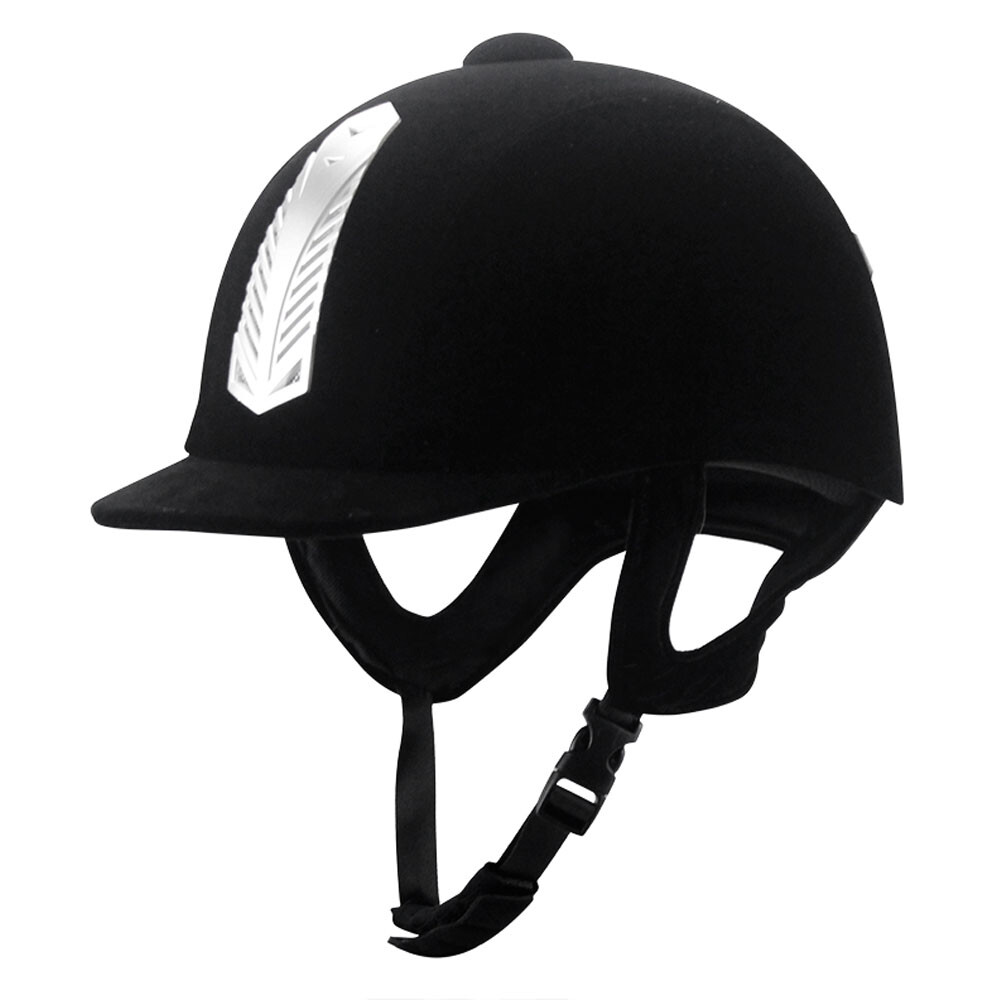

Photos from current listings. Actual item, color, and included accessories may vary.
Children Horse Riding Helmet Buying Guide
Children's riding helmets are certified protective headgear built to equestrian impact standards, not scaled-down bicycle helmets. The core trade-off is between certified rotational-impact protection (ASTM F1163 or VG1) and cosmetic features like velvet covers or fixed peaks. Buy only a helmet that carries a current ASTM F1163 or VG1/SEI mark in the correct head size; anything uncertified or oversized is a compromise, not a savings.


At a glance
- Category
- Riding Helmets, Boots & Apparel
- Data updated
- Nov 18, 2026
Current offers
Highlights
- Certification is the primary durability and safety metric: ASTM F1163 (US) and VG1/PAS 015 (UK/EU) are the equestrian helmet standards; bicycle (CPSC/EN1078) and skate helmets are not interchangeable.
- Rotational-impact technology separates tiers: MIPS low-friction layers and similar systems reduce angular acceleration in falls, fitted in premium models versus basic EPS-only shells in budget helmets.
- Shell construction matters: injection-molded ABS or polycarbonate outer shells with expanded polystyrene liners dominate; velvet-covered traditional shells are cosmetic and offer no added impact protection.
- Fit is measured in centimeters around the head; children's sizing spans roughly 48–56 cm, and adjustable dial-fit systems or removable liners are what allow growth between sizes.
Best use cases
- Choose an ASTM F1163 or VG1-certified, dial-adjustable helmet for weekly lessons and schooling—this is the correct minimum for any child riding regularly.
- Pick a MIPS-equipped model for jumping, eventing, or fast work where rotational falls are more likely; skip bare-EPS budget shells for these disciplines.
- Skip velvet-covered show-style helmets unless the child competes in traditional showing where appearance is judged—the cover adds no protection and traps heat.
- Wrong fit: buying one or two sizes up for growth. A helmet must sit level and snug; an oversized shell slides on impact and offers no real protection.
Buying tips
- Measure head circumference in centimeters just above the eyebrows; match the manufacturer's size chart exactly—do not size up for growth, use adjustable dial-fit instead.
- Confirm the certification label inside the helmet reads ASTM F1163 (with SEI mark) or VG1/PAS 015; reject any helmet sold without a visible standard.
- Replace any helmet after a fall that impacts the shell or liner, and follow the manufacturer's replacement interval—EPS liners do not recover from compression.
- For ponies and small riders, a fixed-peak helmet is standard; ensure the peak is flexible or collapsible to reduce neck injury risk in a fall.
Specs
| Safety Standard | ASTM F1163 or VG1/PAS 015 |
|---|---|
| Rotational Protection | MIPS vs EPS-only liner |
| Shell Construction | Injection ABS/PC + EPS liner |
| Fit System | Dial-adjust 48–56 cm |
Related searches
What to check before buying
- Head circumference measured in cm and compared to the brand's size chart, not the child's age or hat size.
- Certification mark visible on the inner label: ASTM F1163/SEI or VG1/PAS 015.
- Chin strap and harness adjustability, plus a dial-fit or liner system that holds the shell level and snug without pressure points.
- Helmet shape compatibility with the child's head (round vs oval) and check that the helmet does not rock forward over the eyes.
FAQ
Data sources: eBay / Amazon listings and product attribute feeds Data updated Nov 18, 2026.
Some links on this page are affiliate links. If you buy after clicking one, we may earn a commission at no extra cost to you. This does not change which products appear here or their order. Affiliate disclosure.