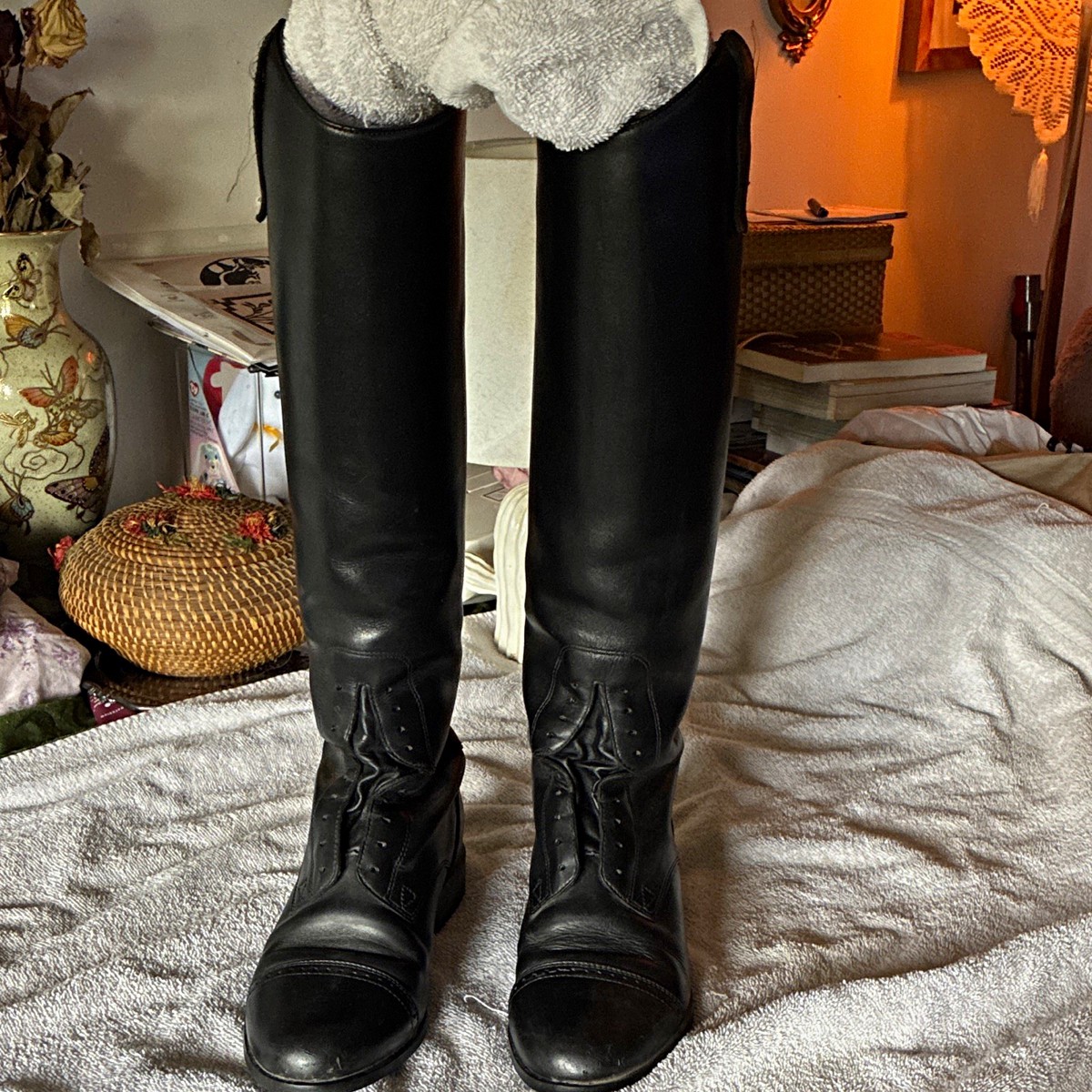

Photos from current listings. Actual item, color, and included accessories may vary.
Riding Boot Buying Guide
Riding boots are tall or paddock-style footwear purpose-built for equestrian stability, leg protection, and direct feel of the horse. The primary trade-off is between full-grain leather construction with a stiff, reinforced calf and a sewn-in sole versus corrected-grain or synthetic uppers on cemented soles that break down under stirrup friction. The decision rule: buy boots with a full-grain leather upper, a stitched (Goodyear or Blake) sole, and an interior spur rest if you ride regularly; accept cemented soles and split-grain leather only for light schooling or fashion use.


At a glance
- Category
- Riding Helmets, Boots & Apparel
- Data updated
- Nov 16, 2026
Current offers
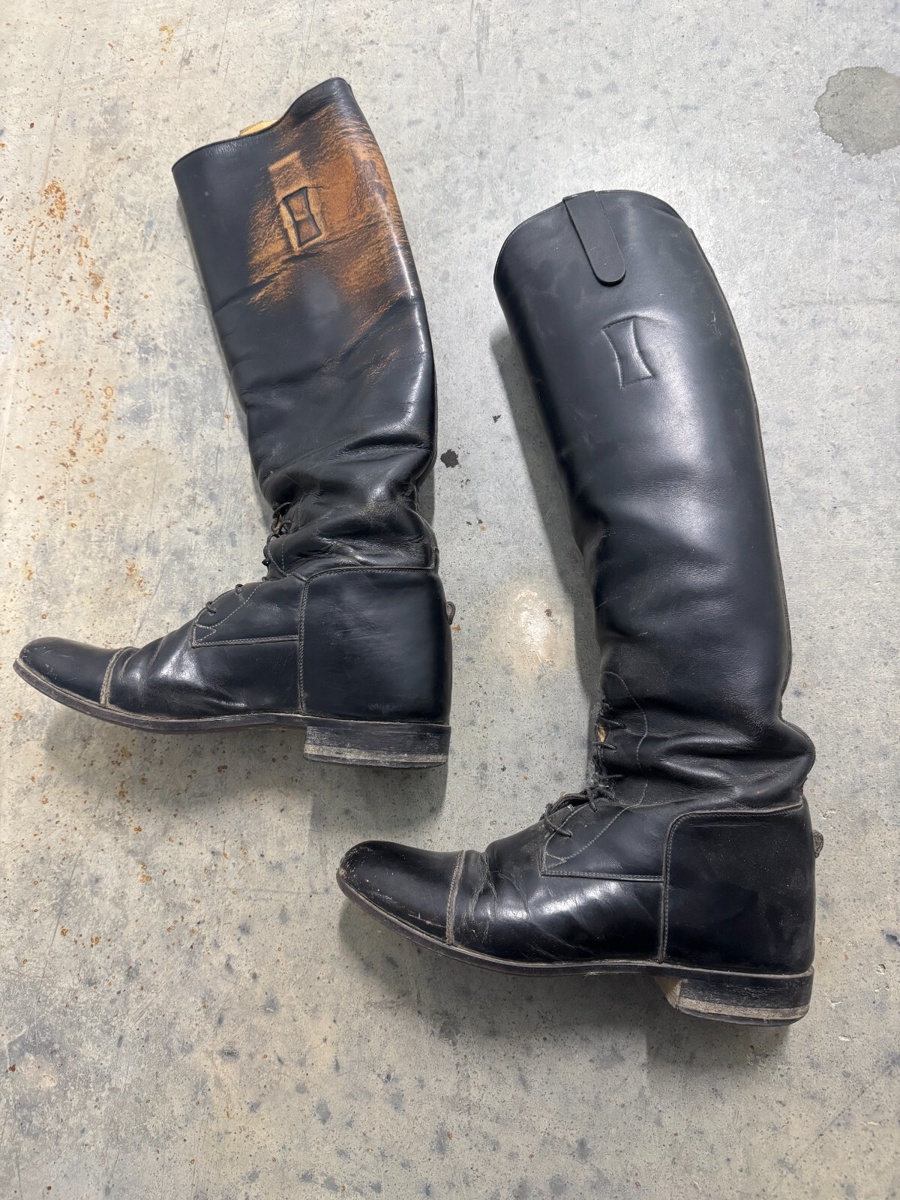
Highlights
- Full-grain leather uppers resist abrasion and mold to the calf; corrected-grain and split leather crack at flex points within a season of daily riding.
- Stitched soles (Goodyear welt or Blake stitch) can be resoled by a cobbler; cemented soles delaminate under stirrup pressure and are effectively disposable.
- Tall field and dress boots run 16-19 inches in shaft height and require a calf circumference within roughly 1 inch of your measurement; half-chaps substitute when calf fit is off.
- Spur rests (a stitched leather ridge at the heel counter) prevent spur slip and are absent on fashion and entry-level schooling boots.
Best use cases
- Pick a tall field or dress boot in full-grain leather with a stitched sole for daily riding, competition, and year-round barn work—it will outlast two or more cemented pairs.
- Pick a paddock boot (ankle height) plus half-chaps when your calf-to-shaft ratio falls outside standard tall-boot sizing or you want one pair for both stable chores and riding.
- Skip tall boots entirely for fashion-only wear; a Chelsea or knee-high fashion boot with a synthetic sole costs less and performs identically when no stirrup contact occurs.
- Skip pull-on tall boots with no elastic gusset if you have a high instep or wide calf—choose a front-zip or lace-up field boot instead.
Buying tips
- Measure calf circumference at the widest point and shaft height from floor to knee crease; match both to the boot's stated calf width and height, not your shoe size alone.
- Choose full-grain or top-grain leather over corrected-grain; full-grain develops a patina and resists cracking, while corrected-grain is sanded and coated and fails at creases.
- Confirm the sole is stitched (visible welt or stitch line) rather than cemented; a stitched sole is the single best durability indicator for repeated stirrup contact.
- Size to the boot's stated EU/UK conversion rather than assuming US sizing; equestrian brands often run narrow, and a too-loose heel causes rub blisters and heel slip.
Specs
| Upper Material | Full-grain leather vs corrected-grain |
|---|---|
| Sole Construction | Stitched welt vs cemented |
| Boot Height | Tall 16-19 in vs paddock ankle |
| Calf Fit Range | Within 1 in of measured calf |
Related searches
What to check before buying
- Measure calf circumference at the widest point and compare with the boot's listed calf width—typically within 1 inch for a correct fit.
- Measure floor-to-knee-crease height and compare with shaft height; a tall boot should reach just below the knee crease when seated.
- Check your stirrup and spur setup: spur rests and reinforced heel counters matter if you ride with spurs or in close-contact disciplines.
- Confirm the sole construction is stitched if you ride more than once weekly; cemented soles are acceptable only for light schooling.
FAQ
Data sources: eBay / Amazon listings and product attribute feeds Data updated Nov 16, 2026.
Some links on this page are affiliate links. If you buy after clicking one, we may earn a commission at no extra cost to you. This does not change which products appear here or their order. Affiliate disclosure.