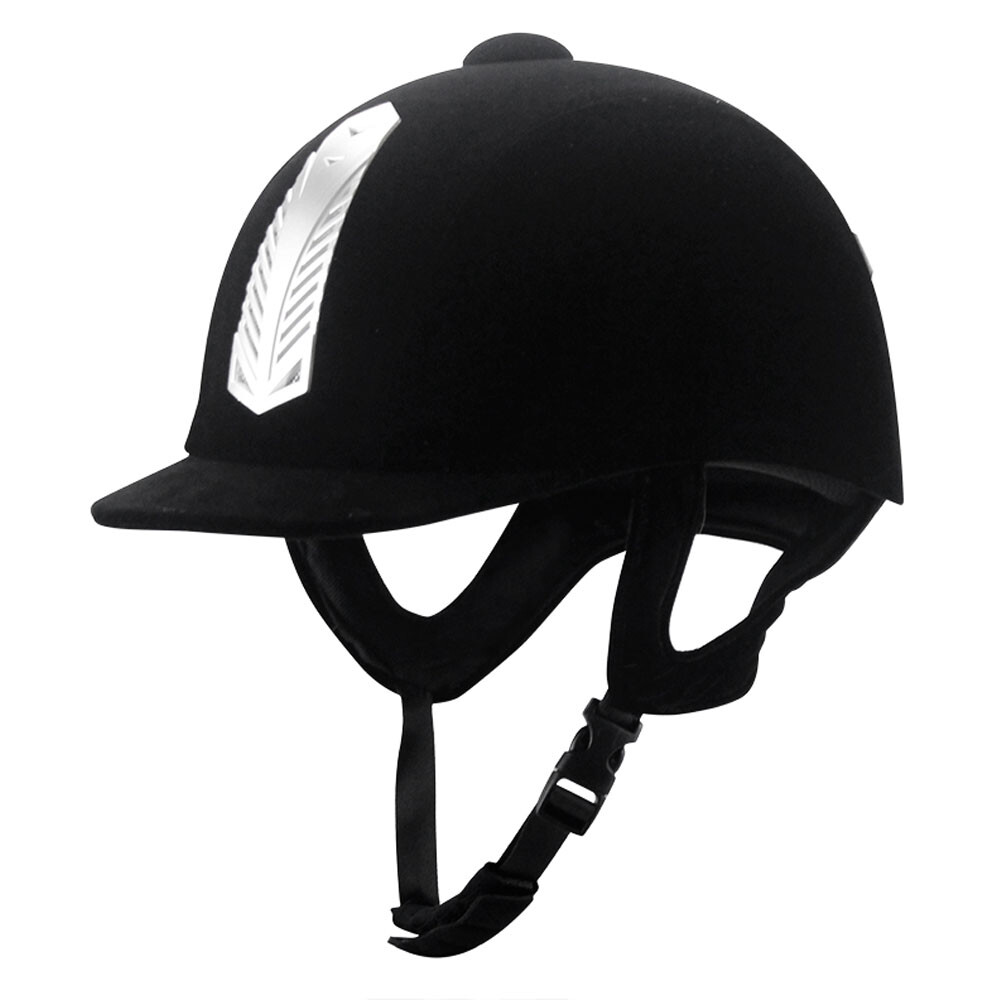

Photos from current listings. Actual item, color, and included accessories may vary.
Children Riding Helmet Buying Guide
A children's riding helmet is a certified protective headgear for equestrian use, defined by its safety standard (ASTM F1163 or VG1), shell construction, and adjustable fit system. The primary trade-off is between passive ventilation and impact protection: ventilated shells are comfortable for lessons but often lack the deep coverage and MIPS-style slip-plane of serious competition helmets. The decision rule is simple: buy only a helmet stamped with a current equestrian safety standard, sized by head circumference with a dial-fit harness, and replace it after any fall.


At a glance
- Category
- Riding Helmets, Boots & Apparel
- Data updated
- Nov 18, 2026
Current offers
Highlights
- ASTM F1163 is the US equestrian helmet standard; VG1 is the European equivalent—never buy a helmet lacking either stamp.
- Dial-fit harnesses (rear adjustment wheel) span roughly 3-4 cm of head circumference, letting a helmet grow with a child for 1-2 seasons.
- MIPS low-friction slip-plane liners reduce rotational forces in angled falls; they add cost and weight but are the top upgrade tier.
- Ventilation ports trade shell stiffness for airflow; competitive jumping helmets use fewer vents and deeper rear coverage than schooling helmets.
Best use cases
- Weekly riding lessons: pick a dial-fit ASTM F1163 schooling helmet with 6+ vents; skip open-face racing helmets that lack rear coverage.
- Pony club and low-level competition: choose a VG1 or ASTM helmet with a fixed chin strap and removable washable liner; skip velcro-only chin straps.
- Trail riding and young beginners: prioritize MIPS or extended rear coverage and a quick-release buckle; skip ultralight ventilated shells with minimal occipital coverage.
- Buying for a growing child: size to current head circumference plus the dial range, not one size up; skip hand-me-down helmets with unknown crash history.
Buying tips
- Measure head circumference 2 cm above the eyebrows; match to the helmet's size chart—children's sizes typically run 48-56 cm in 2 cm increments.
- Choose a dial-fit system with at least 3 cm of adjustment; fixed-size helmets require replacement every growth spurt.
- Require an ASTM F1163 or VG1 label, a three-point harness, and a chin strap that passes a two-finger tension check.
- Replace any helmet after a fall where the head contacts the ground, even without visible cracks—EPS foam compresses permanently.
Specs
| Safety Standard | ASTM F1163 / VG1 certified |
|---|---|
| Fit System | Dial-fit rear adjuster, 3-4 cm range |
| Shell & Liner | EPS foam liner, vented ABS/polycarbonate shell |
| Harness | 3-point with quick-release buckle |
Related searches
What to check before buying
- Measure the child's head circumference with a soft tape and confirm it falls inside the helmet's stated range, not at the extreme edge.
- Check that the helmet's chin strap has a quick-release buckle and that the rear dial tightens without pinching the nape.
- Confirm the helmet is labeled ASTM F1163 or VG1 and includes a removable, washable liner for hygiene.
- Verify the helmet weight is under roughly 500 g for young children to reduce neck strain during long lessons.
FAQ
Data sources: eBay / Amazon listings and product attribute feeds Data updated Nov 18, 2026.
Some links on this page are affiliate links. If you buy after clicking one, we may earn a commission at no extra cost to you. This does not change which products appear here or their order. Affiliate disclosure.