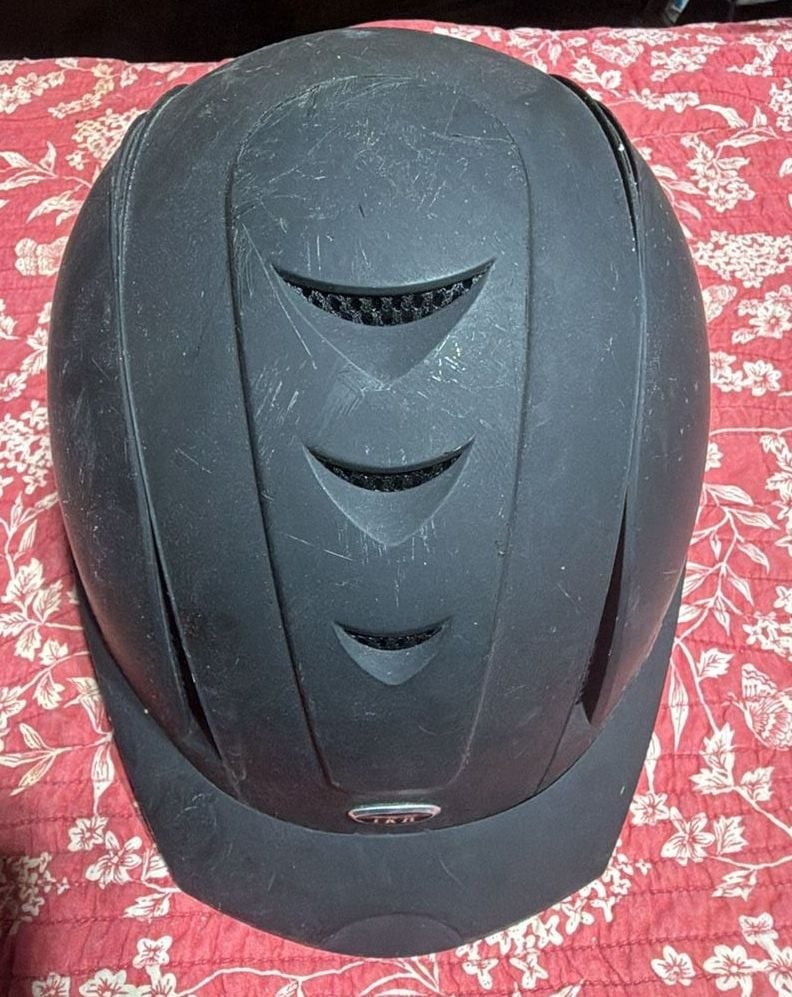

Photos from current listings. Actual item, color, and included accessories may vary.
Irh Riding Helmet Buying Guide
IRH riding helmets are ASTM/SEI-certified English equestrian helmets built around a molded high-density EPS liner and a flexible shell, with the Equi-Pro and Pro-Lite lines as the main tiers. The core trade-off is certification standard and venting versus price and cosmetics: any helmet meeting ASTM F1163 with SEI marking is protective, so the real upgrade is dial-fit retention and removable liners for daily use. The decision rule is simple: buy only an ASTM/SEI-marked helmet with a harness that sits level 2.5 cm above the eyebrows, and skip any unmarked or vintage shell regardless of brand.


At a glance
- Category
- Riding Helmets, Boots & Apparel
- Data updated
- Nov 18, 2026
Current offers
Highlights
- ASTM F1163 is the mandatory US equestrian helmet standard; SEI certification is the proof mark buyers must see inside the helmet.
- IRH Equi-Pro uses a molded EPS liner with deep front and rear ventilation channels; Pro-Lite adds a lighter shell with more aggressive venting.
- Fit size is hat size: Small/Medium typically covers 54–57 cm (6 3/4 to 7 1/8), so measure the widest head circumference in cm.
- Harness systems use a Y-shaped front and rear V-strap with quick-release buckle; retention dials are the main comfort upgrade over fixed padding.
Best use cases
- Best fit: weekly riding lessons and schooling in English tack — pick the Equi-Pro with ASTM/SEI marking and a dial or padded harness.
- Best fit: hot-weather hunter/jumper schooling — choose the more vented Pro-Lite or any ASTM helmet with front and rear vent channels.
- Wrong fit: showing in rated competition — skip low-vent schooling helmets and pick a certified show-legal model with a matte or velvet cover.
- Wrong fit: growing children — skip fixed-pad helmets; choose a dial-fit or replaceable-liner model and re-measure annually.
Buying tips
- Measure head circumference at the widest point above the ears; 54–57 cm maps to Small/Medium, 57–59 cm to Large in most English helmets.
- Demand the ASTM F1163 and SEI label inside the helmet; a helmet without it is not legal for rated competition or insured riding.
- Reject any used helmet with a dropped or cracked shell in the EPS liner, even if the cover looks intact — impact damage is invisible.
- Match vent count to climate: two front/two rear vents suit most schooling, while full-channel liners are better above 30 °C.
Specs
| Safety Standard | ASTM F1163 / SEI marked |
|---|---|
| Fit Sizes | S/M 54–57 cm; L 57–59 cm |
| Liner & Shell | EPS impact liner + molded shell |
| Venting | Front/rear channels; higher on Pro-Lite |
Related searches
What to check before buying
- Measure head circumference in cm and confirm the size band: Small/Medium 54–57 cm, Large 57–59 cm.
- Verify the harness sits level and 2.5 cm above the eyebrows with the chin strap snug under the jaw.
- Confirm the helmet carries the ASTM F1163 seal and SEI mark inside the crown.
- Check that your discipline's rules allow the shell finish (matte or velvet) and that replacement liners are available.
FAQ
Data sources: eBay / Amazon listings and product attribute feeds Data updated Nov 18, 2026.
Some links on this page are affiliate links. If you buy after clicking one, we may earn a commission at no extra cost to you. This does not change which products appear here or their order. Affiliate disclosure.