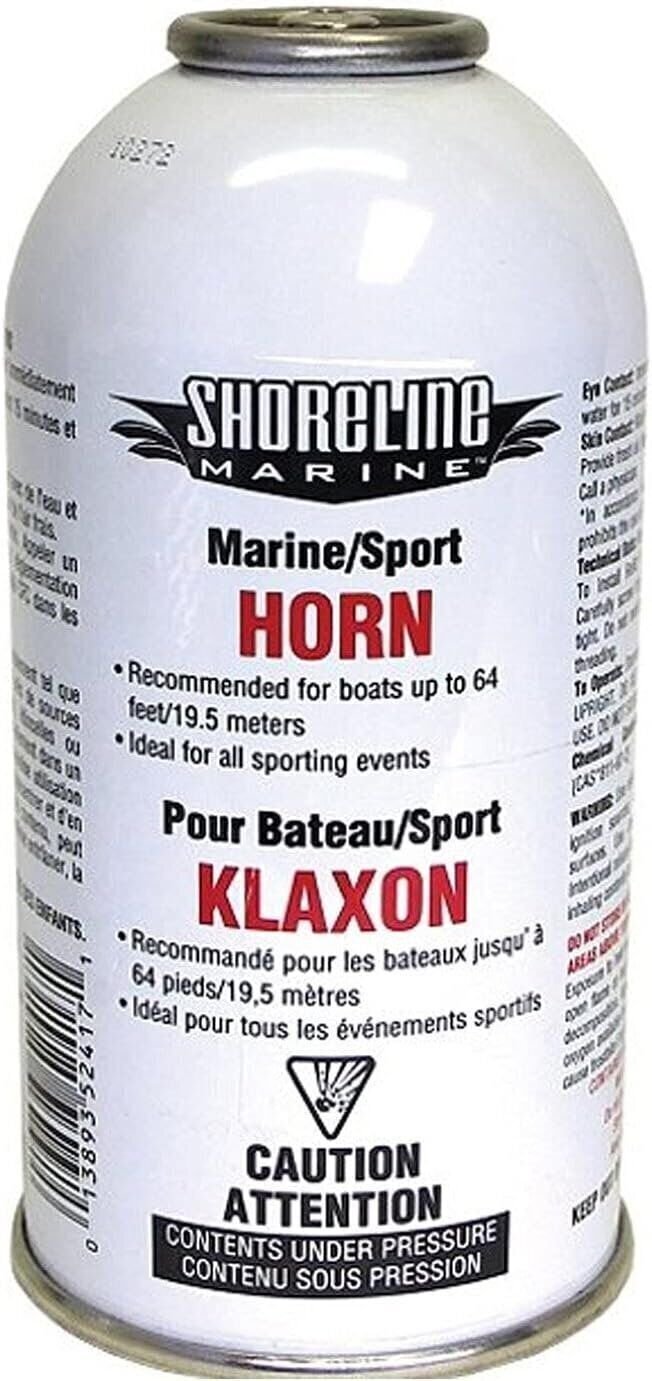

Photos from current listings. Actual item, color, and included accessories may vary.
Shoreline Marine Eco Air Horn Buying Guide
The Shoreline Marine Eco Air Horn is a compact, manual pump-style signaling horn that uses no chemical propellants or batteries, relying instead on a hand-pumped air reservoir. The core trade-off is between eco-friendly, always-ready operation and the loudness/duration limits inherent to a small 1.4 oz air chamber. Buyers should choose a pump horn only for short-range, intermittent signaling where no propellant or battery is acceptable; for sustained loudness or long-range use, a compressed-gas or electric horn is the durable choice.


At a glance
- Brand
- Not synced yet
- Model
- Not synced yet
- MPN
- Not synced yet
- Category
- Human-Powered Water Sports
- Status
- Offers available
- Data updated
- Nov 16, 2026
Current offers
Highlights
- Manual pump mechanism eliminates disposable propellant canisters and batteries, making it legally compliant where chemical horns are restricted.
- 1.4 oz (roughly 40 g) air capacity yields a short, sharp blast rather than a sustained tone—recharge by pumping before each signal.
- Acoustic output of compact pump horns typically lands around 100–110 dB at close range, below the 115–120 dB of gas canisters.
- Construction is usually ABS plastic with a rubberized pump bulb and a lanyard or wrist strap for grab-and-go use.
Best use cases
- Best fit: kayak, canoe, and paddleboard paddlers who need a legal, low-maintenance signaling device that never expires or corrodes in salt air.
- Best fit: inland or nearshore boaters in jurisdictions that ban disposable gas horns or where replacing canisters is impractical.
- Wrong fit: offshore sailors or fog-bound boaters who need sustained 115+ dB blasts—choose a compressed-gas canister horn or electric megaphone instead.
- Wrong fit: buyers expecting instant, one-handed operation—pump horns require several priming squeezes before each blast and demand two hands in wind.
Buying tips
- Match horn type to your legal requirement: pump air horns satisfy most USCG carriage rules for vessels under 26 ft where a handheld sound device is accepted, but not for vessels requiring a bell or whistle.
- Check the air chamber size: 1.4 oz class units deliver roughly 1–2 short blasts per full pump cycle; larger 4–8 oz reservoirs give longer tone but are bulkier to stow.
- Inspect the pump bulb material—natural rubber or silicone outlasts cheap PVC, which stiffens and cracks in UV and cold.
- For saltwater use, confirm stainless or brass internal springs and a corrosion-resistant diaphragm, since salt crystals seize cheap pumps.
Specs
| Type | Manual pump air horn |
|---|---|
| Air Capacity | 1.4 oz class |
| Propellant | None (hand-pumped air) |
| Typical Output | 100–110 dB at close range |
Alternatives to compare

Related searches
What to check before buying
- Confirm your local carriage requirement: a handheld air horn is acceptable for many recreational craft under 26 ft, but larger vessels need a bell and whistle.
- Measure your PFD or cockpit storage: 1.4 oz pump horns run roughly 6–8 inches long and need a lanyard point or pocket clip.
- Verify climate performance—rubber pump bulbs stiffen below freezing, so winter paddlers should store the horn warm and test it before launch.
- Check that the horn has no pressurized or chemical contents if you plan to fly with it; pump air horns are generally carry-on safe.
FAQ
Data sources: eBay / Amazon listings and product attribute feeds Data updated Nov 16, 2026.
Some links on this page are affiliate links. If you buy after clicking one, we may earn a commission at no extra cost to you. This does not change which products appear here or their order. Affiliate disclosure.