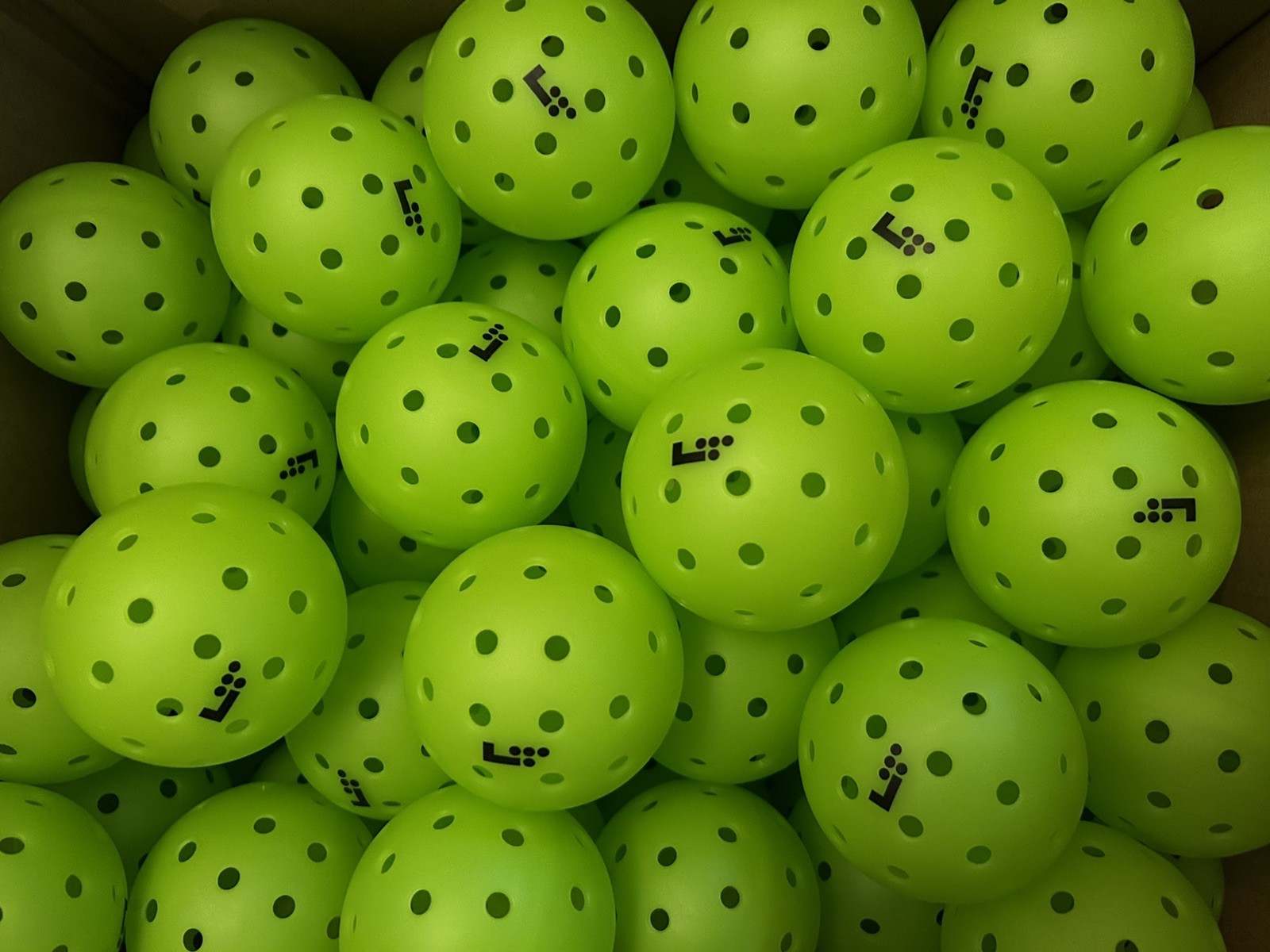

Photos from current listings. Actual item, color, and included accessories may vary.
Official Pickleball Ball Buying Guide
Official pickleball balls are the tournament-legal balls certified by USA Pickleball or a pro tour, built to precise bounce, hardness, and hole patterns that separate consistent play from recreational compromises. The core trade-off is indoor vs outdoor construction and one-piece vs two-piece molding: outdoor balls need harder, thicker plastic and smaller holes to resist wind, while indoor balls use softer, larger-hole designs for controlled play on smooth floors. The decision rule is simple: buy balls explicitly labeled official and matched to your court surface, because uncertified balls warp, crack, or bounce inconsistently and break tournament eligibility.


At a glance
- Category
- Pickleball Balls
- Data updated
- Nov 16, 2026
Current offers
Highlights
- USA Pickleball certification requires balls to pass bounce, hardness, and durability tests; official balls carry the USA Pickleball Approved mark or a pro tour endorsement such as PPA Tour.
- Outdoor balls use 40 holes in a specific pattern with harder, thicker plastic (typically polyethylene) for wind resistance and durable court wear; indoor balls use 26 larger holes and softer plastic.
- Two-piece molded balls join two hemispheres for consistent bounce and longer life, while one-piece balls are cheaper but prone to seam cracks and inconsistent flight.
- Pro tour official balls like the Lifetime LT Pro 48 are batch-tested for roundness and hardness, so tournament play demands the exact model and color specified by the event.
Best use cases
- Pick outdoor official balls in high-visibility colors (yellow, orange, neon green) for asphalt or concrete courts—these resist wind and abrasion; skip indoor balls outdoors because soft plastic wears fast and bounces erratically.
- Pick indoor official balls with 26 larger holes for gymnasium wood or tile floors—they give controlled, slower flight; skip outdoor balls indoors because harder plastic and small holes produce skittish, fast bounces on smooth surfaces.
- Pick the exact official ball named by your tournament or league (e.g., PPA Tour official) for competitive play; skip generic 'official-style' balls for sanctioned events because certification and batch consistency are required for fair play.
- Pick two-piece molded balls for frequent recreational and club play where durability matters; skip one-piece balls for high-level play because seam cracks develop and alter bounce.
Buying tips
- Match ball to court: outdoor = 40 small holes, harder plastic; indoor = 26 large holes, softer plastic; using the wrong type accelerates wear and ruins bounce consistency.
- Buy two-piece molded construction for club or tournament use—the seam bond keeps the ball round longer; one-piece balls are false economy for regular play.
- Confirm USA Pickleball Approved or a named pro tour official endorsement on the ball or packaging; uncertified balls are not legal for sanctioned tournaments.
- Buy in multi-packs (e.g., 5-pack, 48-pack) from a single batch for consistent hardness and color; mixed batches can vary slightly in bounce.
Specs
| Certification | USA Pickleball Approved / Pro Tour Official |
|---|---|
| Court Surface | Outdoor 40-hole / Indoor 26-hole |
| Construction | Two-piece molded vs one-piece |
| Pack Size | 5-pack to 48-pack bulk |
Related searches
What to check before buying
- Identify your primary court surface: outdoor hard court (asphalt/concrete) needs outdoor balls; indoor gym floor needs indoor balls.
- Check your league or tournament rulebook for the required ball model, color, and certification—buy that exact spec for competitive play.
- Verify the ball is USA Pickleball Approved or carries a named pro tour official mark; avoid uncertified 'practice' balls for match play.
- Store balls at room temperature and inspect for cracks or out-of-round shape before play; replace worn balls to keep bounce consistent.
FAQ
Data sources: eBay / Amazon listings and product attribute feeds Data updated Nov 16, 2026.
Some links on this page are affiliate links. If you buy after clicking one, we may earn a commission at no extra cost to you. This does not change which products appear here or their order. Affiliate disclosure.