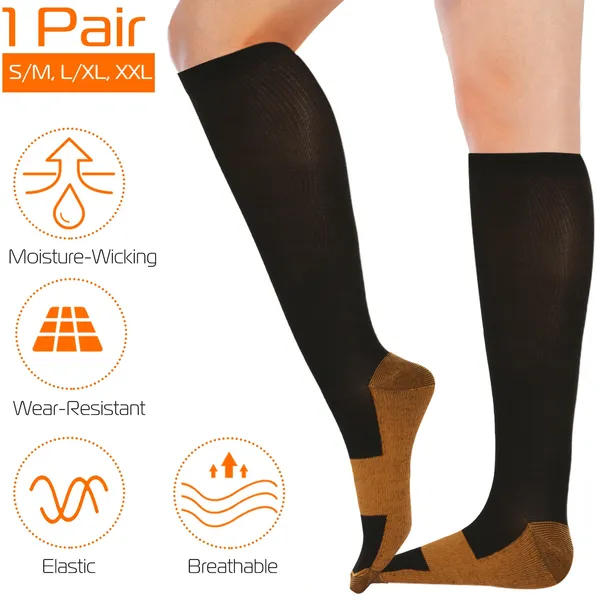

Photos from current listings. Actual item, color, and included accessories may vary.
Running Sock Buying Guide
Running socks are the primary interface between foot and shoe, where the real trade-off is moisture management and blister prevention versus compression and recovery support. The decisive rule: choose thin, seamless, synthetic-blend crew socks for daily training; choose graduated 15-20 or 20-30 mmHg compression knee-highs only for recovery, travel, or medical swelling—not as a substitute for performance socks.


At a glance
- Category
- Running Apparel
- Data updated
- Nov 16, 2026
Current offers
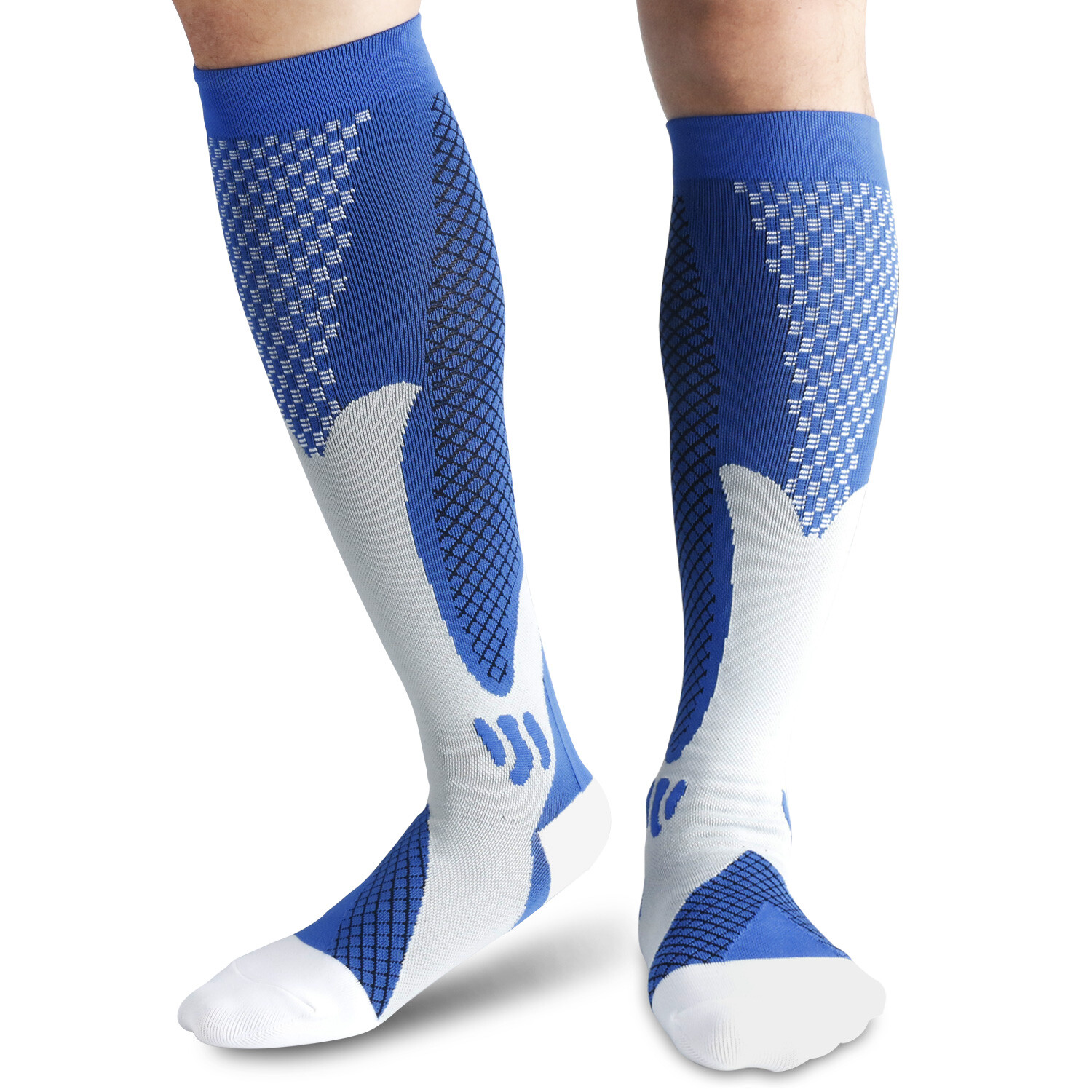
Highlights
- Performance running socks use nylon/polyester/spandex blends with flat-lock toe seams and mesh ventilation zones; cotton retains moisture and causes blisters.
- Graduated compression socks are rated in mmHg: 15-20 mmHg for mild support/travel, 20-30 mmHg for clinical swelling and shin splint recovery, 30-40 mmHg for post-surgical or severe edema.
- Cushioning tiers differ by construction: no-cushion for race day, light cushion under heel/forefoot for daily training, full-terry cushion for long runs and high-impact.
- Compression fit depends on calf circumference and shoe size, not sock size alone; knee-high socks must reach just below the knee without bunching at the ankle.
Best use cases
- Daily road/trail training: pick thin or light-cushion crew socks in nylon/spandex with seamless toes—skip cotton and over-tight compression.
- Post-run recovery or long-haul travel: pick 15-20 mmHg graduated knee-highs worn 1-2 hours after running; skip 30-40 mmHg unless medically advised.
- Shin splints or edema management: pick 20-30 mmHg graduated compression with a measured calf circumference; skip drugstore one-size socks that bunch.
- Race day: pick no-cushion, ultralight race socks with minimal seams; skip thick terry socks that alter shoe fit and add heat.
Buying tips
- Match compression to purpose: 15-20 mmHg for travel/mild fatigue, 20-30 mmHg for swelling and shin splints, 30-40 mmHg only for clinical or post-op use.
- Measure calf circumference at its widest point and match to the brand's size chart; shoe size alone mis-sizes knee-high compression socks.
- For blister prevention choose flat-lock or hand-linked toe seams and moisture-wicking nylon/polyester; cotton socks hold sweat and cause friction.
- Replace training socks every 6-12 months or when elastic loses rebound—stretched cuffs cause bunching, slipping, and hot spots.
Specs
| Compression Level | 15-20 / 20-30 / 30-40 mmHg |
|---|---|
| Fabric Blend | Nylon/polyester/spandex vs cotton |
| Cushion Tier | No-cushion / light / full terry |
| Height | No-show / crew / knee-high |
Related searches
What to check before buying
- Measure calf circumference and ankle circumference; knee-high compression must fit both, not just shoe size.
- Confirm shoe fit: thick cushioned socks can require a half-size-up shoe; race-thin socks may need a tighter lacing.
- Check fiber content label: nylon/polyester/spandex for wicking; avoid high-cotton blends for running.
FAQ
Data sources: eBay / Amazon listings and product attribute feeds Data updated Nov 16, 2026.
Some links on this page are affiliate links. If you buy after clicking one, we may earn a commission at no extra cost to you. This does not change which products appear here or their order. Affiliate disclosure.