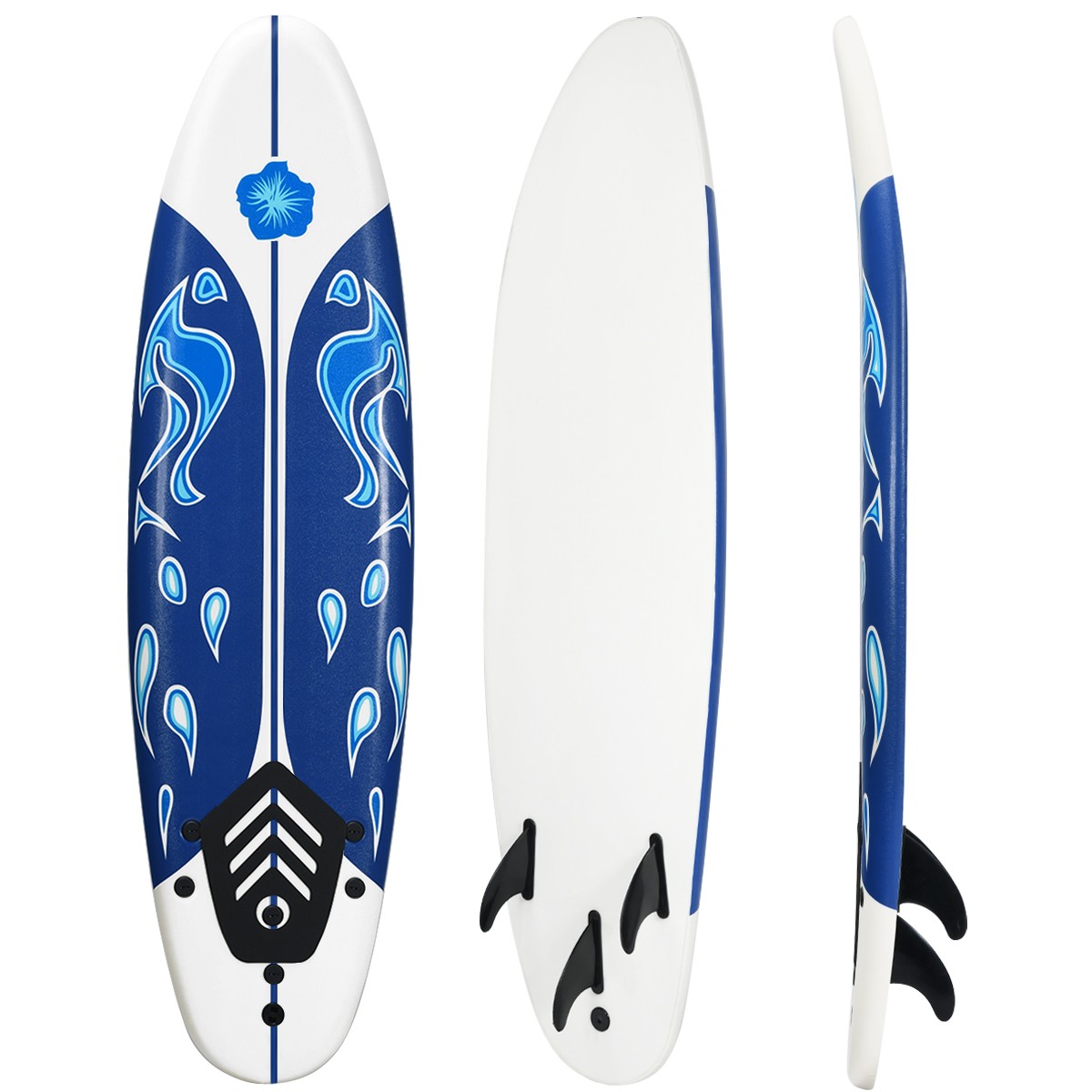

Photos from current listings. Actual item, color, and included accessories may vary.
Surfing Sup Buying Guide
A surfing SUP is a stand-up paddleboard built with surf-oriented rocker, rails, and fin setups for riding waves rather than flatwater touring. The core trade-off is stability versus wave performance: wider, thicker boards paddle easily but turn sluggishly, while narrower surf shapes need more skill. Choose a surf-specific SUP with a thruster or quad fin configuration and a planing hull; avoid displacement-touring boards if wave riding is your goal.


At a glance
- Category
- Surfboards
- Data updated
- Nov 16, 2026
Current offers
Highlights
- Surf SUP shapes use planing hulls with pronounced nose rocker and pulled-in tails, unlike flat-rockered displacement boards designed for straight-line tracking.
- Construction tiers: EPS foam core with epoxy or PVC sandwich is stiff and light; single-skin or inflatable drop-stitch is softer and flexes under wave load.
- Fin setup drives performance: thruster (3-fin) gives pivot and drive; quad (4-fin) offers looser, faster down-the-line speed; single-fin suits classic longboard glide.
- Volume-to-weight rule: surf SUPs typically run 1.2–1.6 liters per kg of rider weight; beginners want the higher end, advanced surfers the lower.
Best use cases
- Best fit: riding small-to-medium beach break waves — pick a 7'6"–9'0" planing hull with thruster fins and 120–160L volume for glide and turnability.
- Wrong fit: flatwater distance paddling or downwinding — skip surf-rockered SUPs; choose a displacement-nose touring board with 12'6"+ length and single fin.
- Best fit: heavier or beginner riders wanting wave time — choose 9'0"–10'6" with 160–200L and 32"+ width for stability; skip sub-8' narrow boards until balance improves.
- Wrong fit: storing in a small apartment or transporting in a sedan — a hard 10'6" epoxy board is cumbersome; an inflatable surf SUP packs down but sacrifices wave precision.
Buying tips
- Match length to rider weight and skill: under 70kg beginners start at 8'6"–9'6"; over 90kg choose 9'6"–10'6" with 170L+ to float and paddle into waves.
- Check fin box standard: FCS II or Futures dual-tab boxes accept modern surf fins; older US single-fin boxes limit thruster setups unless adapters are used.
- Inflatable surf SUPs need drop-stitch pressure of 15–20 PSI for adequate stiffness; below 12 PSI the board flexes and loses rail control in turns.
- Deck pad coverage and rail saver tape indicate build intent: full-coverage EVA grip and reinforced rails signal a board meant for aggressive wave riding, not casual flatwater.
Specs
| Hull Type | Planing surf vs displacement touring |
|---|---|
| Construction | EPS/epoxy, PVC sandwich, inflatable |
| Fin Setup | Thruster 3-fin / Quad 4-fin / Single |
| Volume Range | 90–200 L (1.2–1.6 L per kg rider) |
Related searches
What to check before buying
- Measure your vehicle and storage space: hard surf SUPs run 7'6"–10'6" long and 28"–34" wide; confirm roof-rack or van clearance before buying.
- Verify rider weight against board volume: divide board liters by your kg; aim for 1.2–1.6 L/kg for surfing, higher for stability.
- Confirm fin compatibility: ensure the board's fin boxes (FCS II, Futures, US single) match fins you own or can source locally.
- Check leash plug and deck pad condition on used boards; missing plugs or delaminated EVA mean immediate repair costs.
FAQ
Data sources: eBay / Amazon listings and product attribute feeds Data updated Nov 16, 2026.
Some links on this page are affiliate links. If you buy after clicking one, we may earn a commission at no extra cost to you. This does not change which products appear here or their order. Affiliate disclosure.