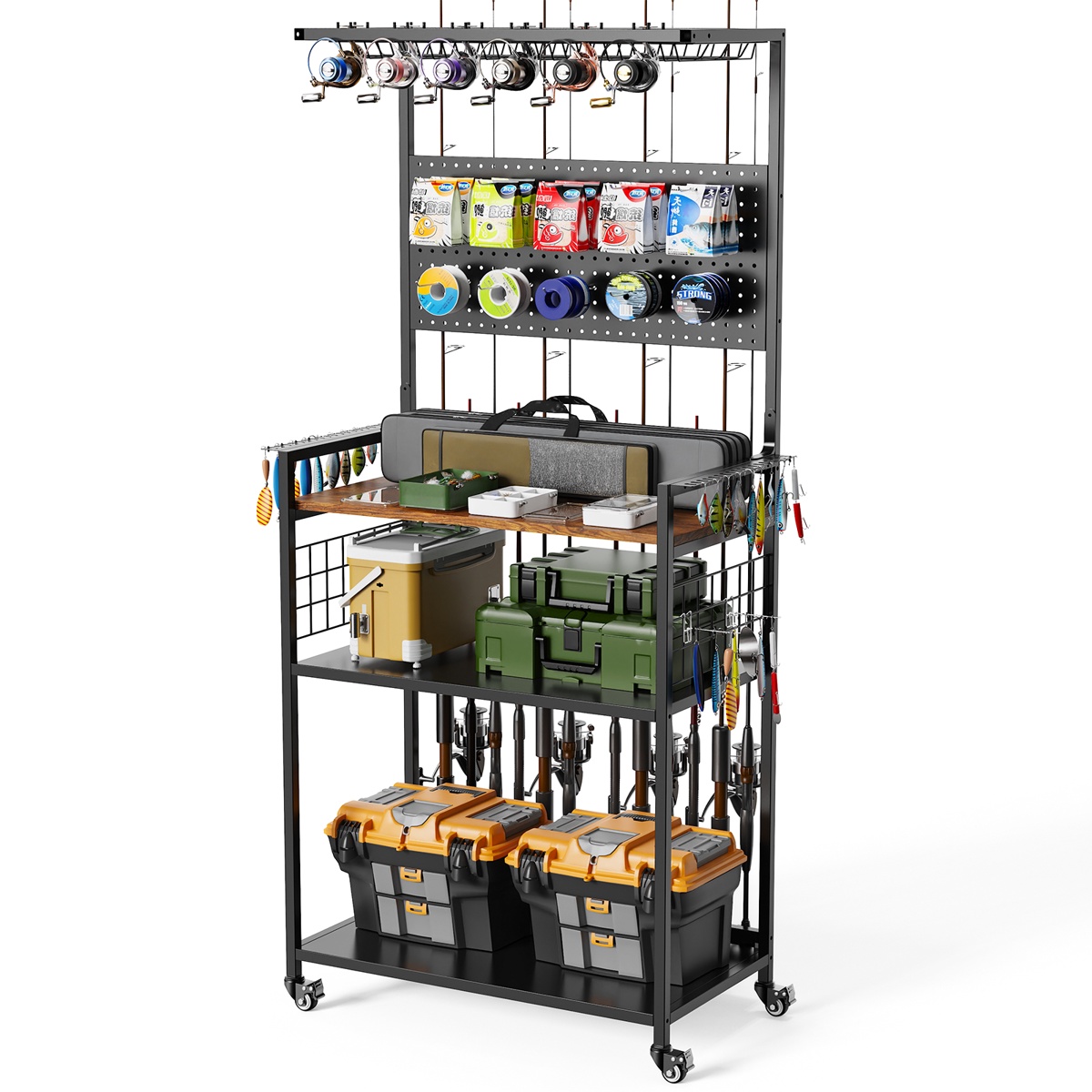

Photos from current listings. Actual item, color, and included accessories may vary.
Fishing Rod Rack Buying Guide
A fishing rod rack is a dedicated storage system that holds rods, reels, and tackle vertically, horizontally, or on a cart, protecting guides and blanks from bending and impact. The core trade-off is between wall-mounted static racks (space-efficient, low cost, fixed) and freestanding or rolling racks (portable, lockable, higher capacity but footprint-heavy). Buy a rack rated for your rod count plus 20% headroom and built from powder-coated steel or marine-grade polymer; skip thin-gauge wire or untreated wood if rods are stored long-term in humid garages.


At a glance
- Category
- Tackle Storage & Tools
- Data updated
- Nov 17, 2026
Current offers
Highlights
- Wall racks typically hold 6-12 rods in horizontal or vertical cradles; freestanding multi-tier carts handle 16-36 rods with separate reel and tackle-box shelves.
- Powder-coated steel tubing (1-1.5 mm wall) resists rust far better than chrome-plated wire or painted mild steel in saltwater and garage environments.
- Foam or EVA rod cradles prevent guide deformation; bare metal or hard plastic hooks can scratch blanks and crush cork handles over time.
- Lockable casters (2-4 inch) and a wheel-brake set determine whether a rolling rack stays put on sloped driveways or boat ramps.
Best use cases
- Truck bed or SUV cargo area: choose a low-profile horizontal or telescoping rack with tie-down points and no casters; skip tall rolling carts that tip on uneven beds.
- Garage or tackle room with 20+ rods: pick a multi-tier rolling cart with lockable wheels and separate reel/box shelves; skip wall-mounted 6-rod racks that force rod stacking.
- Boat or dock storage: use marine-grade aluminum or stainless hardware with UV-stable polymer cradles; skip untreated wood racks that warp and rot in wet environments.
- Apartment or small closet: select a vertical floor rack with a narrow footprint (under 2 ft square) or a ceiling-mounted lift; skip wide horizontal wall racks that need 7 ft of clear wall.
Buying tips
- Match rod count to cradle slots plus 20%: a 12-rod rack should have 14+ cradle positions because reels and guides consume extra spacing.
- Measure your longest rod butt-to-tip; vertical racks need ceiling height equal to rod length plus 6 inches, while horizontal racks need wall length equal to rod length plus 4 inches.
- For truck use, confirm bed length and rack width fit between wheel wells; a 60-inch horizontal rack fits most full-size beds but not compact trucks.
- Choose powder-coated steel for garage humidity, aluminum or stainless for coastal salt air, and HDPE or EVA cradles over PVC or bare metal to protect guides.
Specs
| Mount Type | Wall / Ceiling / Freestanding / Rolling |
|---|---|
| Rod Capacity | 6-12 (wall) / 16-36 (cart) |
| Frame Material | Powder-coated steel / aluminum / HDPE |
| Cradle Type | EVA foam / HDPE / rubber-lined |
Related searches
What to check before buying
- Measure your rod count and longest rod length; verify the rack's cradle count and maximum rod length rating exceed both.
- Check floor or wall space: rolling carts need 2-3 ft clearance to move, wall racks need studs or concrete anchors at the mounting height.
- Confirm wheel type and brake: lockable casters are required for sloped surfaces, and soft rubber wheels protect garage floors better than hard plastic.
- Verify assembly hardware is stainless or zinc-coated if the rack will live outdoors or in a boat shed; untreated fasteners rust within one season.
FAQ
Data sources: eBay / Amazon listings and product attribute feeds Data updated Nov 17, 2026.
Some links on this page are affiliate links. If you buy after clicking one, we may earn a commission at no extra cost to you. This does not change which products appear here or their order. Affiliate disclosure.