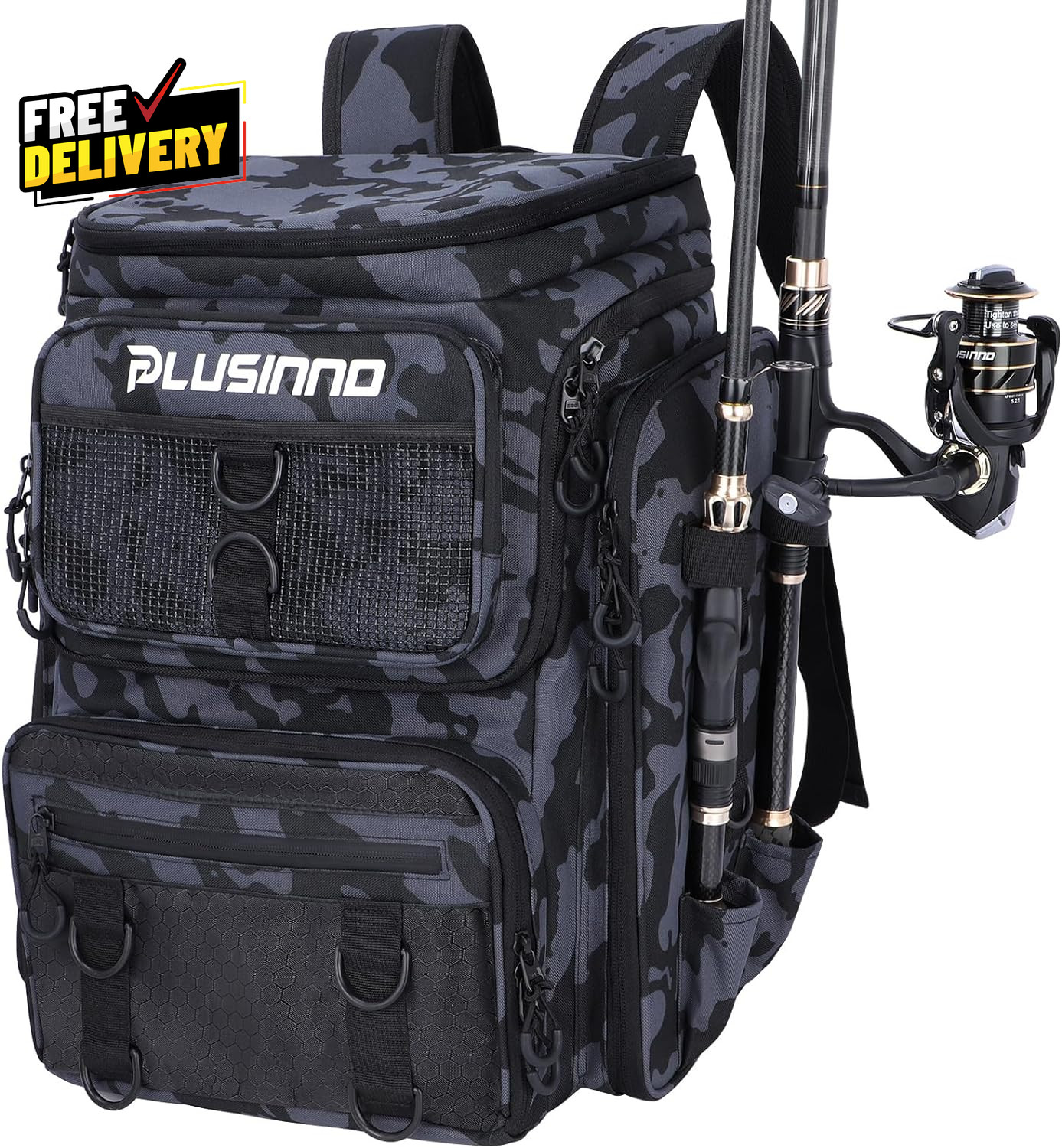

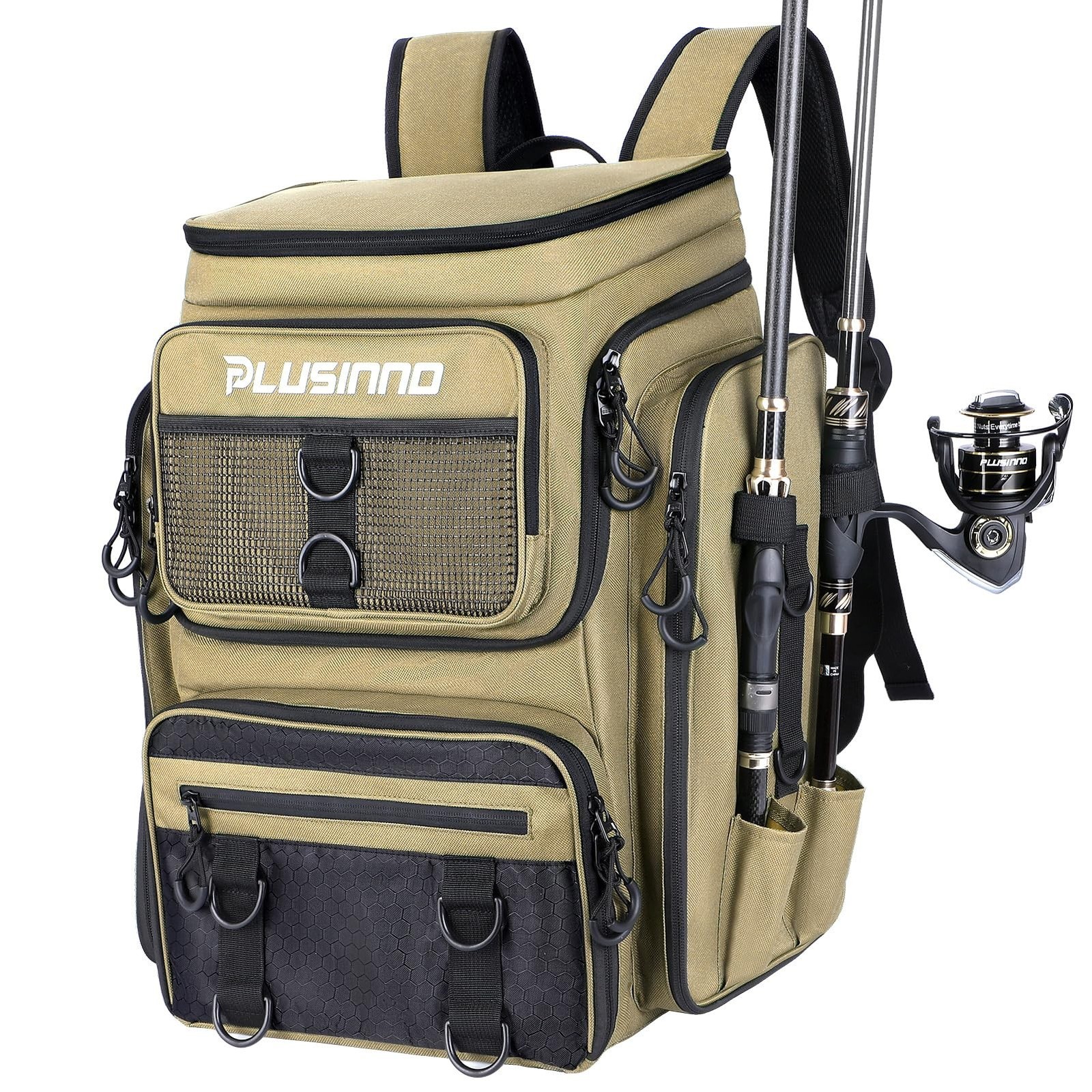
Photos from current listings. Actual item, color, and included accessories may vary.
Large Fishing Tackle Box Buying Guide
A large fishing tackle box is a high-capacity storage system—typically 30–50L in soft backpack or hard case form—built to organize trays, rods, and tools for full-day or multi-species trips. The core trade-off is between flexible soft-sided carry (backpack or shoulder bag with modular trays) and rigid hard-case protection (waterproof, crush-resistant, but heavier and less ergonomic). The decision rule: buy soft-sided only if the fabric is 600D+ with welded waterproof seams and a reinforced base, and buy hard-sided only if it has dual-throw latches plus a rubber gasket; anything lighter or latch-free is a fair-weather compromise, not a durable field box.


At a glance
- Category
- Tackle Storage & Tools
- Data updated
- Nov 16, 2026
Current offers
Highlights
- Soft packs in the 40–45L class typically use 600D–900D polyester or PVC-backed Oxford; below 500D denier, abrasion and UV resistance drop sharply after one season.
- Hard boxes are defined by latch and seal: dual-throw ABS or polypropylene latches with a continuous rubber gasket achieve IPX6-level splash resistance; single cam latches without gaskets are not weather-sealed.
- Tray modularity is the real capacity metric—standard 3700-series trays (14 x 9 x 2 in) fit most large soft bags and hard cases; confirm internal dimensions rather than advertised liter count.
- Backpack rod holders are typically 2–4 side sleeves with open bottoms; they protect transport but do not substitute for a rod case, and reel stems can snag on unbound sleeves.
Best use cases
- Best fit: bank and kayak anglers carrying 6–10 Plano 3700 trays plus rod transport—choose a 40–45L soft backpack with padded harness, welded base, and at least two side rod sleeves.
- Best fit: boat and pier anglers needing crush and splash protection—choose a hard case with gasketed lid, dual latches, and 4–6 internal 3700 trays; skip soft bags that collapse under stacked gear.
- Wrong fit: minimalists with 1–2 trays—a 40L pack wastes volume and adds harness weight; a small 3700-size soft bag or belt pack is the right tier.
- Wrong fit: saltwater surf anglers exposing gear to repeated submersion—neither standard large soft packs nor gasketed hard boxes are submersible; a dry bag plus separate tray box is the correct architecture.
Buying tips
- Match tray count to internal dimensions, not liters: a 42L pack typically holds 4–6 3700 trays; measure the main compartment against 14 x 9 x 2 in per tray before buying.
- For soft packs, require 600D+ fabric, bar-tacked or welded stress points, and a molded EVA or tarpaulin base—stitched-only bottoms leak and abrade on rocks and decks.
- For hard cases, insist on dual-throw latches plus a continuous gasket; single-latch boxes pop open in drops and are not splash-rated.
- Check harness load rating: a fully loaded 42L pack with trays and tools reaches 15–25 lb; look for padded shoulder straps, a sternum strap, and a waist belt for loads above 15 lb.
Specs
| Box Architecture | Soft backpack vs hard case |
|---|---|
| Capacity Class | 30–35L / 40–45L / 50L+ |
| Fabric Grade | 600D–900D / PVC-backed Oxford |
| Tray Compatibility | 3700-series (14x9x2 in) x4–6 |
Related searches
What to check before buying
- Measure your existing trays (3700-series is 14 x 9 x 2 in; 3600 is 11 x 7.25 x 1.75 in) and confirm the bag or case lists internal compartment dimensions that fit them flat.
- Confirm the pack or case fits your transport: backpack models need torso-fit harness adjustment; hard cases need a footprint that fits your boat hatch, truck bed, or pier cart.
- For saltwater or rainy climates, require gasketed hard cases or welded-seam soft packs with PVC backing; standard stitched polyester is freshwater-fair-weather only.
- Verify rod holder diameter and count against your rod butt sizes (typically 1–1.5 in) and whether sleeves are open-bottom or capped, which affects salt and sand ingress.
FAQ
Data sources: eBay / Amazon listings and product attribute feeds Data updated Nov 16, 2026.
Some links on this page are affiliate links. If you buy after clicking one, we may earn a commission at no extra cost to you. This does not change which products appear here or their order. Affiliate disclosure.