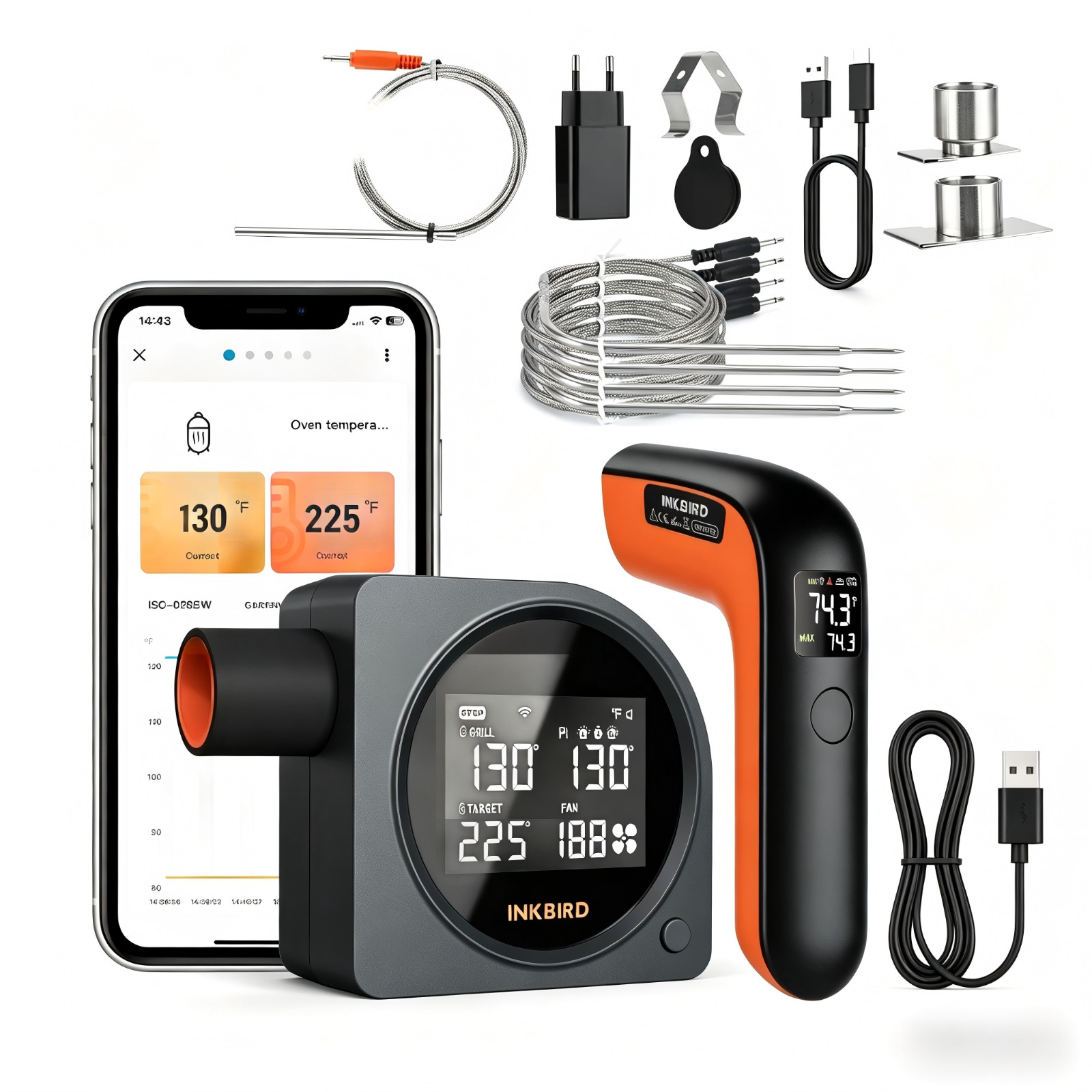

Photos from current listings. Actual item, color, and included accessories may vary.
Bbq Controller Buying Guide
A BBQ controller is an electronic system that regulates smoker or grill temperature by cycling a fan based on pit-probe feedback, while also monitoring food probes. The core trade-off is between accurate, durable PID control with a high-temp-resistant blower and cheap bang-bang thermostats with weak fans that overshoot and fail in weather. Choose a controller with a true PID algorithm, a replaceable high-temp blower, and probe ports matched to your cook; skip any unit that cannot hold ±5°F or lacks weather sealing.


At a glance
- Category
- BBQ Thermometers & Controllers
- Data updated
- Nov 16, 2026
Current offers
Highlights
- Control algorithm: PID vs bang-bang — PID modulates fan duty for ±5°F stability; bang-bang overshoots 20–30°F and causes temperature spikes.
- Blower construction: high-temp nylon or die-cast aluminum housing with silicone gasket rating 500°F+; cheap ABS fans warp and seize above 300°F.
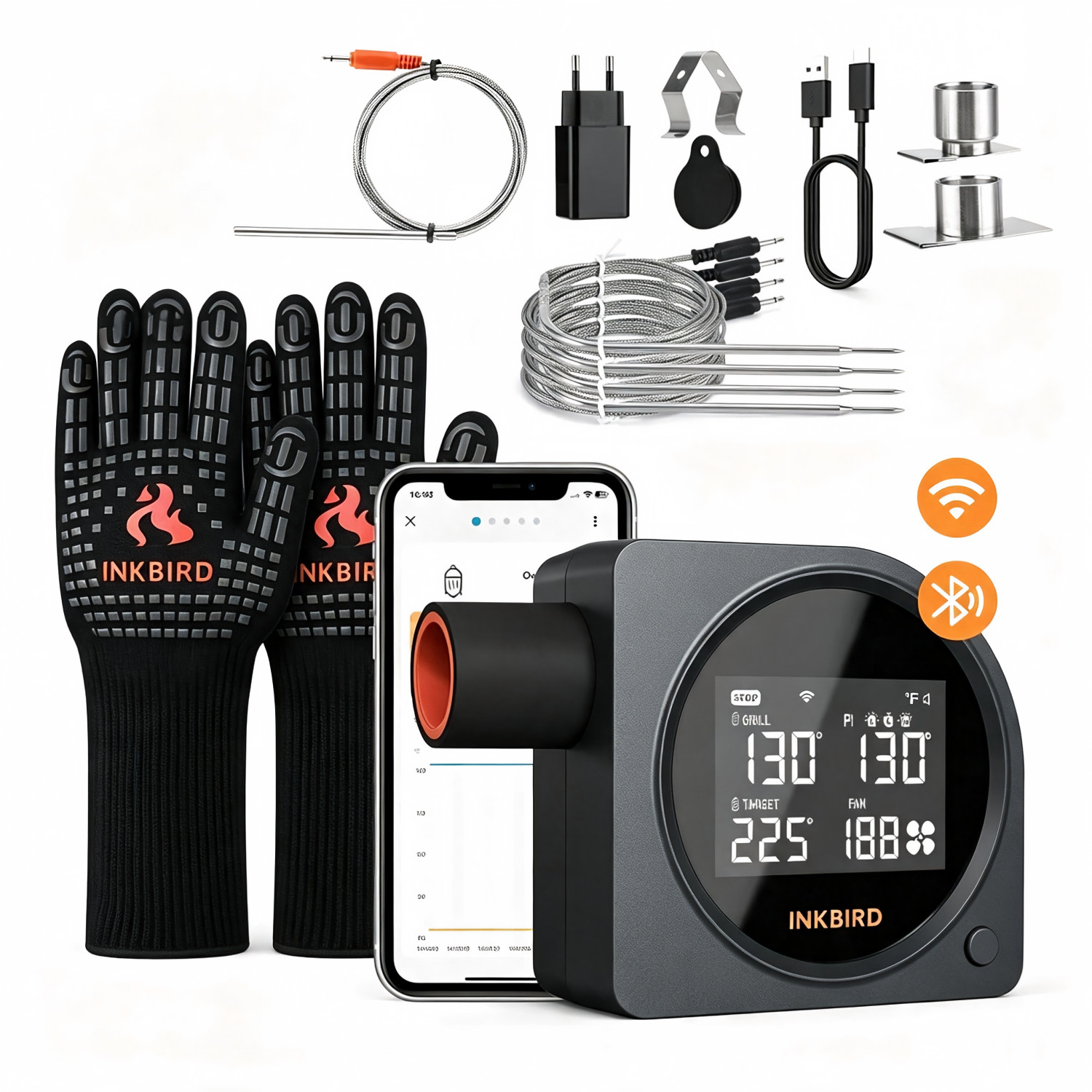
- Probe architecture: thermistor probes with braided stainless cables and 2.5mm/3.5mm jacks; 5-probe units add infrared gun or ambient monitoring but require probe-slot matching.
- Connectivity tiers: Bluetooth-only (line-of-sight ~100 ft) vs WiFi (cloud access anywhere) vs RF remote; WiFi models need 2.4GHz network and add app-based alerts and firmware updates.
Best use cases
- Best fit: overnight brisket on a charcoal offset — pick a WiFi PID controller with a 500°F-rated blower and at least 2 food probes, so you can monitor from bed without opening the lid.
- Best fit: weeknight ribs on a kettle — a Bluetooth PID with a single ambient probe and one food probe is sufficient; skip multi-probe WiFi units that add cost and setup time.
- Wrong fit: gas grill searing above 600°F — standard controllers and blowers are rated to 500°F max; use a high-temp probe thermometer instead, not a fan controller.
- Wrong fit: pellet grill — most pellet grills have integrated PID controllers; adding an external BBQ controller duplicates function and can conflict with the onboard system.
Buying tips
- Match blower CFM to cooker volume: 10–15 CFM for kettles and drums up to 55 gallons; 20–25 CFM for offset smokers 60–120 gallons; oversized fans cause overshoot on small pits.
- Confirm probe jack type: 2.5mm vs 3.5mm plugs are not interchangeable; replacement probes must match the controller's jack and thermistor curve (common types: 10K NTC, 100K NTC).
- Check power source: rechargeable lithium-ion (5–7 day standby) vs AA batteries (2–3 cooks); rechargeable units need USB-C charging and a low-battery alert to avoid mid-cook failure.
- Verify temperature range: controllers should read up to 572°F (300°C) for high-heat searing; blowers rated 500°F continuous with silicone gaskets are the durability baseline.
Specs
| Control Type | PID vs Bang-Bang thermostat |
|---|---|
| Blower Rating | 500°F+ high-temp housing |
| Probe Ports | 2–5 probes (2.5/3.5mm jacks) |
| Connectivity | Bluetooth / WiFi / RF remote |
Related searches
What to check before buying
- Measure your cooker's intake port diameter (common 1.5–2.5 inches) and adapter plate size; most blowers mount via a universal adapter or direct bolt pattern.
- Confirm your smoker's body material and gasket condition — leaky pits defeat PID control; seal doors and intake with high-temp gasket before adding a controller.
- Check WiFi band: controllers require 2.4GHz networks; 5GHz-only routers need a 2.4GHz guest network or dual-band split.
- Verify probe cable length (3–6 ft typical) reaches from controller to your cooking grate without tension, and that braided cables are rated to 500°F+.
FAQ
Data sources: eBay / Amazon listings and product attribute feeds Data updated Nov 16, 2026.
Some links on this page are affiliate links. If you buy after clicking one, we may earn a commission at no extra cost to you. This does not change which products appear here or their order. Affiliate disclosure.