Choosing an RV solar, batteries & power setup means choosing between two very different jobs: a portable source for running several devices, or a charger that replenishes a separate 12V battery while you drive or use solar. These products are not interchangeable, so the useful question is which job your camper actually needs. The quick answer: choose the BLUETTI Elite 200 V2 for portable power and the 20A DC-to-DC kit for focused dual-battery charging.
Quick verdict
- Choose the BLUETTI Elite 200 V2 when you want a portable power station for RV camping, road trips, backup power, and several connected devices.
- Choose the Premium 20A DC to DC Battery Charger MPPT 12V Dual Battery System Kit Caravan RV when your project centers on charging a secondary battery from vehicle or solar input.
The price gap is substantial, but it reflects different product roles rather than two versions of the same setup.
Compact comparison
| Category | BLUETTI Elite 200 V2 | 20A DC-to-DC MPPT Kit |
|---|---|---|
| Listed price | USD 899.00 | USD 138.72 |
| Product type | Portable power station | DC-to-DC battery charger |
| Input path | AC wall, car, and solar charging | Dual input with drive or solar use |
| Notable control or protection | WiFi/Bluetooth app control | Multi-stage charging and listed protective features |
Where each product wins
BLUETTI Elite 200 V2
BLUETTI wins the portable-load comparison. Its 2,073Wh capacity, 2,600W output, and ability to power up to nine devices simultaneously give it a clear brief for RV camping and emergency power. AC, car, and solar charging also offer several ways to replenish the unit. Choose it when the priority is carrying a single power station that can handle multiple device demands, rather than adding a dedicated charger to a battery bank.
20A DC-to-DC Charger MPPT Kit
The charger wins for a 12V dual-battery plan. Its 20A DC-to-DC rating and built-in MPPT regulator address charging from the vehicle or solar input, while the selectable profiles cover Lead Acid, AGM, Gel, calcium, and Li-ion batteries. That makes it a direct fit when the project centers on charging a secondary battery. The tradeoff is scope: it is described as a charger kit, so the choice depends on having the matching dual-battery arrangement.
Product notes
BLUETTI Elite 200 V2 2073Wh Portable Power Station for RV Camping Emergencies
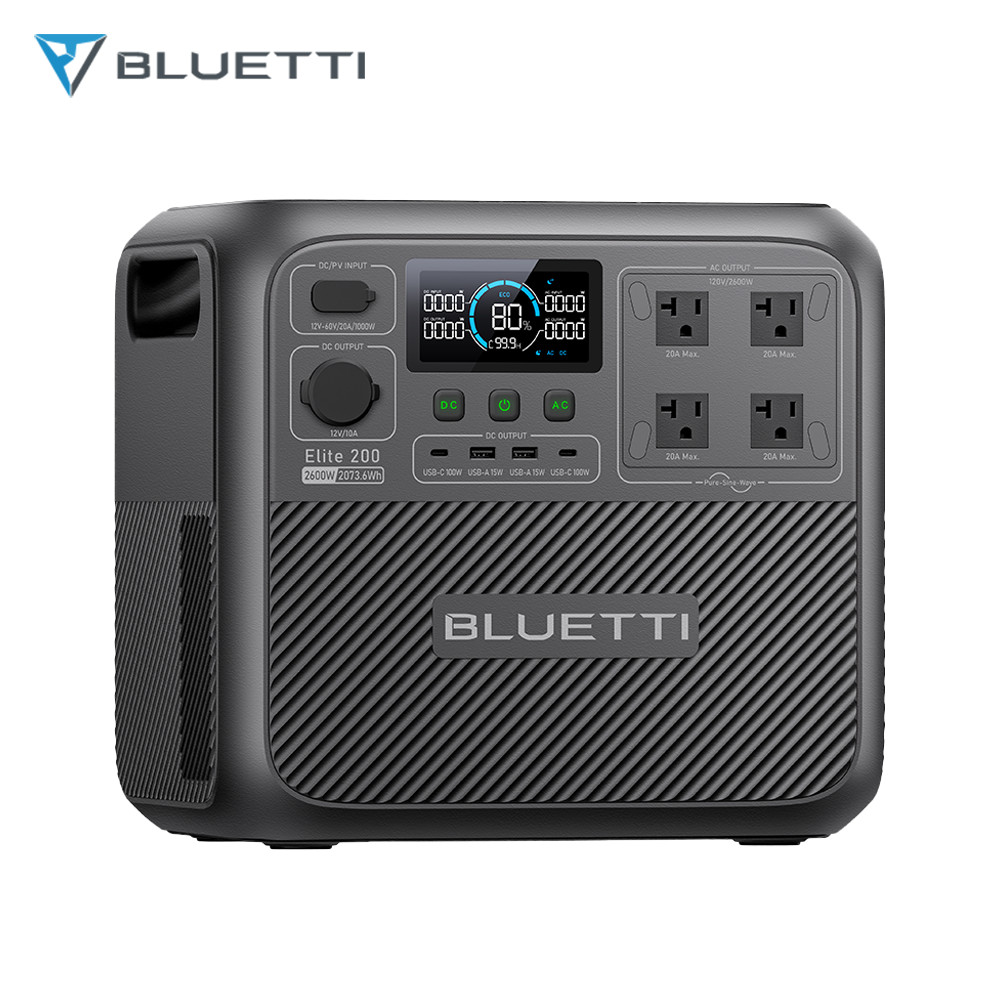
The BLUETTI Elite 200 V2 is a clear match when an RV setup needs a portable source for several devices at once. Its 2,073Wh capacity, 2,600W output, and support for up to nine devices provide a concrete reason to choose it. LiFePO₄ battery chemistry and WiFi/Bluetooth app control add useful definition to the power-station format. The limitation is the USD 899.00 listed price, along with its specific car-input figures: 96W at 12V or 192W at 24V. AC charging is listed at 1,800W maximum, so the intended input route matters when planning use. It fits camping, RV use, or backup power where portable capacity is the main requirement.
Premium 20A DC to DC Battery Charger MPPT 12V Dual Battery System Kit Caravan RV
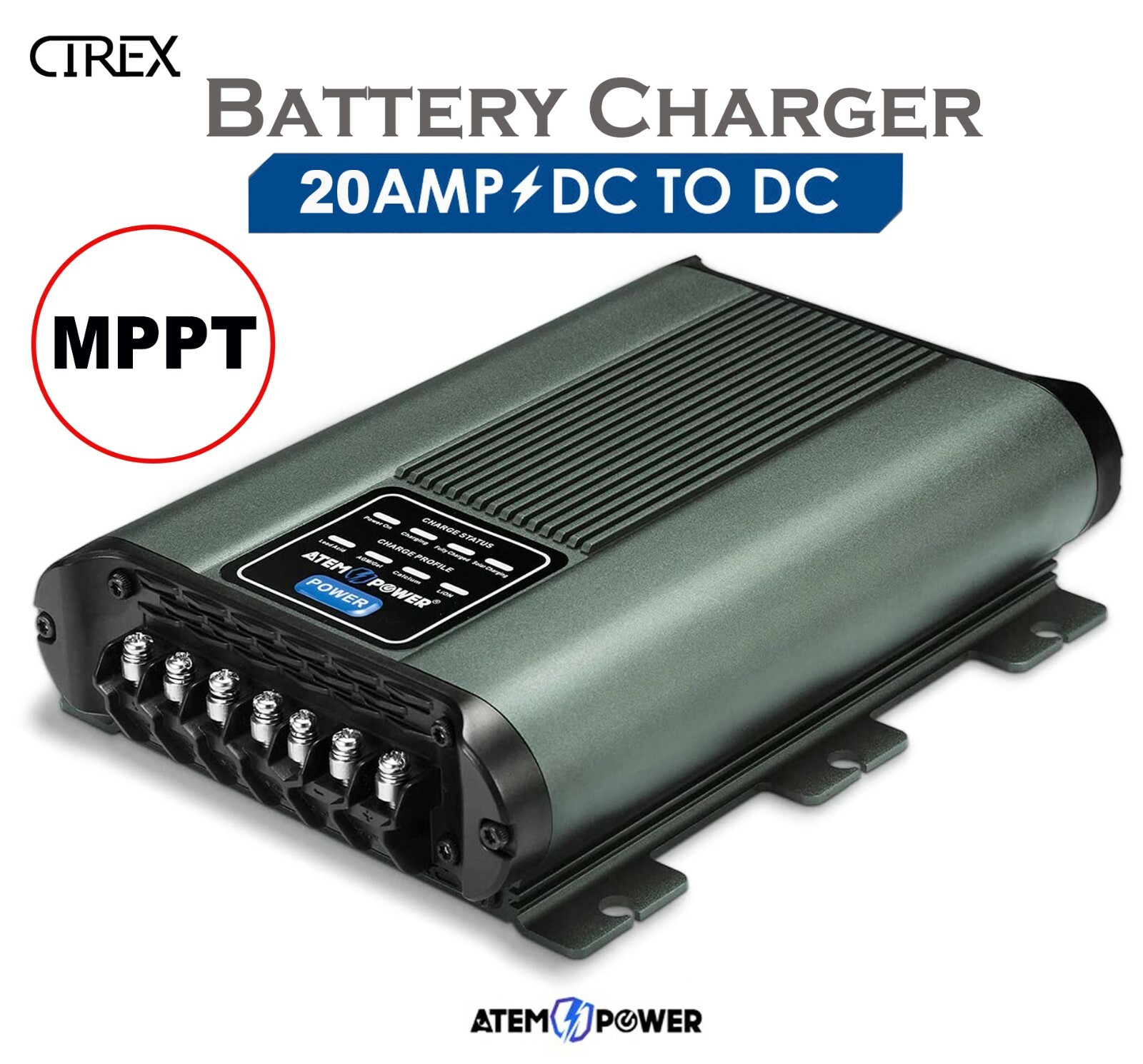
The Premium 20A DC to DC Battery Charger MPPT 12V Dual Battery System Kit Caravan RV suits a defined charging task. Its selectable profiles for Lead Acid, AGM, Gel, calcium, and Li-ion batteries give it a concrete reason to enter a dual-battery project, while multi-stage charging supports the stated charging approach. Reverse-connection, over- and under-voltage, over-temperature, and spark-free protections are also specified. The limitation is its 20A charger role: its usefulness depends on a planned 12V dual-battery system rather than a portable power-station format. The listed IP20 housing protection is another specification to account for in that setup.
Final choice by use case
- RV camping, road trips, or backup power: choose the BLUETTI Elite 200 V2 for its portable power-station format and multi-device focus.
- 12V dual-battery charging: choose the 20A kit for its charger format, vehicle-or-solar input, and MPPT regulator.
- If price is the deciding factor: the listed prices differ by $760.28. That gap reflects the different scope of a portable power station versus a dedicated battery charger.