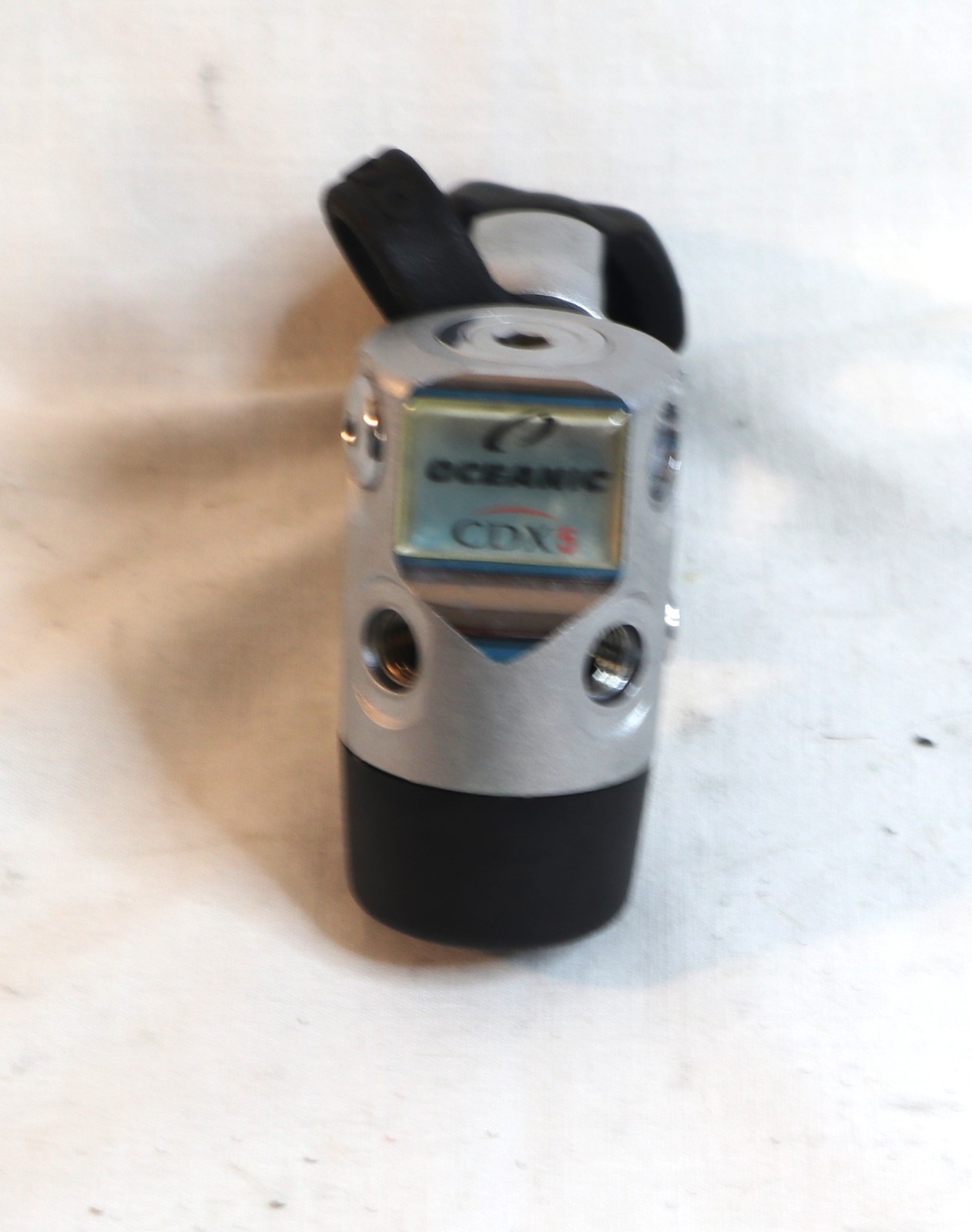

Photos from current listings. Actual item, color, and included accessories may vary.
Oceanic CDX 5 Buying Guide
The Oceanic CDX 5 is a balanced-diaphragm first stage regulator with a dry-sealed environmental chamber, positioned as Oceanic's compact travel-oriented first stage rather than a high-flow primary. The core trade-off is size/weight versus flow capacity: the CDX 5 uses a smaller valve body and fewer LP ports than full-size balanced first stages, so it suits travel and warm-water singles but is a compromise as a primary stage for cold water, twinsets, or heavy second-stage breathing. The decision rule is simple: buy it as a lightweight travel primary or backup where port count and sealing suit your diving, and skip it if you need a high-flow primary for cold water or technical rigs.


At a glance
- Brand
- Not synced yet
- Model
- Not synced yet
- MPN
- Not synced yet
- Category
- BCD & Dive Regulators
- Status
- Offers available
- Data updated
- Nov 16, 2026
Current offers
Highlights
- Balanced diaphragm design with a dry-sealed ambient chamber resists water and contaminant ingress, making it the right architecture for cold or silty conditions.
- The CDX 5 is Oceanic's compact first stage: a smaller body and reduced LP port count compared with full-size balanced first stages, which is the defining performance limitation.
- Oceanic models carry a two-year service interval with authorized-service records, not an annual service mandate, unlike many competitors.
- Yoke (A-clamp) and DIN configurations exist; DIN is the correct choice above 232 bar and for technical or travel-to-Europe setups.
Best use cases
- Best fit: warm-water travel singles with a single second stage — pick the yoke CDX 5 for a compact, light regulator kit where port count is not a constraint.
- Best fit: cold-water or silty-water diving — the dry-sealed diaphragm chamber is the reason to choose this over an unsealed piston first stage.
- Wrong fit: technical, twinset, or stage-bottle use — the limited LP ports and compact valve body cannot match a full-size balanced first stage for flow and hose routing.
- Wrong fit: a diver wanting one regulator for all conditions — the CDX 5 is a travel-oriented first stage; a full-size balanced diaphragm is the correct primary for cold-water or high-demand use.
Buying tips
- Match the first stage to your second stage: the CDX 5 pairs with Oceanic balanced second stages; an unbalanced second stage negates the balanced first stage's benefit.
- Choose yoke for standard 232 bar aluminium cylinders and DIN for 300 bar steel or European travel; do not convert a yoke valve with an adapter for high-pressure use.
- Buy a serviced or recently serviced unit: the tracked example is sold needing service, so budget for a full first-stage service before use.
- Confirm the first stage's LP port count against your hoses (primary, octopus, BCD, drysuit, gauge) before buying; the compact CDX 5 has fewer LP ports than full-size first stages.
Specs
| First Stage Type | Balanced diaphragm, dry-sealed |
|---|---|
| Connection Standard | Yoke 232 bar / DIN 300 bar |
| LP Port Count | Compact: fewer than full-size stages |
| Service Interval | 2 years (Oceanic authorized service) |
Alternatives to compare
Related searches
What to check before buying
- Count your LP hoses and verify the CDX 5's LP port count covers primary, octopus, BCD inflator, and gauge — with a spare for a drysuit if needed.
- Confirm the cylinder valve standard: yoke for 232 bar A-clamp valves, DIN for 300 bar or European travel cylinders.
- Check the service record: a used CDX 5 needs a full first-stage service with OEM parts before it is dive-ready.
- Verify climate: the dry-sealed diaphragm suits cold water, but confirm the second stage is also rated for the water temperature you dive.
FAQ
Data sources: eBay / Amazon listings and product attribute feeds Data updated Nov 16, 2026.
Some links on this page are affiliate links. If you buy after clicking one, we may earn a commission at no extra cost to you. This does not change which products appear here or their order. Affiliate disclosure.