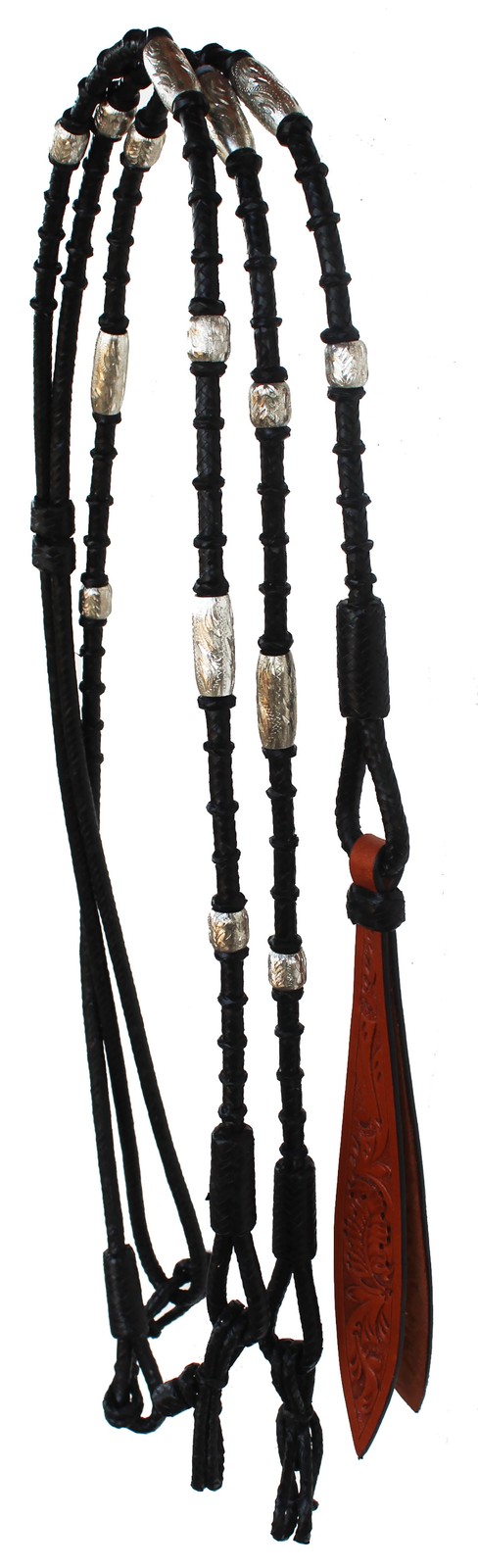

Photos from current listings. Actual item, color, and included accessories may vary.
Rawhide Romal Rein Buying Guide
Rawhide romal reins are a traditional western rein style combining a braided rawhide romal (a flexible quirt-like extension) with long leather or rawhide split reins, used for refined signal and, in some traditions, as a light quirt. The core trade-off is rawhide quality and braid tightness versus leather softness: genuine tightly braided rawhide delivers durability and feel but requires break-in and care, while loose or synthetic braid compromises signal clarity and lifespan. Decision rule: buy only fully braided rawhide romals with consistent strand tension and specified width/length; skip bonded leather or loose single-strand braid that stretches and lacks feel.


At a glance
- Category
- Bridles, Bits & Reins
- Data updated
- Nov 16, 2026
Current offers
Highlights
- Genuine rawhide (cured hide) braid vs synthetic or bonded leather: rawhide holds shape and transmits feel; synthetics stretch and dull signals.
- Braid strand count and tightness determine durability: tighter, higher-strand braid resists stretching and abrasion better than loose 4-strand construction.
- Typical romal rein length is 8-9 ft total with 3/8 in wide rein tails; romal body often 3/8-1/2 in diameter with a popper or button end.
- Silver or ferrule accents are cosmetic; the functional core is the rawhide braid quality and the rein-to-romal connection (button or knot) integrity.
Best use cases
- Best fit: traditional western and vaquero-style riders wanting refined neck-rein signal and a functional romal for light reinforcement; choose 8-9 ft, 3/8 in rawhide braid.
- Best fit: show or ranch work where durability and traditional appearance matter; pick tight multi-strand rawhide with secure button connections and silver accents only as desired.
- Wrong fit: casual trail riders wanting soft, low-maintenance leather; choose split leather reins instead of rawhide romal, which requires break-in and moisture care.
- Wrong fit: riders needing a full quirt for correction; a romal is a signal and light aid, not a heavy quirt—select a dedicated quirt if heavier contact is required.
Buying tips
- Match total rein length to riding style: 8-9 ft suits most western riders; shorter rein limits romal use, longer rein risks slack and tangling.
- Choose 3/8 in wide rein tails for standard feel; wider tails add weight and durability but reduce subtle signal; narrower tails increase feel but wear faster.
- Inspect braid tension and strand count: tight, even braid with more strands resists stretching; loose or uneven braid signals lower durability and poor feel.
- Verify the romal-to-rein connection: a secure button or braided knot that will not slip is essential; stitched or glued joints are a weak point under load.
Specs
| Material | Braided rawhide vs leather |
|---|---|
| Length | 8-9 ft total |
| Rein Width | 3/8 in standard |
| Romal Type | Braided with button/popper end |
Related searches
What to check before buying
- Measure your horse's neck and your arm reach: confirm 8-9 ft total length leaves proper slack without excess loop when riding.
- Check bit compatibility: romal reins attach to bit rings via rein chains or direct loops; confirm your bit accepts the chosen attachment style.
- Assess climate and care routine: rawhide requires periodic conditioning and dryness control; if you cannot maintain it, choose leather.
- Confirm rein width and romal diameter fit your hand size and glove use; 3/8 in is standard, larger diameters suit larger hands.
FAQ
Data sources: eBay / Amazon listings and product attribute feeds Data updated Nov 16, 2026.
Some links on this page are affiliate links. If you buy after clicking one, we may earn a commission at no extra cost to you. This does not change which products appear here or their order. Affiliate disclosure.