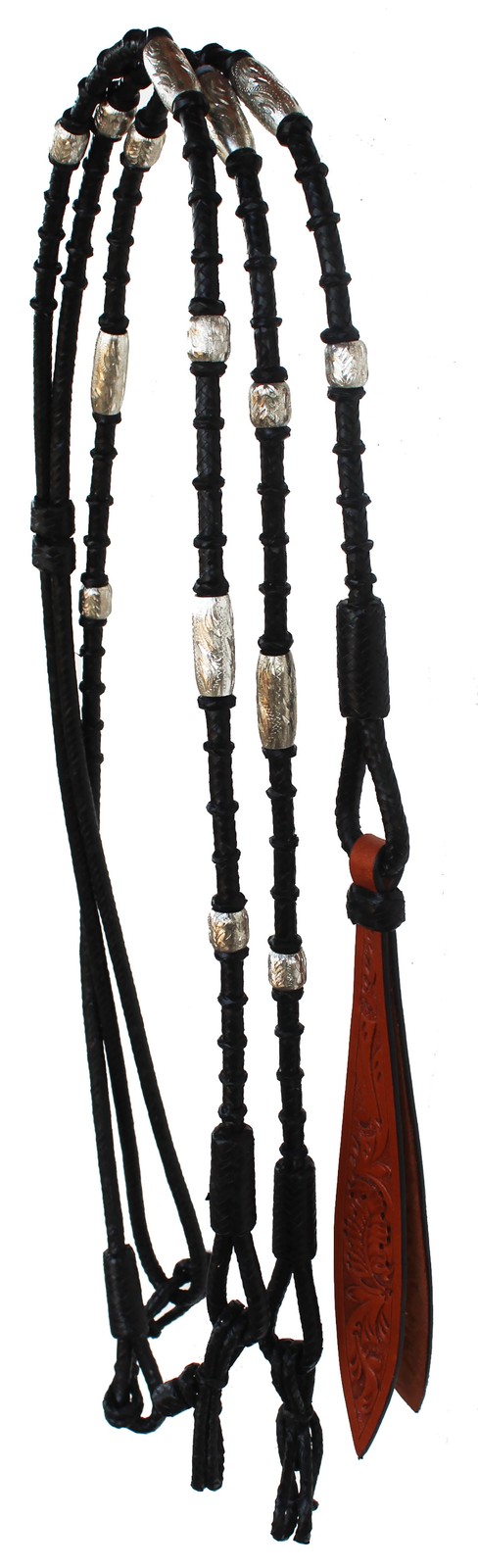

Photos from current listings. Actual item, color, and included accessories may vary.
Romal Rein Buying Guide
Romal reins are a closed-rein western bridle component consisting of a single braided loop rein joined to a flexible quirt-style romal tail, used for neck reining and signaling in finished bridle-horse and ranch riding. The core trade-off is braid construction and material: hand-braided rawhide offers supple, balanced feel and long service life, while machine-braided or leather-laced romals are stiffer, heavier, and prone to stretch or cracking at the rein-to-romal junction. Buyers should choose a romal sized to their horse's neck and their hand span, with a braided rawhide or leather body and a romal tail long enough to reach the saddle horn when the reins are held at riding length.


At a glance
- Category
- Bridles, Bits & Reins
- Data updated
- Nov 16, 2026
Current offers
Highlights
- Romal reins are a single-piece rein-and-quirt system: the rein loop attaches to the bit and the romal tail hangs from the rider's hand for one-handed neck-rein cues.
- Traditional construction is braided rawhide over a core; 4-strand, 8-strand, and 16-strand braids change suppleness, weight, and durability, with higher strand counts giving rounder, smoother feel.
- Standard romal length is 8-9 ft overall with a 3/8 in rein width; the romal tail typically adds 18-30 in beyond the rein loop and must clear the saddle horn.
- Leather-laced or single-ply leather romals are cheaper but stretch and crack at the hand junction; braided rawhide resists moisture and holds shape over years of use.
Best use cases
- Best fit: finished bridle-horse or ranch-riding horses already neck-reining — pick a braided rawhide romal in 8-9 ft length with a tail that reaches the horn from your hand position.
- Best fit: show or traditional western dress — choose a finer 8- or 16-strand braid with silver ferrule or concho accents for a cleaner, more formal look.
- Wrong fit: green horses or two-handed direct-rein riding — skip romal reins and use split leather reins until the horse neck-reins reliably; a romal adds no steering advantage and can confuse a young horse.
- Wrong fit: trail or everyday wet-weather use on a budget — a leather-laced romal is acceptable for light work but will stiffen and crack; braided rawhide is the durable pick if the horse works regularly.
Buying tips
- Measure from bit ring to bit ring across your horse's neck at riding height; an 8-9 ft romal rein fits most adult horses, but ponies and small Arabians need the shorter end of that range.
- Match romal tail length to your arm and saddle: with the rein held at riding length, the tail should hang 6-10 in below the saddle horn so it can be lifted without slack tangling.
- Choose braid count by feel: 4-strand is heavier and stiffer for ranch work, 8-strand is the all-around standard, and 16-strand gives the supplest, most refined feel for show hands.
- Check the hand junction — the point where the rein loop meets the romal — for tight, even braiding and a reinforced core; this is where cheap romals fail first.
Specs
| Braid Material | Braided rawhide vs leather-laced |
|---|---|
| Strand Count | 4-, 8-, 16-strand braid |
| Overall Length | 8-9 ft (pony to draft) |
| Rein Width | 3/8 in standard |
Related searches
What to check before buying
- Confirm your bridle's bit has slobber straps or rein rings that accept a 3/8 in rein width without binding.
- Measure your horse's neck circumference at the rein line and your saddle horn height before choosing overall length.
- Verify the romal tail clears your saddle horn and doesn't catch on a breast collar or tie-down when lifted.
- Check climate: braided rawhide handles wet and dry conditions better than leather-laced romals, which need conditioning and dry storage.
FAQ
Data sources: eBay / Amazon listings and product attribute feeds Data updated Nov 16, 2026.
Some links on this page are affiliate links. If you buy after clicking one, we may earn a commission at no extra cost to you. This does not change which products appear here or their order. Affiliate disclosure.