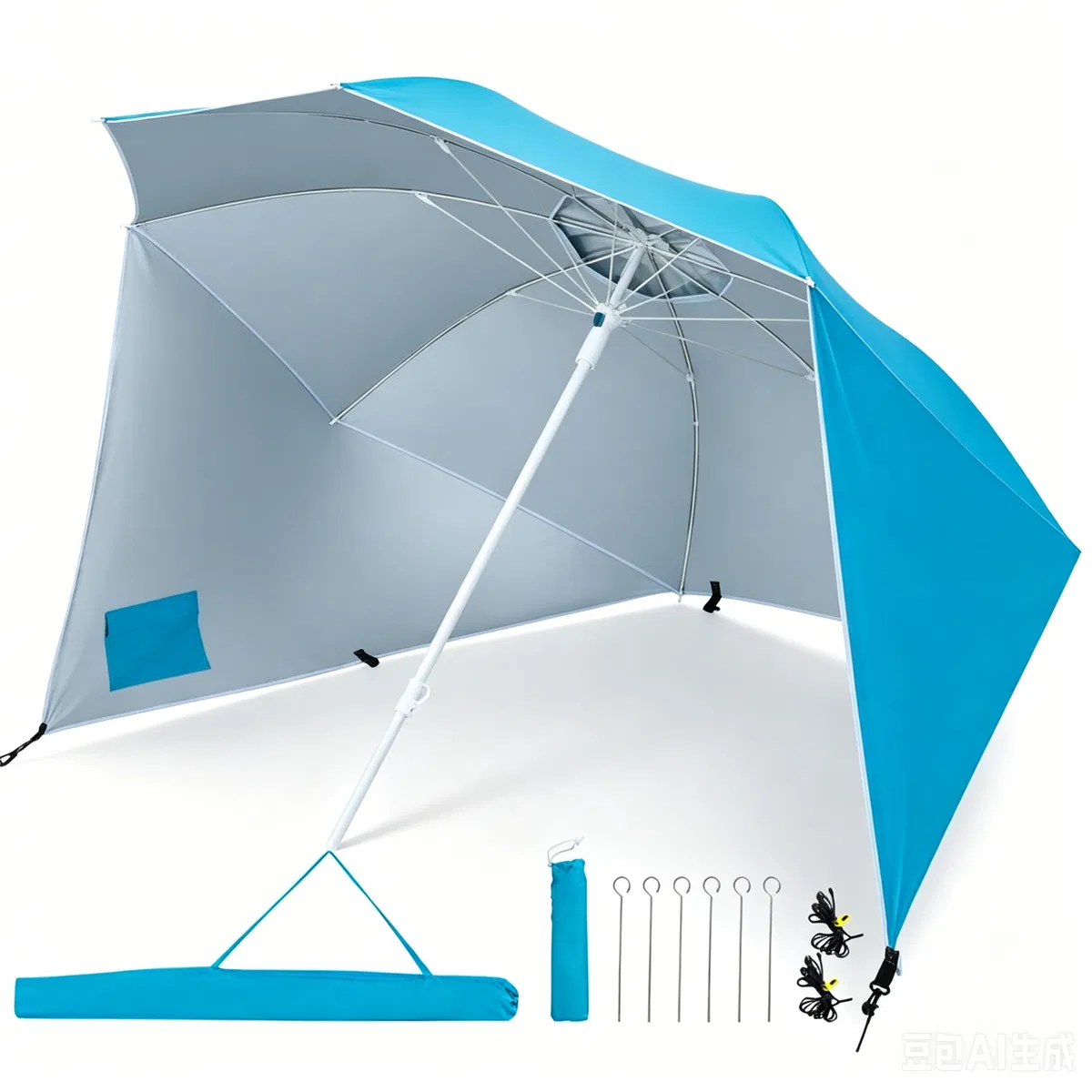

Photos from current listings. Actual item, color, and included accessories may vary.
Beach Umbrella Buying Guide
A beach umbrella is a portable shade structure defined by its canopy fabric, pole material, and anchoring system; the core trade-off is UPF-rated UV blocking and wind stability versus packability and weight. Durable options use solution-dyed or silver-coated Oxford/polyester with a vented canopy and a sand screw or auger anchor, while compromises rely on thin nylon and a straight pole that tilts or blows over. Decide by wind exposure and sand type first, then match canopy span and UPF grade to your group size.


At a glance
- Category
- Tents & Shelters
- Data updated
- Nov 18, 2026
Current offers
Highlights
- Canopy fabric: 190T-210T polyester or Oxford with silver PU coating blocks UV; UPF 50+ blocks 98% of UV rays, while uncoated thin nylon degrades and fades in one season.
- Vent system: a top vent or wind vent lets gusts pass through, reducing uplift; unvented canopies catch wind like a sail and bend fiberglass ribs or snap pole joints.
- Pole and ribs: fiberglass ribs flex and recover; aluminum poles are lighter but dent; steel poles are strongest but rust without powder coating—1.25-1.5 mm wall aluminum is the durability benchmark.
- Anchor type: sand screw/auger anchors bite into packed sand and resist lateral pull; spike stakes only hold in soft dry sand, and base-plate weights are needed on hard-packed or rocky beaches.
Best use cases
- Coastal windy beaches: choose a vented canopy with fiberglass ribs, a sand screw anchor, and a tilt mechanism—skip flat unvented canopies and straight spike poles.
- Calm lake or bay shores: a standard UPF 50+ umbrella with a pole stake and carry bag is sufficient; skip auger hardware and heavy sand screws you will not need.
- Family shade for 3-4 people: pick a 7-9 ft canopy span with a tilt joint and side panels; skip 5-6 ft compact umbrellas that only shade one chair.
- Soft dry sand: use a sand screw or auger anchor buried 12-18 in; skip base-plate weights that sink and tip in loose sand.
Buying tips
- Match canopy span to users: 6-7 ft shades 1-2 people, 7-9 ft shades 2-4, and 9-10 ft shades 4+; measure the shaded footprint at midday sun angle, not the canopy diameter.
- Demand UPF 50+ with a silver or PU coating on 190T+ fabric; UPF 50 blocks about 98% of UV, while UPF 15-24 blocks only 93-96% and is not beach-grade.
- For wind, require a vented canopy plus fiberglass ribs and at least a 1.25 mm aluminum pole; a sand screw anchor outperforms a spike stake in packed sand.
- Check tilt and height range: a tilt joint plus 7-8 ft pole height lets you track the sun; fixed straight poles force you to reposition the whole umbrella.
Specs
| Canopy Fabric | 190T+ polyester/Oxford, UPF 50+ |
|---|---|
| Pole & Ribs | Aluminum 1.25-1.5 mm / fiberglass ribs |
| Wind & Anchor | Vented canopy + sand screw/auger |
| Canopy Span | 6-10 ft (1-4+ users) |
Related searches
What to check before buying
- Measure your group's shaded area need: plan 3-4 ft of canopy radius per seated person and confirm the umbrella's open span before buying.
- Confirm your beach surface: packed sand suits a sand screw, loose dry sand needs a deep auger, and rocky or shell beaches require a weighted base plate.
- Verify pole diameter and anchor compatibility: 1.25-1.5 in poles need matching sand screws or bases; thin 0.9 in poles fit only spike stakes.
- Check car and carry constraints: a 7-9 ft canopy typically packs to 48-60 in and 5-10 lb; confirm it fits your trunk and walk distance.
FAQ
Data sources: eBay / Amazon listings and product attribute feeds Data updated Nov 18, 2026.
Some links on this page are affiliate links. If you buy after clicking one, we may earn a commission at no extra cost to you. This does not change which products appear here or their order. Affiliate disclosure.