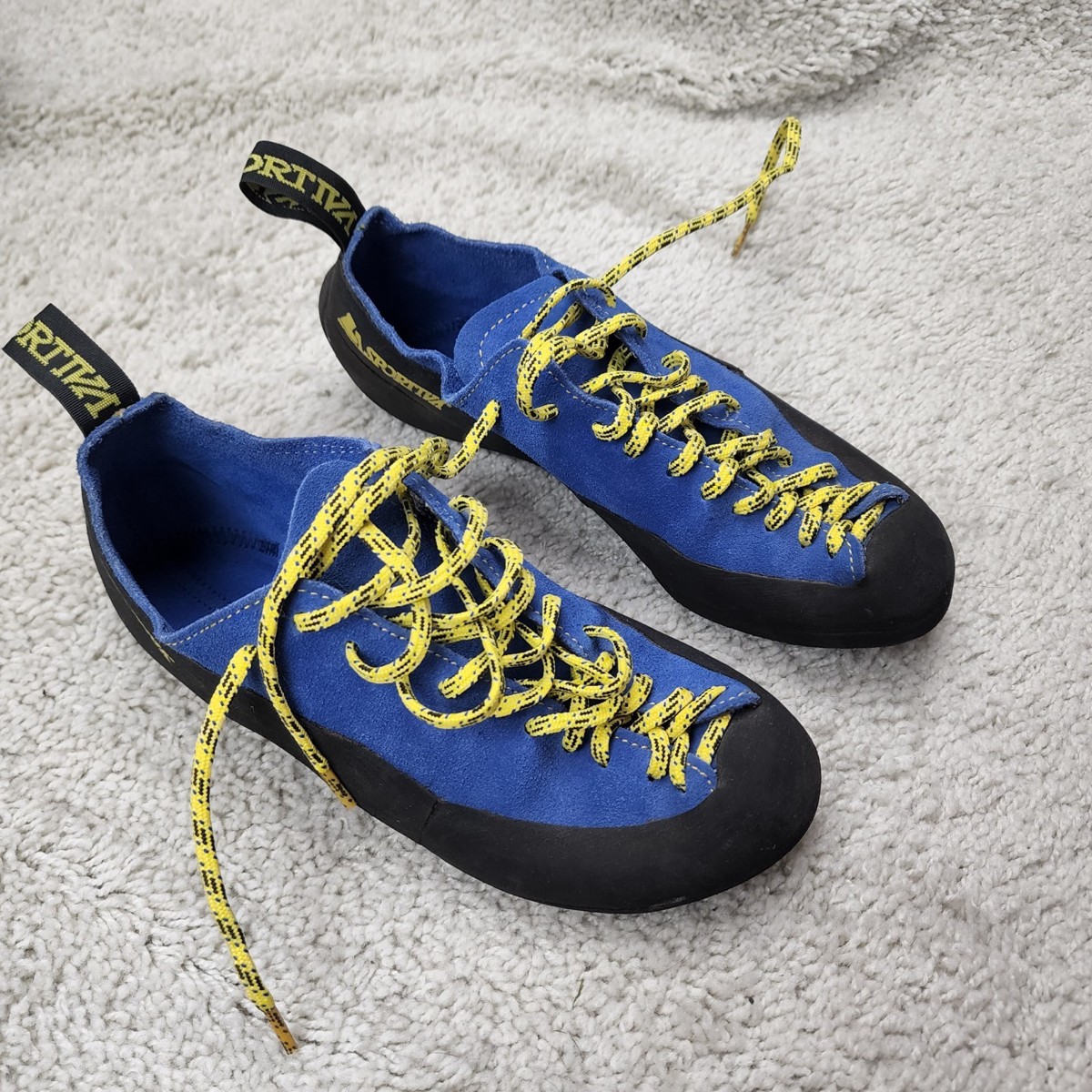

Photos from current listings. Actual item, color, and included accessories may vary.
Bouldering Shoe Buying Guide
Bouldering shoes are specialized climbing footwear with sticky rubber, a snug fit, and a downturned or asymmetric last for edging and smearing on short, powerful routes. The primary trade-off is aggression versus comfort: softer, more downturned shoes excel on overhangs but punish flat-footed all-day wear, while flatter, stiffer shoes favor vertical terrain and long sessions. The decision rule is simple—match the last shape and closure system to your terrain and foot volume, and skip any shoe that forces toe curl before you even weight it.


At a glance
- Category
- Climbing & Bouldering Shoes
- Data updated
- Nov 16, 2026
Current offers
Highlights
- Last shape defines performance: downturned (aggressive) for steep overhangs, flat (neutral) for vertical and crack, semi-asymmetric for all-around.
- Rubber thickness and hardness control sensitivity: 3.5–4mm soft rubber maximizes feel on plastic and volumes, 4.5mm+ harder rubber resists wear on granite and sharp limestone.
- Closure systems change fit and durability: lace-ups allow micro-adjustment and stay put on narrow feet, Velcro straps favor quick on/off for bouldering sessions, slippers maximize sensitivity.
- Upper materials matter: unlined leather stretches up to a half size, synthetic uppers hold their shape, and lined leather balances comfort with minimal stretch.
Best use cases
- Best fit for gym bouldering and plastic: pick a soft, downturned Velcro shoe with 3.5–4mm rubber for sensitivity on volumes and quick transitions; skip stiff lace-ups that deaden feel.
- Best fit for outdoor granite and long routes: choose a flatter, stiffer lace-up with 4.5mm rubber for edging support and durability; skip soft slippers that roll on small edges.
- Best fit for beginners and all-day comfort: select a neutral, flat-lasted shoe with a roomy toe box and synthetic upper; skip aggressive downturned models that cause hot spots and early fatigue.
Buying tips
- Size down 0–0.5 size from street shoe for neutral lasts; down 1–1.5 sizes for aggressive downturned lasts—never size down more than 1.5 or you risk toe injury.
- Match rubber hardness to rock type: soft 3.5–4mm rubber for plastic and sandstone smearing, harder 4.5mm+ rubber for granite edges and sharp limestone.
- Choose lace-ups for narrow or low-volume feet and Velcro for quick bouldering transitions; slippers only if you prioritize sensitivity over support.
- Check the rand and midsole: full-length midsole adds stiffness for edging, half or no midsole maximizes sensitivity for smearing and toe hooks.
Specs
| Last Shape | Downturned / Semi-asymmetric / Flat |
|---|---|
| Rubber Thickness | 3.5–4mm soft / 4.5mm+ hard |
| Closure Type | Lace-up / Velcro / Slipper |
| Upper Material | Leather / Synthetic / Lined leather |
Related searches
What to check before buying
- Measure your foot length and width at the end of the day; climbing shoes should fit snug with toes flat or slightly curled—never painfully curled before weighting.
- Confirm your gym or crag style: steep overhangs need downturned shoes, vertical walls need flatter shoes, and cracks need stiffer, higher-cut models.
- Check closure and upper compatibility with your foot volume—low-volume feet need lace-ups or narrow lasts, high-volume feet need wider lasts and Velcro adjustability.
- Verify rubber thickness and midsole for your terrain: 3.5–4mm soft for sensitivity, 4.5mm+ hard for durability; full midsole for support, no midsole for feel.
FAQ
Data sources: eBay / Amazon listings and product attribute feeds Data updated Nov 16, 2026.
Some links on this page are affiliate links. If you buy after clicking one, we may earn a commission at no extra cost to you. This does not change which products appear here or their order. Affiliate disclosure.